

7 Aptamers for Personalized Therapeutics
191
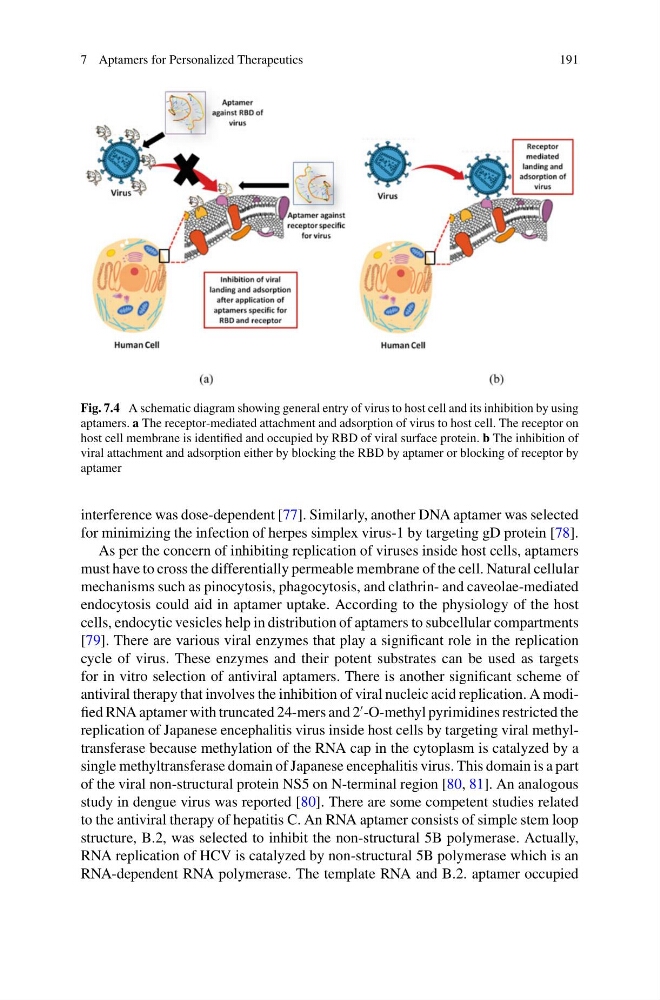
Fig. 7.4 A schematic diagram showing general entry of virus to host cell and its inhibition by using
aptamers. a The receptor-mediated attachment and adsorption of virus to host cell. The receptor on
host cell membrane is identified and occupied by RBD of viral surface protein. b The inhibition of
viral attachment and adsorption either by blocking the RBD by aptamer or blocking of receptor by
aptamer
interference was dose-dependent [77]. Similarly, another DNA aptamer was selected
for minimizing the infection of herpes simplex virus-1 by targeting gD protein [78].
As per the concern of inhibiting replication of viruses inside host cells, aptamers
must have to cross the differentially permeable membrane of the cell. Natural cellular
mechanisms such as pinocytosis, phagocytosis, and clathrin- and caveolae-mediated
endocytosis could aid in aptamer uptake. According to the physiology of the host
cells, endocytic vesicles help in distribution of aptamers to subcellular compartments
[79]. There are various viral enzymes that play a significant role in the replication
cycle of virus. These enzymes and their potent substrates can be used as targets
for in vitro selection of antiviral aptamers. There is another significant scheme of
antiviral therapy that involves the inhibition of viral nucleic acid replication. A modified RNA aptamer with truncated 24-mers and 2
-O-methyl pyrimidines restricted the
replication of Japanese encephalitis virus inside host cells by targeting viral methyltransferase because methylation of the RNA cap in the cytoplasm is catalyzed by a
single methyltransferase domain of Japanese encephalitis virus. This domain is a part
of the viral non-structural protein NS5 on N-terminal region [80, 81]. An analogous
study in dengue virus was reported [80]. There are some competent studies related
to the antiviral therapy of hepatitis C. An RNA aptamer consists of simple stem loop
structure, B.2, was selected to inhibit the non-structural 5B polymerase. Actually,
RNA replication of HCV is catalyzed by non-structural 5B polymerase which is an
RNA-dependent RNA polymerase. The template RNA and B.2. aptamer occupied
191
Fig. 7.4 A schematic diagram showing general entry of virus to host cell and its inhibition by using
aptamers. a The receptor-mediated attachment and adsorption of virus to host cell. The receptor on
host cell membrane is identified and occupied by RBD of viral surface protein. b The inhibition of
viral attachment and adsorption either by blocking the RBD by aptamer or blocking of receptor by
aptamer
interference was dose-dependent [77]. Similarly, another DNA aptamer was selected
for minimizing the infection of herpes simplex virus-1 by targeting gD protein [78].
As per the concern of inhibiting replication of viruses inside host cells, aptamers
must have to cross the differentially permeable membrane of the cell. Natural cellular
mechanisms such as pinocytosis, phagocytosis, and clathrin- and caveolae-mediated
endocytosis could aid in aptamer uptake. According to the physiology of the host
cells, endocytic vesicles help in distribution of aptamers to subcellular compartments
[79]. There are various viral enzymes that play a significant role in the replication
cycle of virus. These enzymes and their potent substrates can be used as targets
for in vitro selection of antiviral aptamers. There is another significant scheme of
antiviral therapy that involves the inhibition of viral nucleic acid replication. A modified RNA aptamer with truncated 24-mers and 2
-O-methyl pyrimidines restricted the
replication of Japanese encephalitis virus inside host cells by targeting viral methyltransferase because methylation of the RNA cap in the cytoplasm is catalyzed by a
single methyltransferase domain of Japanese encephalitis virus. This domain is a part
of the viral non-structural protein NS5 on N-terminal region [80, 81]. An analogous
study in dengue virus was reported [80]. There are some competent studies related
to the antiviral therapy of hepatitis C. An RNA aptamer consists of simple stem loop
structure, B.2, was selected to inhibit the non-structural 5B polymerase. Actually,
RNA replication of HCV is catalyzed by non-structural 5B polymerase which is an
RNA-dependent RNA polymerase. The template RNA and B.2. aptamer occupied