

7 Aptamers for Personalized Therapeutics
189
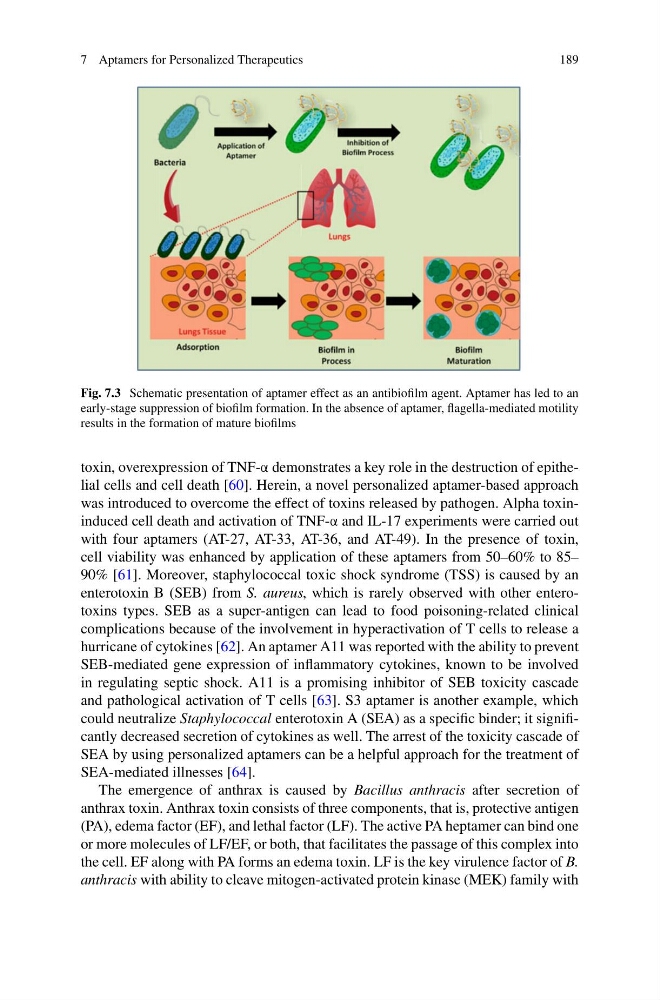
Fig. 7.3 Schematic presentation of aptamer effect as an antibiofilm agent. Aptamer has led to an
early-stage suppression of biofilm formation. In the absence of aptamer, flagella-mediated motility
results in the formation of mature biofilms
toxin, overexpression of TNF-α demonstrates a key role in the destruction of epithelial cells and cell death [60]. Herein, a novel personalized aptamer-based approach
was introduced to overcome the effect of toxins released by pathogen. Alpha toxininduced cell death and activation of TNF-α and IL-17 experiments were carried out
with four aptamers (AT-27, AT-33, AT-36, and AT-49). In the presence of toxin,
cell viability was enhanced by application of these aptamers from 50–60% to 85–
90% [61]. Moreover, staphylococcal toxic shock syndrome (TSS) is caused by an
enterotoxin B (SEB) from S. aureus, which is rarely observed with other enterotoxins types. SEB as a super-antigen can lead to food poisoning-related clinical
complications because of the involvement in hyperactivation of T cells to release a
hurricane of cytokines [62]. An aptamer A11 was reported with the ability to prevent
SEB-mediated gene expression of inflammatory cytokines, known to be involved
in regulating septic shock. A11 is a promising inhibitor of SEB toxicity cascade
and pathological activation of T cells [63]. S3 aptamer is another example, which
could neutralize Staphylococcal enterotoxin A (SEA) as a specific binder; it significantly decreased secretion of cytokines as well. The arrest of the toxicity cascade of
SEA by using personalized aptamers can be a helpful approach for the treatment of
SEA-mediated illnesses [64].
The emergence of anthrax is caused by Bacillus anthracis after secretion of
anthrax toxin. Anthrax toxin consists of three components, that is, protective antigen
(PA), edema factor (EF), and lethal factor (LF). The active PA heptamer can bind one
or more molecules of LF/EF, or both, that facilitates the passage of this complex into
the cell. EF along with PA forms an edema toxin. LF is the key virulence factor of B.
anthracis with ability to cleave mitogen-activated protein kinase (MEK) family with
189
Fig. 7.3 Schematic presentation of aptamer effect as an antibiofilm agent. Aptamer has led to an
early-stage suppression of biofilm formation. In the absence of aptamer, flagella-mediated motility
results in the formation of mature biofilms
toxin, overexpression of TNF-α demonstrates a key role in the destruction of epithelial cells and cell death [60]. Herein, a novel personalized aptamer-based approach
was introduced to overcome the effect of toxins released by pathogen. Alpha toxininduced cell death and activation of TNF-α and IL-17 experiments were carried out
with four aptamers (AT-27, AT-33, AT-36, and AT-49). In the presence of toxin,
cell viability was enhanced by application of these aptamers from 50–60% to 85–
90% [61]. Moreover, staphylococcal toxic shock syndrome (TSS) is caused by an
enterotoxin B (SEB) from S. aureus, which is rarely observed with other enterotoxins types. SEB as a super-antigen can lead to food poisoning-related clinical
complications because of the involvement in hyperactivation of T cells to release a
hurricane of cytokines [62]. An aptamer A11 was reported with the ability to prevent
SEB-mediated gene expression of inflammatory cytokines, known to be involved
in regulating septic shock. A11 is a promising inhibitor of SEB toxicity cascade
and pathological activation of T cells [63]. S3 aptamer is another example, which
could neutralize Staphylococcal enterotoxin A (SEA) as a specific binder; it significantly decreased secretion of cytokines as well. The arrest of the toxicity cascade of
SEA by using personalized aptamers can be a helpful approach for the treatment of
SEA-mediated illnesses [64].
The emergence of anthrax is caused by Bacillus anthracis after secretion of
anthrax toxin. Anthrax toxin consists of three components, that is, protective antigen
(PA), edema factor (EF), and lethal factor (LF). The active PA heptamer can bind one
or more molecules of LF/EF, or both, that facilitates the passage of this complex into
the cell. EF along with PA forms an edema toxin. LF is the key virulence factor of B.
anthracis with ability to cleave mitogen-activated protein kinase (MEK) family with