

7 Aptamers for Personalized Therapeutics
181
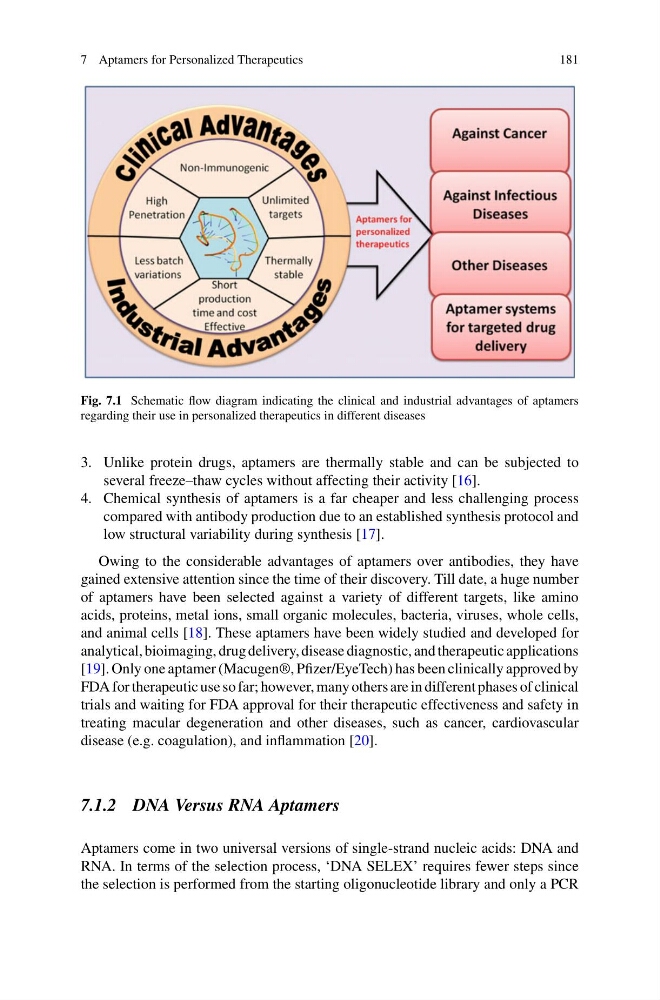
Fig. 7.1 Schematic flow diagram indicating the clinical and industrial advantages of aptamers
regarding their use in personalized therapeutics in different diseases
3. Unlike protein drugs, aptamers are thermally stable and can be subjected to
several freeze–thaw cycles without affecting their activity [16].
4. Chemical synthesis of aptamers is a far cheaper and less challenging process
compared with antibody production due to an established synthesis protocol and
low structural variability during synthesis [17].
Owing to the considerable advantages of aptamers over antibodies, they have
gained extensive attention since the time of their discovery. Till date, a huge number
of aptamers have been selected against a variety of different targets, like amino
acids, proteins, metal ions, small organic molecules, bacteria, viruses, whole cells,
and animal cells [18]. These aptamers have been widely studied and developed for
analytical, bioimaging, drug delivery, disease diagnostic, and therapeutic applications
[19]. Only one aptamer (Macugen®, Pfizer/EyeTech) has been clinically approved by
FDA for therapeutic use so far; however, many others are in different phases of clinical
trials and waiting for FDA approval for their therapeutic effectiveness and safety in
treating macular degeneration and other diseases, such as cancer, cardiovascular
disease (e.g. coagulation), and inflammation [20].
7.1.2 DNA Versus RNA Aptamers
Aptamers come in two universal versions of single-strand nucleic acids: DNA and
RNA. In terms of the selection process, ‘DNA SELEX’ requires fewer steps since
the selection is performed from the starting oligonucleotide library and only a PCR
181
Fig. 7.1 Schematic flow diagram indicating the clinical and industrial advantages of aptamers
regarding their use in personalized therapeutics in different diseases
3. Unlike protein drugs, aptamers are thermally stable and can be subjected to
several freeze–thaw cycles without affecting their activity [16].
4. Chemical synthesis of aptamers is a far cheaper and less challenging process
compared with antibody production due to an established synthesis protocol and
low structural variability during synthesis [17].
Owing to the considerable advantages of aptamers over antibodies, they have
gained extensive attention since the time of their discovery. Till date, a huge number
of aptamers have been selected against a variety of different targets, like amino
acids, proteins, metal ions, small organic molecules, bacteria, viruses, whole cells,
and animal cells [18]. These aptamers have been widely studied and developed for
analytical, bioimaging, drug delivery, disease diagnostic, and therapeutic applications
[19]. Only one aptamer (Macugen®, Pfizer/EyeTech) has been clinically approved by
FDA for therapeutic use so far; however, many others are in different phases of clinical
trials and waiting for FDA approval for their therapeutic effectiveness and safety in
treating macular degeneration and other diseases, such as cancer, cardiovascular
disease (e.g. coagulation), and inflammation [20].
7.1.2 DNA Versus RNA Aptamers
Aptamers come in two universal versions of single-strand nucleic acids: DNA and
RNA. In terms of the selection process, ‘DNA SELEX’ requires fewer steps since
the selection is performed from the starting oligonucleotide library and only a PCR