

322
A. Sedlackova et al.
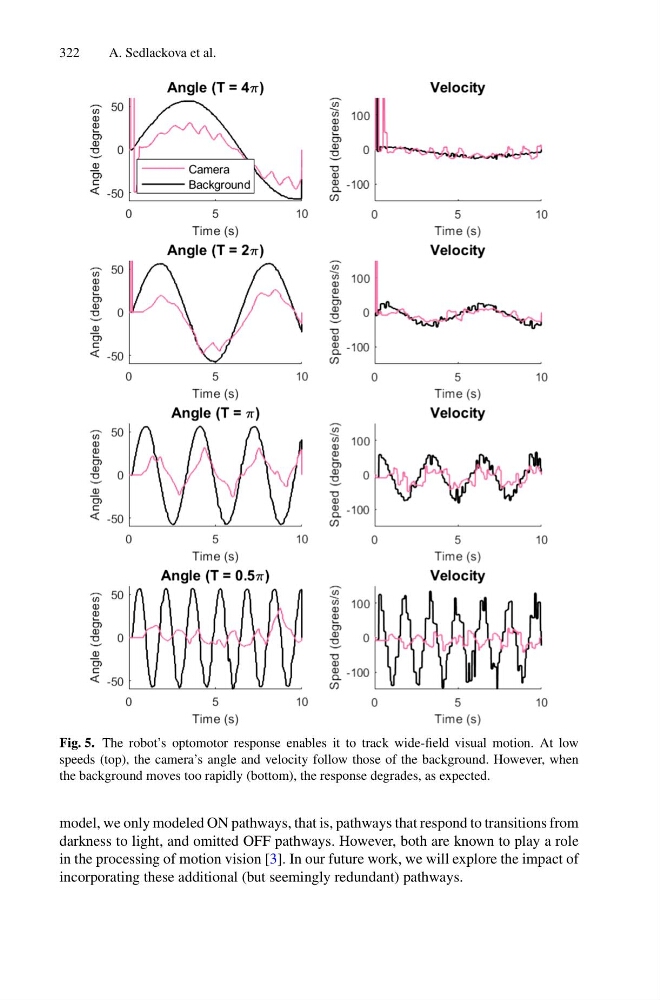
Fig. 5. The robot’s optomotor response enables it to track wide-field visual motion. At low
speeds (top), the camera’s angle and velocity follow those of the background. However, when
the background moves too rapidly (bottom), the response degrades, as expected.
model, we only modeled ON pathways, that is, pathways that respond to transitions from
darkness to light, and omitted OFF pathways. However, both are known to play a role
in the processing of motion vision [3]. In our future work, we will explore the impact of
incorporating these additional (but seemingly redundant) pathways.
A. Sedlackova et al.
Fig. 5. The robot’s optomotor response enables it to track wide-field visual motion. At low
speeds (top), the camera’s angle and velocity follow those of the background. However, when
the background moves too rapidly (bottom), the response degrades, as expected.
model, we only modeled ON pathways, that is, pathways that respond to transitions from
darkness to light, and omitted OFF pathways. However, both are known to play a role
in the processing of motion vision [3]. In our future work, we will explore the impact of
incorporating these additional (but seemingly redundant) pathways.