

302
P. E. Schiebel et al.
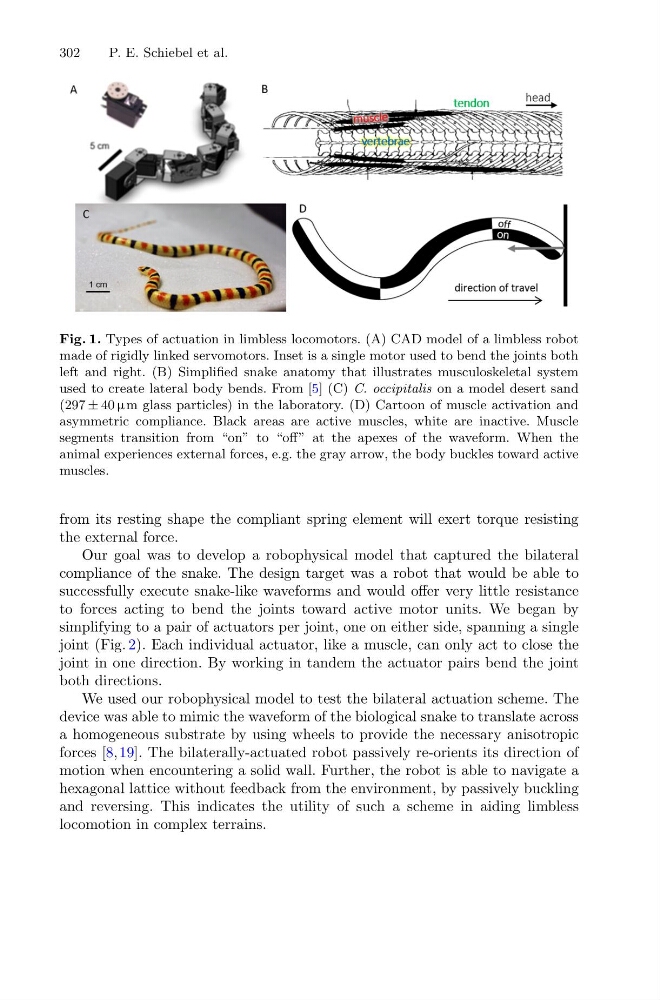
Fig. 1. Types of actuation in limbless locomotors. (A) CAD model of a limbless robot
made of rigidly linked servomotors. Inset is a single motor used to bend the joints both
left and right. (B) Simplified snake anatomy that illustrates musculoskeletal system
used to create lateral body bends. From [5] (C) C. occipitalis on a model desert sand
(297 ± 40 µm glass particles) in the laboratory. (D) Cartoon of muscle activation and
asymmetric compliance. Black areas are active muscles, white are inactive. Muscle
segments transition from “on” to “off” at the apexes of the waveform. When the
animal experiences external forces, e.g. the gray arrow, the body buckles toward active
muscles.
from its resting shape the compliant spring element will exert torque resisting
the external force.
Our goal was to develop a robophysical model that captured the bilateral
compliance of the snake. The design target was a robot that would be able to
successfully execute snake-like waveforms and would offer very little resistance
to forces acting to bend the joints toward active motor units. We began by
simplifying to a pair of actuators per joint, one on either side, spanning a single
joint (Fig. 2). Each individual actuator, like a muscle, can only act to close the
joint in one direction. By working in tandem the actuator pairs bend the joint
both directions.
We used our robophysical model to test the bilateral actuation scheme. The
device was able to mimic the waveform of the biological snake to translate across
a homogeneous substrate by using wheels to provide the necessary anisotropic
forces [8,19]. The bilaterally-actuated robot passively re-orients its direction of
motion when encountering a solid wall. Further, the robot is able to navigate a
hexagonal lattice without feedback from the environment, by passively buckling
and reversing. This indicates the utility of such a scheme in aiding limbless
locomotion in complex terrains.
P. E. Schiebel et al.
Fig. 1. Types of actuation in limbless locomotors. (A) CAD model of a limbless robot
made of rigidly linked servomotors. Inset is a single motor used to bend the joints both
left and right. (B) Simplified snake anatomy that illustrates musculoskeletal system
used to create lateral body bends. From [5] (C) C. occipitalis on a model desert sand
(297 ± 40 µm glass particles) in the laboratory. (D) Cartoon of muscle activation and
asymmetric compliance. Black areas are active muscles, white are inactive. Muscle
segments transition from “on” to “off” at the apexes of the waveform. When the
animal experiences external forces, e.g. the gray arrow, the body buckles toward active
muscles.
from its resting shape the compliant spring element will exert torque resisting
the external force.
Our goal was to develop a robophysical model that captured the bilateral
compliance of the snake. The design target was a robot that would be able to
successfully execute snake-like waveforms and would offer very little resistance
to forces acting to bend the joints toward active motor units. We began by
simplifying to a pair of actuators per joint, one on either side, spanning a single
joint (Fig. 2). Each individual actuator, like a muscle, can only act to close the
joint in one direction. By working in tandem the actuator pairs bend the joint
both directions.
We used our robophysical model to test the bilateral actuation scheme. The
device was able to mimic the waveform of the biological snake to translate across
a homogeneous substrate by using wheels to provide the necessary anisotropic
forces [8,19]. The bilaterally-actuated robot passively re-orients its direction of
motion when encountering a solid wall. Further, the robot is able to navigate a
hexagonal lattice without feedback from the environment, by passively buckling
and reversing. This indicates the utility of such a scheme in aiding limbless
locomotion in complex terrains.