

276
S. T. Nichols et al.
potential benefits for man-made systems, including 1) robustness where many
sensors must fail before the entire system fails, 2) the use of less complex and/or
resource-intensive sensors to obtain actionable information about the world [2],
3) the development of systems with lower size, weight, cost, and power requirements, 4) and improved adaptive navigation behavior [3].
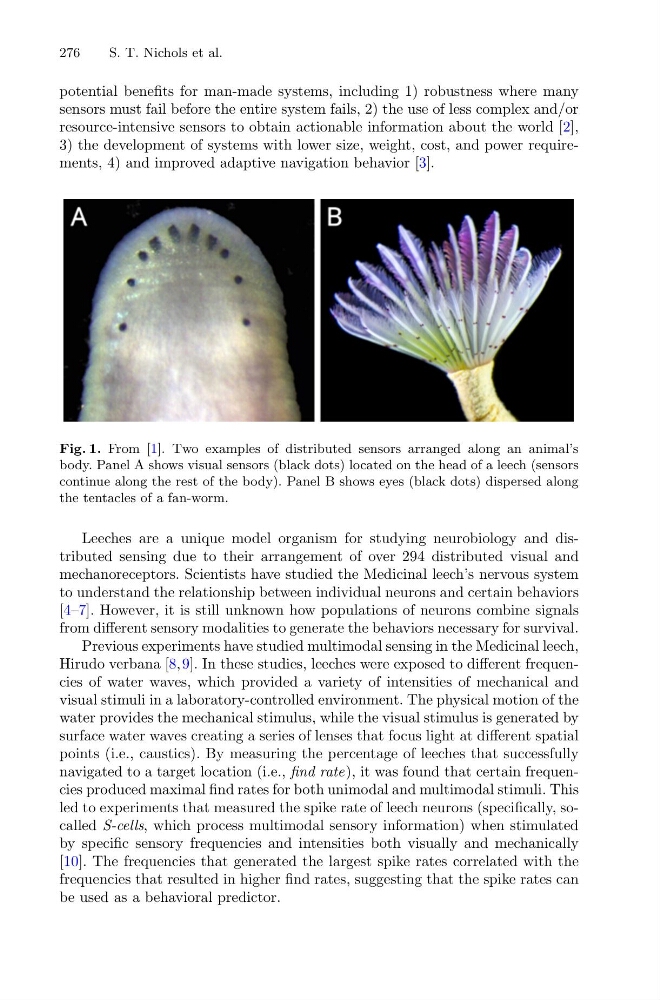
Fig. 1. From [1]. Two examples of distributed sensors arranged along an animal’s
body. Panel A shows visual sensors (black dots) located on the head of a leech (sensors
continue along the rest of the body). Panel B shows eyes (black dots) dispersed along
the tentacles of a fan-worm.
Leeches are a unique model organism for studying neurobiology and distributed sensing due to their arrangement of over 294 distributed visual and
mechanoreceptors. Scientists have studied the Medicinal leech’s nervous system
to understand the relationship between individual neurons and certain behaviors
[4–7]. However, it is still unknown how populations of neurons combine signals
from different sensory modalities to generate the behaviors necessary for survival.
Previous experiments have studied multimodal sensing in the Medicinal leech,
Hirudo verbana [8,9]. In these studies, leeches were exposed to different frequencies of water waves, which provided a variety of intensities of mechanical and
visual stimuli in a laboratory-controlled environment. The physical motion of the
water provides the mechanical stimulus, while the visual stimulus is generated by
surface water waves creating a series of lenses that focus light at different spatial
points (i.e., caustics). By measuring the percentage of leeches that successfully
navigated to a target location (i.e., find rate), it was found that certain frequencies produced maximal find rates for both unimodal and multimodal stimuli. This
led to experiments that measured the spike rate of leech neurons (specifically, socalled S-cells, which process multimodal sensory information) when stimulated
by specific sensory frequencies and intensities both visually and mechanically
[10]. The frequencies that generated the largest spike rates correlated with the
frequencies that resulted in higher find rates, suggesting that the spike rates can
be used as a behavioral predictor.
S. T. Nichols et al.
potential benefits for man-made systems, including 1) robustness where many
sensors must fail before the entire system fails, 2) the use of less complex and/or
resource-intensive sensors to obtain actionable information about the world [2],
3) the development of systems with lower size, weight, cost, and power requirements, 4) and improved adaptive navigation behavior [3].
Fig. 1. From [1]. Two examples of distributed sensors arranged along an animal’s
body. Panel A shows visual sensors (black dots) located on the head of a leech (sensors
continue along the rest of the body). Panel B shows eyes (black dots) dispersed along
the tentacles of a fan-worm.
Leeches are a unique model organism for studying neurobiology and distributed sensing due to their arrangement of over 294 distributed visual and
mechanoreceptors. Scientists have studied the Medicinal leech’s nervous system
to understand the relationship between individual neurons and certain behaviors
[4–7]. However, it is still unknown how populations of neurons combine signals
from different sensory modalities to generate the behaviors necessary for survival.
Previous experiments have studied multimodal sensing in the Medicinal leech,
Hirudo verbana [8,9]. In these studies, leeches were exposed to different frequencies of water waves, which provided a variety of intensities of mechanical and
visual stimuli in a laboratory-controlled environment. The physical motion of the
water provides the mechanical stimulus, while the visual stimulus is generated by
surface water waves creating a series of lenses that focus light at different spatial
points (i.e., caustics). By measuring the percentage of leeches that successfully
navigated to a target location (i.e., find rate), it was found that certain frequencies produced maximal find rates for both unimodal and multimodal stimuli. This
led to experiments that measured the spike rate of leech neurons (specifically, socalled S-cells, which process multimodal sensory information) when stimulated
by specific sensory frequencies and intensities both visually and mechanically
[10]. The frequencies that generated the largest spike rates correlated with the
frequencies that resulted in higher find rates, suggesting that the spike rates can
be used as a behavioral predictor.