

Reinforcement Learning of Flight Behaviors
233
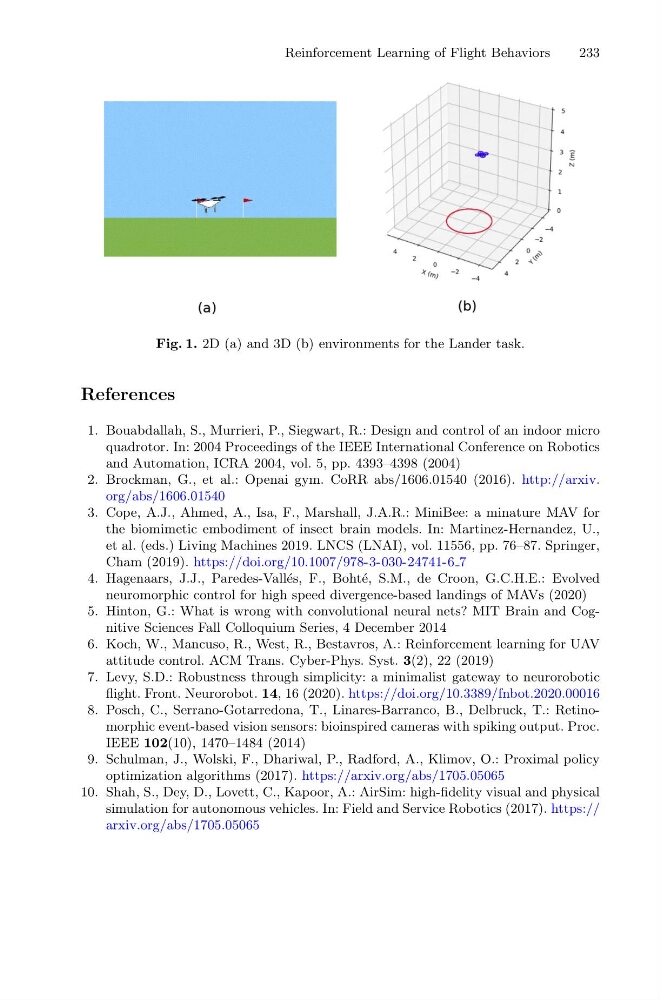
Fig. 1. 2D (a) and 3D (b) environments for the Lander task.
References
1. Bouabdallah, S., Murrieri, P., Siegwart, R.: Design and control of an indoor micro
quadrotor. In: 2004 Proceedings of the IEEE International Conference on Robotics
and Automation, ICRA 2004, vol. 5, pp. 4393–4398 (2004)
2. Brockman, G., et al.: Openai gym. CoRR abs/1606.01540 (2016). http://arxiv.
org/abs/1606.01540
3. Cope, A.J., Ahmed, A., Isa, F., Marshall, J.A.R.: MiniBee: a minature MAV for
the biomimetic embodiment of insect brain models. In: Martinez-Hernandez, U.,
et al. (eds.) Living Machines 2019. LNCS (LNAI), vol. 11556, pp. 76–87. Springer,
Cham (2019). https://doi.org/10.1007/978-3-030-24741-6 7
4. Hagenaars, J.J., Paredes-Vall´ es, F., Boht´ e, S.M., de Croon, G.C.H.E.: Evolved
neuromorphic control for high speed divergence-based landings of MAVs (2020)
5. Hinton, G.: What is wrong with convolutional neural nets? MIT Brain and Cognitive Sciences Fall Colloquium Series, 4 December 2014
6. Koch, W., Mancuso, R., West, R., Bestavros, A.: Reinforcement learning for UAV
attitude control. ACM Trans. Cyber-Phys. Syst. 3(2), 22 (2019)
7. Levy, S.D.: Robustness through simplicity: a minimalist gateway to neurorobotic
flight. Front. Neurorobot. 14, 16 (2020). https://doi.org/10.3389/fnbot.2020.00016
8. Posch, C., Serrano-Gotarredona, T., Linares-Barranco, B., Delbruck, T.: Retinomorphic event-based vision sensors: bioinspired cameras with spiking output. Proc.
IEEE 102(10), 1470–1484 (2014)
9. Schulman, J., Wolski, F., Dhariwal, P., Radford, A., Klimov, O.: Proximal policy
optimization algorithms (2017). https://arxiv.org/abs/1705.05065
10. Shah, S., Dey, D., Lovett, C., Kapoor, A.: AirSim: high-fidelity visual and physical
simulation for autonomous vehicles. In: Field and Service Robotics (2017). https://
arxiv.org/abs/1705.05065
233
Fig. 1. 2D (a) and 3D (b) environments for the Lander task.
References
1. Bouabdallah, S., Murrieri, P., Siegwart, R.: Design and control of an indoor micro
quadrotor. In: 2004 Proceedings of the IEEE International Conference on Robotics
and Automation, ICRA 2004, vol. 5, pp. 4393–4398 (2004)
2. Brockman, G., et al.: Openai gym. CoRR abs/1606.01540 (2016). http://arxiv.
org/abs/1606.01540
3. Cope, A.J., Ahmed, A., Isa, F., Marshall, J.A.R.: MiniBee: a minature MAV for
the biomimetic embodiment of insect brain models. In: Martinez-Hernandez, U.,
et al. (eds.) Living Machines 2019. LNCS (LNAI), vol. 11556, pp. 76–87. Springer,
Cham (2019). https://doi.org/10.1007/978-3-030-24741-6 7
4. Hagenaars, J.J., Paredes-Vall´ es, F., Boht´ e, S.M., de Croon, G.C.H.E.: Evolved
neuromorphic control for high speed divergence-based landings of MAVs (2020)
5. Hinton, G.: What is wrong with convolutional neural nets? MIT Brain and Cognitive Sciences Fall Colloquium Series, 4 December 2014
6. Koch, W., Mancuso, R., West, R., Bestavros, A.: Reinforcement learning for UAV
attitude control. ACM Trans. Cyber-Phys. Syst. 3(2), 22 (2019)
7. Levy, S.D.: Robustness through simplicity: a minimalist gateway to neurorobotic
flight. Front. Neurorobot. 14, 16 (2020). https://doi.org/10.3389/fnbot.2020.00016
8. Posch, C., Serrano-Gotarredona, T., Linares-Barranco, B., Delbruck, T.: Retinomorphic event-based vision sensors: bioinspired cameras with spiking output. Proc.
IEEE 102(10), 1470–1484 (2014)
9. Schulman, J., Wolski, F., Dhariwal, P., Radford, A., Klimov, O.: Proximal policy
optimization algorithms (2017). https://arxiv.org/abs/1705.05065
10. Shah, S., Dey, D., Lovett, C., Kapoor, A.: AirSim: high-fidelity visual and physical
simulation for autonomous vehicles. In: Field and Service Robotics (2017). https://
arxiv.org/abs/1705.05065