

130
V. Gabler et al.
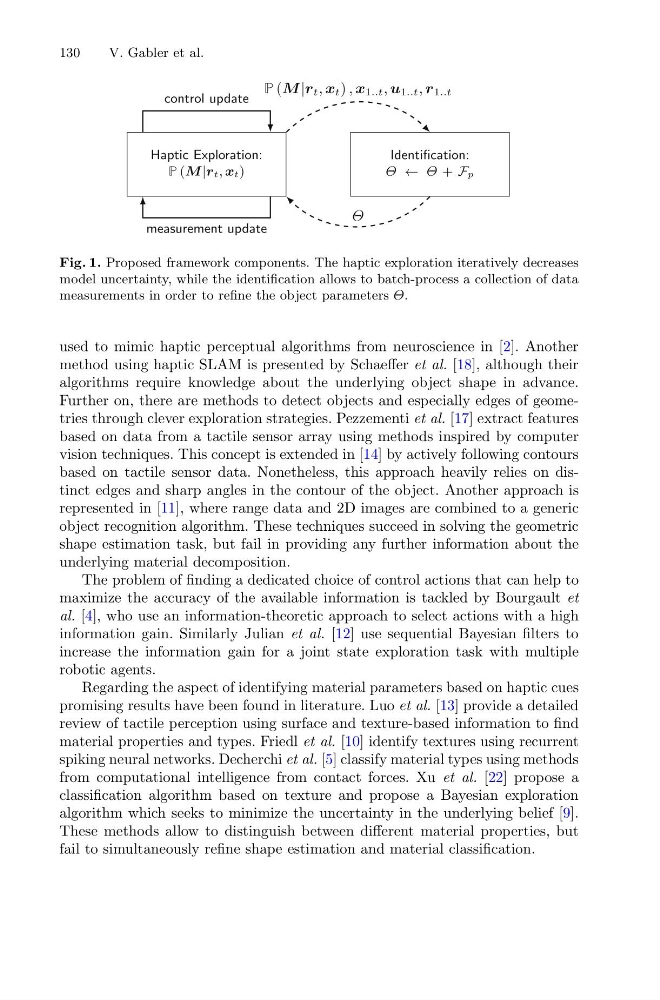
Fig. 1. Proposed framework components. The haptic exploration iteratively decreases
model uncertainty, while the identification allows to batch-process a collection of data
measurements in order to refine the object parameters Θ.
used to mimic haptic perceptual algorithms from neuroscience in [2]. Another
method using haptic SLAM is presented by Schaeffer et al. [18], although their
algorithms require knowledge about the underlying object shape in advance.
Further on, there are methods to detect objects and especially edges of geometries through clever exploration strategies. Pezzementi et al. [17] extract features
based on data from a tactile sensor array using methods inspired by computer
vision techniques. This concept is extended in [14] by actively following contours
based on tactile sensor data. Nonetheless, this approach heavily relies on distinct edges and sharp angles in the contour of the object. Another approach is
represented in [11], where range data and 2D images are combined to a generic
object recognition algorithm. These techniques succeed in solving the geometric
shape estimation task, but fail in providing any further information about the
underlying material decomposition.
The problem of finding a dedicated choice of control actions that can help to
maximize the accuracy of the available information is tackled by Bourgault et
al. [4], who use an information-theoretic approach to select actions with a high
information gain. Similarly Julian et al. [12] use sequential Bayesian filters to
increase the information gain for a joint state exploration task with multiple
robotic agents.
Regarding the aspect of identifying material parameters based on haptic cues
promising results have been found in literature. Luo et al. [13] provide a detailed
review of tactile perception using surface and texture-based information to find
material properties and types. Friedl et al. [10] identify textures using recurrent
spiking neural networks. Decherchi et al. [5] classify material types using methods
from computational intelligence from contact forces. Xu et al. [22] propose a
classification algorithm based on texture and propose a Bayesian exploration
algorithm which seeks to minimize the uncertainty in the underlying belief [9].
These methods allow to distinguish between different material properties, but
fail to simultaneously refine shape estimation and material classification.
V. Gabler et al.
Fig. 1. Proposed framework components. The haptic exploration iteratively decreases
model uncertainty, while the identification allows to batch-process a collection of data
measurements in order to refine the object parameters Θ.
used to mimic haptic perceptual algorithms from neuroscience in [2]. Another
method using haptic SLAM is presented by Schaeffer et al. [18], although their
algorithms require knowledge about the underlying object shape in advance.
Further on, there are methods to detect objects and especially edges of geometries through clever exploration strategies. Pezzementi et al. [17] extract features
based on data from a tactile sensor array using methods inspired by computer
vision techniques. This concept is extended in [14] by actively following contours
based on tactile sensor data. Nonetheless, this approach heavily relies on distinct edges and sharp angles in the contour of the object. Another approach is
represented in [11], where range data and 2D images are combined to a generic
object recognition algorithm. These techniques succeed in solving the geometric
shape estimation task, but fail in providing any further information about the
underlying material decomposition.
The problem of finding a dedicated choice of control actions that can help to
maximize the accuracy of the available information is tackled by Bourgault et
al. [4], who use an information-theoretic approach to select actions with a high
information gain. Similarly Julian et al. [12] use sequential Bayesian filters to
increase the information gain for a joint state exploration task with multiple
robotic agents.
Regarding the aspect of identifying material parameters based on haptic cues
promising results have been found in literature. Luo et al. [13] provide a detailed
review of tactile perception using surface and texture-based information to find
material properties and types. Friedl et al. [10] identify textures using recurrent
spiking neural networks. Decherchi et al. [5] classify material types using methods
from computational intelligence from contact forces. Xu et al. [22] propose a
classification algorithm based on texture and propose a Bayesian exploration
algorithm which seeks to minimize the uncertainty in the underlying belief [9].
These methods allow to distinguish between different material properties, but
fail to simultaneously refine shape estimation and material classification.