

6. Identify colonies carrying plasmids containing the miRNAbinding site oligonucleotide by colony PCR.
7. Confirm correct insertion of the miRNA-binding site oligonucleotide by sequencing (see Note 11).
P-35S
attR2
EGFP
T-35S
KanR
LB
RB
Sm/SpR
CmR
ccdB
attR1
KanR
attL2
attL1
Renilla
LR recombination
P-35S
attB2
EGFP
T-35S
KanR
LB
RB
Sm/SpR
attB1
Renilla
pK7WGF2
miRNA-BS
miRNA-BS
P-35S
attB2
EGFP
T-35S
KanR
LB
RB
Sm/SpR
attB1
Renilla
miRNA-BS
pENTR11-Renilla ORF-BS
pENTR11-Renilla 3’UTR-BS
ORF sensor
(pK7WGF2-Renilla-ORF miRNA-BS)
3’UTR sensor
(pK7WGF2-Renilla-3’UTR miRNA-BS)
P-35S
attR2
EGFP
T-35S
KanR
LB
RB
Sm/SpR
CmR
ccdB
attR1
KanR
attL2
attL1
Renilla
LR recombination
miRNA-BS
pK7WGF2
miRNA-BS
pENTR11-Renilla
XbaI-XhoI
BstBI
miRNA-BS
KanR
attL2
attL1
Renilla
XbaI
XhoI
BstBI
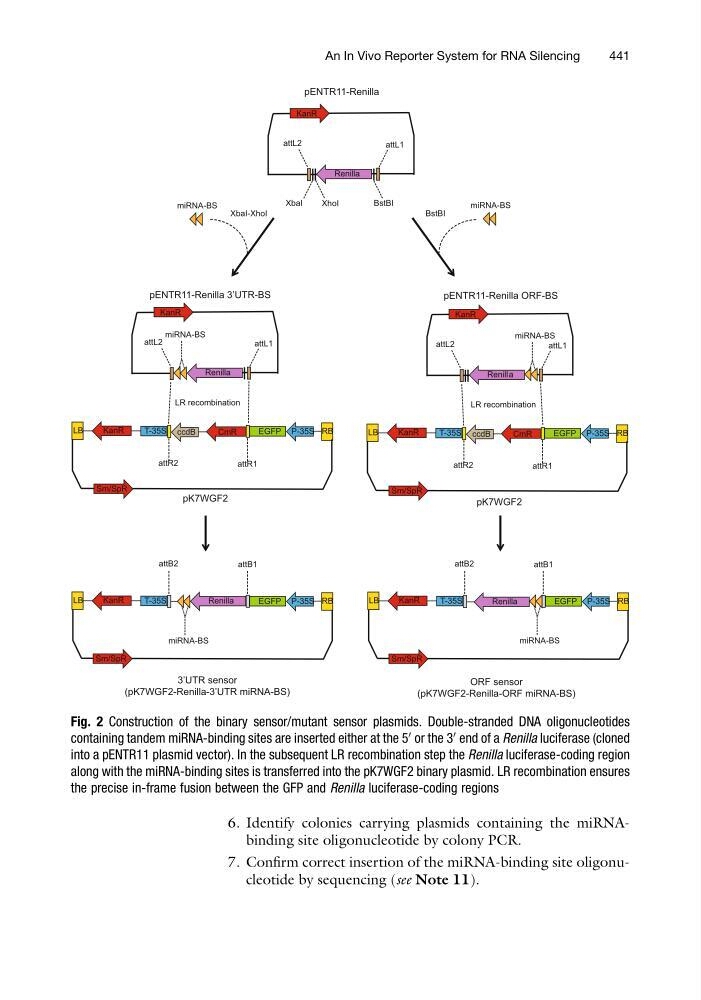
Fig. 2 Construction of the binary sensor/mutant sensor plasmids. Double-stranded DNA oligonucleotides
containing tandem miRNA-binding sites are inserted either at the 5
0 or the 3
0 end of a Renilla luciferase (cloned
into a pENTR11 plasmid vector). In the subsequent LR recombination step the Renilla luciferase-coding region
along with the miRNA-binding sites is transferred into the pK7WGF2 binary plasmid. LR recombination ensures
the precise in-frame fusion between the GFP and Renilla luciferase-coding regions
An In Vivo Reporter System for RNA Silencing
441
7. Confirm correct insertion of the miRNA-binding site oligonucleotide by sequencing (see Note 11).
P-35S
attR2
EGFP
T-35S
KanR
LB
RB
Sm/SpR
CmR
ccdB
attR1
KanR
attL2
attL1
Renilla
LR recombination
P-35S
attB2
EGFP
T-35S
KanR
LB
RB
Sm/SpR
attB1
Renilla
pK7WGF2
miRNA-BS
miRNA-BS
P-35S
attB2
EGFP
T-35S
KanR
LB
RB
Sm/SpR
attB1
Renilla
miRNA-BS
pENTR11-Renilla ORF-BS
pENTR11-Renilla 3’UTR-BS
ORF sensor
(pK7WGF2-Renilla-ORF miRNA-BS)
3’UTR sensor
(pK7WGF2-Renilla-3’UTR miRNA-BS)
P-35S
attR2
EGFP
T-35S
KanR
LB
RB
Sm/SpR
CmR
ccdB
attR1
KanR
attL2
attL1
Renilla
LR recombination
miRNA-BS
pK7WGF2
miRNA-BS
pENTR11-Renilla
XbaI-XhoI
BstBI
miRNA-BS
KanR
attL2
attL1
Renilla
XbaI
XhoI
BstBI
Fig. 2 Construction of the binary sensor/mutant sensor plasmids. Double-stranded DNA oligonucleotides
containing tandem miRNA-binding sites are inserted either at the 5
0 or the 3
0 end of a Renilla luciferase (cloned
into a pENTR11 plasmid vector). In the subsequent LR recombination step the Renilla luciferase-coding region
along with the miRNA-binding sites is transferred into the pK7WGF2 binary plasmid. LR recombination ensures
the precise in-frame fusion between the GFP and Renilla luciferase-coding regions
An In Vivo Reporter System for RNA Silencing
441