

2 Materials
Solutions should be prepared in autoclaved deionized water unless
otherwise indicated. Kits, enzymes, reagents, and chemicals can be
purchased from various suppliers and should be of molecular biology or analytical grade.
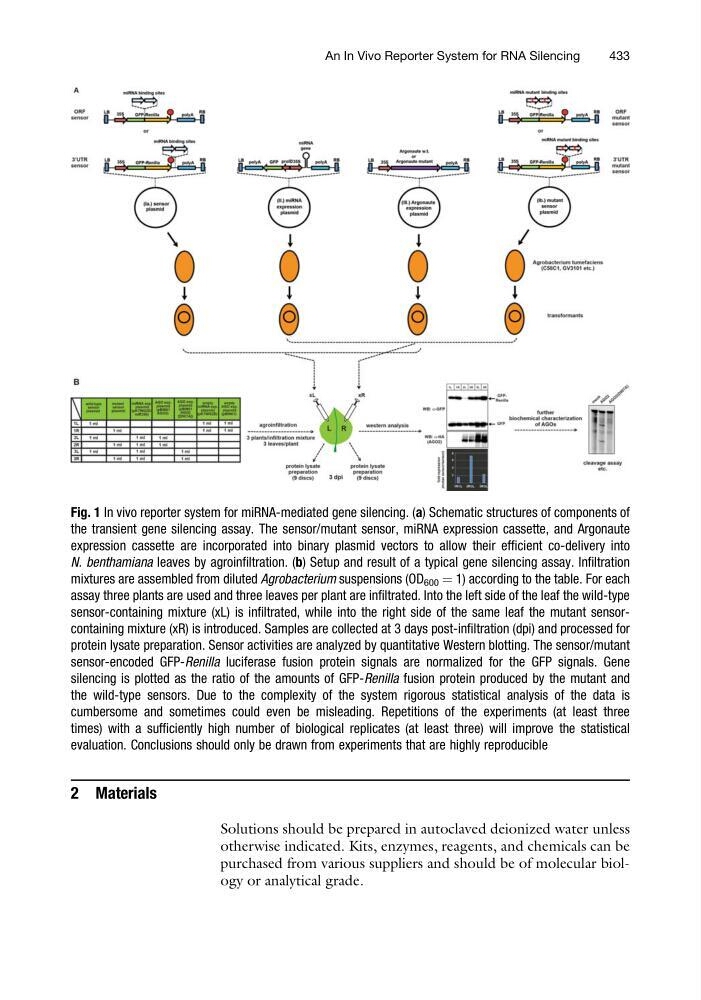
Fig. 1 In vivo reporter system for miRNA-mediated gene silencing. (a) Schematic structures of components of
the transient gene silencing assay. The sensor/mutant sensor, miRNA expression cassette, and Argonaute
expression cassette are incorporated into binary plasmid vectors to allow their efficient co-delivery into
N. benthamiana leaves by agroinfiltration. (b) Setup and result of a typical gene silencing assay. Infiltration
mixtures are assembled from diluted Agrobacterium suspensions (OD 600 ¼ 1) according to the table. For each
assay three plants are used and three leaves per plant are infiltrated. Into the left side of the leaf the wild-type
sensor-containing mixture (xL) is infiltrated, while into the right side of the same leaf the mutant sensorcontaining mixture (xR) is introduced. Samples are collected at 3 days post-infiltration (dpi) and processed for
protein lysate preparation. Sensor activities are analyzed by quantitative Western blotting. The sensor/mutant
sensor-encoded GFP-Renilla luciferase fusion protein signals are normalized for the GFP signals. Gene
silencing is plotted as the ratio of the amounts of GFP-Renilla fusion protein produced by the mutant and
the wild-type sensors. Due to the complexity of the system rigorous statistical analysis of the data is
cumbersome and sometimes could even be misleading. Repetitions of the experiments (at least three
times) with a sufficiently high number of biological replicates (at least three) will improve the statistical
evaluation. Conclusions should only be drawn from experiments that are highly reproducible
An In Vivo Reporter System for RNA Silencing
433
Solutions should be prepared in autoclaved deionized water unless
otherwise indicated. Kits, enzymes, reagents, and chemicals can be
purchased from various suppliers and should be of molecular biology or analytical grade.
Fig. 1 In vivo reporter system for miRNA-mediated gene silencing. (a) Schematic structures of components of
the transient gene silencing assay. The sensor/mutant sensor, miRNA expression cassette, and Argonaute
expression cassette are incorporated into binary plasmid vectors to allow their efficient co-delivery into
N. benthamiana leaves by agroinfiltration. (b) Setup and result of a typical gene silencing assay. Infiltration
mixtures are assembled from diluted Agrobacterium suspensions (OD 600 ¼ 1) according to the table. For each
assay three plants are used and three leaves per plant are infiltrated. Into the left side of the leaf the wild-type
sensor-containing mixture (xL) is infiltrated, while into the right side of the same leaf the mutant sensorcontaining mixture (xR) is introduced. Samples are collected at 3 days post-infiltration (dpi) and processed for
protein lysate preparation. Sensor activities are analyzed by quantitative Western blotting. The sensor/mutant
sensor-encoded GFP-Renilla luciferase fusion protein signals are normalized for the GFP signals. Gene
silencing is plotted as the ratio of the amounts of GFP-Renilla fusion protein produced by the mutant and
the wild-type sensors. Due to the complexity of the system rigorous statistical analysis of the data is
cumbersome and sometimes could even be misleading. Repetitions of the experiments (at least three
times) with a sufficiently high number of biological replicates (at least three) will improve the statistical
evaluation. Conclusions should only be drawn from experiments that are highly reproducible
An In Vivo Reporter System for RNA Silencing
433