

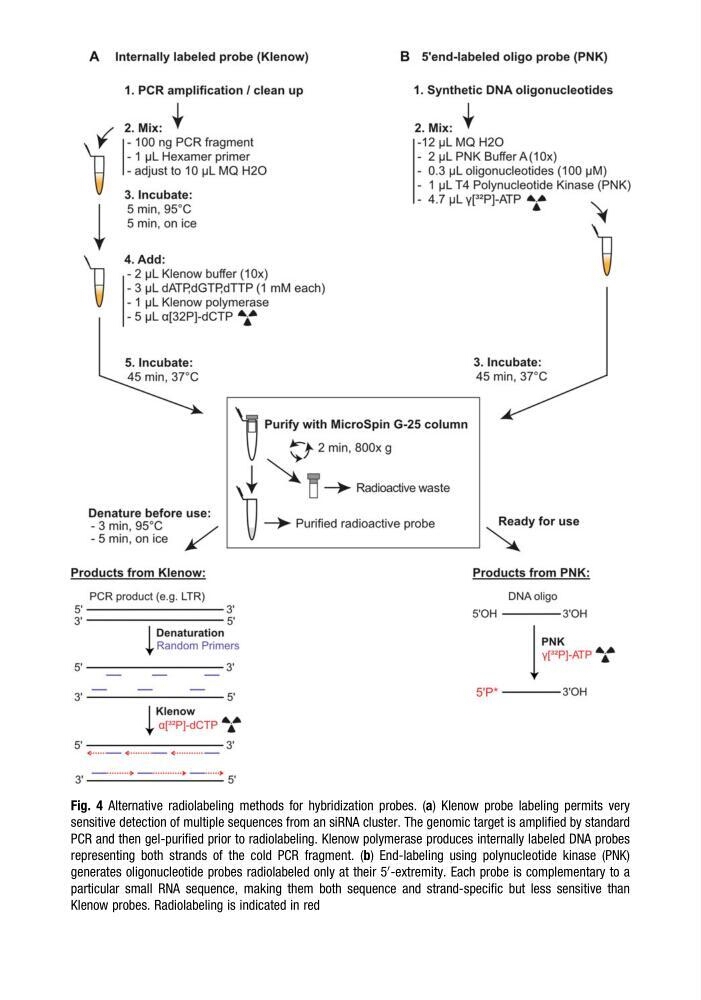
Fig. 4 Alternative radiolabeling methods for hybridization probes. (a) Klenow probe labeling permits very
sensitive detection of multiple sequences from an siRNA cluster. The genomic target is amplified by standard
PCR and then gel-purified prior to radiolabeling. Klenow polymerase produces internally labeled DNA probes
representing both strands of the cold PCR fragment. (b) End-labeling using polynucleotide kinase (PNK)
generates oligonucleotide probes radiolabeled only at their 5
0 -extremity. Each probe is complementary to a
particular small RNA sequence, making them both sequence and strand-specific but less sensitive than
Klenow probes. Radiolabeling is indicated in red
sensitive detection of multiple sequences from an siRNA cluster. The genomic target is amplified by standard
PCR and then gel-purified prior to radiolabeling. Klenow polymerase produces internally labeled DNA probes
representing both strands of the cold PCR fragment. (b) End-labeling using polynucleotide kinase (PNK)
generates oligonucleotide probes radiolabeled only at their 5
0 -extremity. Each probe is complementary to a
particular small RNA sequence, making them both sequence and strand-specific but less sensitive than
Klenow probes. Radiolabeling is indicated in red