

process [41], and reveal small RNA-dependent mechanisms by
which TEs regulate genes in cis and in trans [42–44]. Conversely,
the full analysis of small RNA-seq data involves annotating and
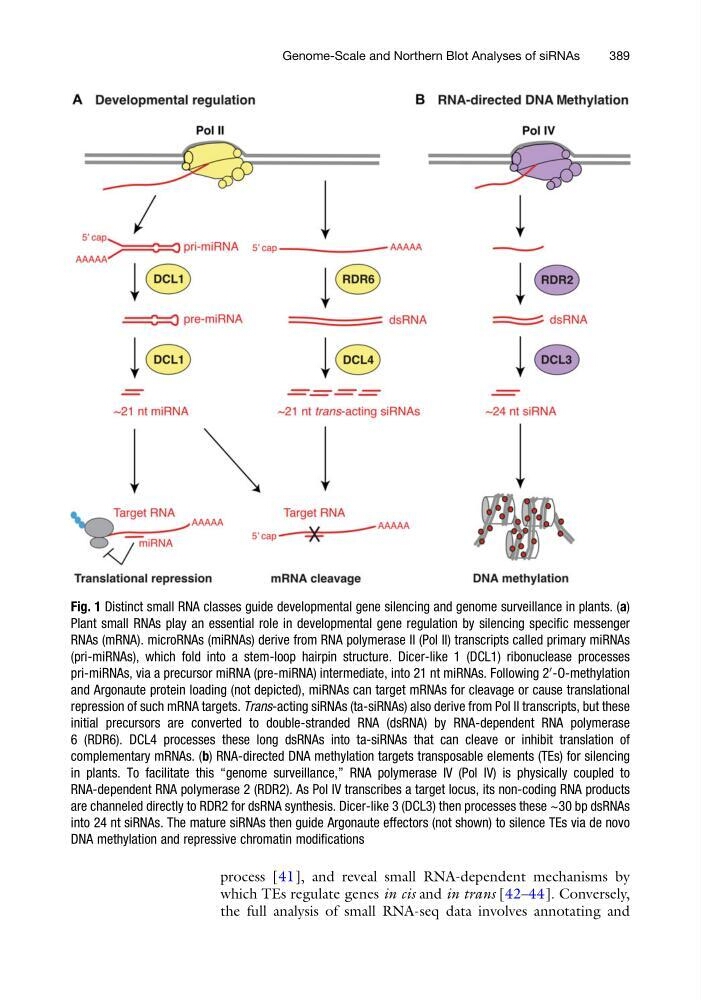
Fig. 1 Distinct small RNA classes guide developmental gene silencing and genome surveillance in plants. (a)
Plant small RNAs play an essential role in developmental gene regulation by silencing specific messenger
RNAs (mRNA). microRNAs (miRNAs) derive from RNA polymerase II (Pol II) transcripts called primary miRNAs
(pri-miRNAs), which fold into a stem-loop hairpin structure. Dicer-like 1 (DCL1) ribonuclease processes
pri-miRNAs, via a precursor miRNA (pre-miRNA) intermediate, into 21 nt miRNAs. Following 2
0 -O-methylation
and Argonaute protein loading (not depicted), miRNAs can target mRNAs for cleavage or cause translational
repression of such mRNA targets. Trans-acting siRNAs (ta-siRNAs) also derive from Pol II transcripts, but these
initial precursors are converted to double-stranded RNA (dsRNA) by RNA-dependent RNA polymerase
6 (RDR6). DCL4 processes these long dsRNAs into ta-siRNAs that can cleave or inhibit translation of
complementary mRNAs. (b) RNA-directed DNA methylation targets transposable elements (TEs) for silencing
in plants. To facilitate this “genome surveillance,” RNA polymerase IV (Pol IV) is physically coupled to
RNA-dependent RNA polymerase 2 (RDR2). As Pol IV transcribes a target locus, its non-coding RNA products
are channeled directly to RDR2 for dsRNA synthesis. Dicer-like 3 (DCL3) then processes these ~30 bp dsRNAs
into 24 nt siRNAs. The mature siRNAs then guide Argonaute effectors (not shown) to silence TEs via de novo
DNA methylation and repressive chromatin modifications
Genome-Scale and Northern Blot Analyses of siRNAs
389
which TEs regulate genes in cis and in trans [42–44]. Conversely,
the full analysis of small RNA-seq data involves annotating and
Fig. 1 Distinct small RNA classes guide developmental gene silencing and genome surveillance in plants. (a)
Plant small RNAs play an essential role in developmental gene regulation by silencing specific messenger
RNAs (mRNA). microRNAs (miRNAs) derive from RNA polymerase II (Pol II) transcripts called primary miRNAs
(pri-miRNAs), which fold into a stem-loop hairpin structure. Dicer-like 1 (DCL1) ribonuclease processes
pri-miRNAs, via a precursor miRNA (pre-miRNA) intermediate, into 21 nt miRNAs. Following 2
0 -O-methylation
and Argonaute protein loading (not depicted), miRNAs can target mRNAs for cleavage or cause translational
repression of such mRNA targets. Trans-acting siRNAs (ta-siRNAs) also derive from Pol II transcripts, but these
initial precursors are converted to double-stranded RNA (dsRNA) by RNA-dependent RNA polymerase
6 (RDR6). DCL4 processes these long dsRNAs into ta-siRNAs that can cleave or inhibit translation of
complementary mRNAs. (b) RNA-directed DNA methylation targets transposable elements (TEs) for silencing
in plants. To facilitate this “genome surveillance,” RNA polymerase IV (Pol IV) is physically coupled to
RNA-dependent RNA polymerase 2 (RDR2). As Pol IV transcribes a target locus, its non-coding RNA products
are channeled directly to RDR2 for dsRNA synthesis. Dicer-like 3 (DCL3) then processes these ~30 bp dsRNAs
into 24 nt siRNAs. The mature siRNAs then guide Argonaute effectors (not shown) to silence TEs via de novo
DNA methylation and repressive chromatin modifications
Genome-Scale and Northern Blot Analyses of siRNAs
389