

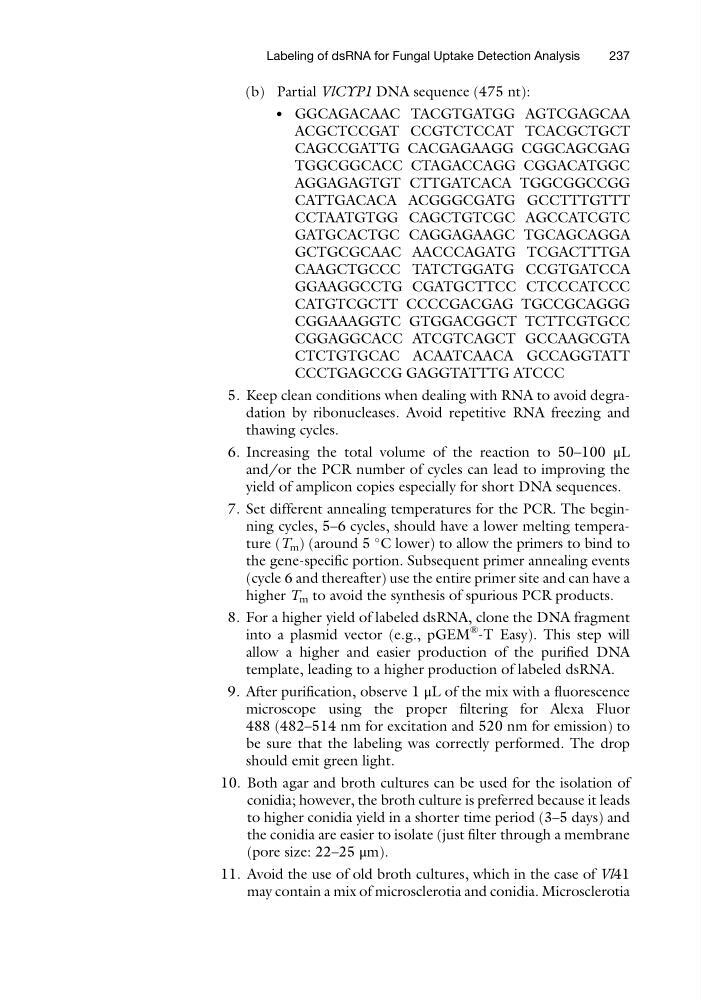
(b) Partial VlCYP1 DNA sequence (475 nt):
l
GGCAGACAAC TACGTGATGG AGTCGAGCAA
ACGCTCCGAT CCGTCTCCAT TCACGCTGCT
CAGCCGATTG CACGAGAAGG CGGCAGCGAG
TGGCGGCACC CTAGACCAGG CGGACATGGC
AGGAGAGTGT CTTGATCACA TGGCGGCCGG
CATTGACACA ACGGGCGATG GCCTTTGTTT
CCTAATGTGG CAGCTGTCGC AGCCATCGTC
GATGCACTGC CAGGAGAAGC TGCAGCAGGA
GCTGCGCAAC AACCCAGATG TCGACTTTGA
CAAGCTGCCC TATCTGGATG CCGTGATCCA
GGAAGGCCTG CGATGCTTCC CTCCCATCCC
CATGTCGCTT CCCCGACGAG TGCCGCAGGG
CGGAAAGGTC GTGGACGGCT TCTTCGTGCC
CGGAGGCACC ATCGTCAGCT GCCAAGCGTA
CTCTGTGCAC ACAATCAACA GCCAGGTATT
CCCTGAGCCG GAGGTATTTG ATCCC
5. Keep clean conditions when dealing with RNA to avoid degradation by ribonucleases. Avoid repetitive RNA freezing and
thawing cycles.
6. Increasing the total volume of the reaction to 50–100 μL
and/or the PCR number of cycles can lead to improving the
yield of amplicon copies especially for short DNA sequences.
7. Set different annealing temperatures for the PCR. The beginning cycles, 5–6 cycles, should have a lower melting temperature (T m ) (around 5
C lower) to allow the primers to bind to
the gene-specific portion. Subsequent primer annealing events
(cycle 6 and thereafter) use the entire primer site and can have a
higher T m to avoid the synthesis of spurious PCR products.
8. For a higher yield of labeled dsRNA, clone the DNA fragment
into a plasmid vector (e.g., pGEM
®
-T Easy). This step will
allow a higher and easier production of the purified DNA
template, leading to a higher production of labeled dsRNA.
9. After purification, observe 1 μL of the mix with a fluorescence
microscope using the proper filtering for Alexa Fluor
488 (482–514 nm for excitation and 520 nm for emission) to
be sure that the labeling was correctly performed. The drop
should emit green light.
10. Both agar and broth cultures can be used for the isolation of
conidia; however, the broth culture is preferred because it leads
to higher conidia yield in a shorter time period (3–5 days) and
the conidia are easier to isolate (just filter through a membrane
(pore size: 22–25 μm).
11. Avoid the use of old broth cultures, which in the case of Vl41
may contain a mix of microsclerotia and conidia. Microsclerotia
Labeling of dsRNA for Fungal Uptake Detection Analysis
237
l
GGCAGACAAC TACGTGATGG AGTCGAGCAA
ACGCTCCGAT CCGTCTCCAT TCACGCTGCT
CAGCCGATTG CACGAGAAGG CGGCAGCGAG
TGGCGGCACC CTAGACCAGG CGGACATGGC
AGGAGAGTGT CTTGATCACA TGGCGGCCGG
CATTGACACA ACGGGCGATG GCCTTTGTTT
CCTAATGTGG CAGCTGTCGC AGCCATCGTC
GATGCACTGC CAGGAGAAGC TGCAGCAGGA
GCTGCGCAAC AACCCAGATG TCGACTTTGA
CAAGCTGCCC TATCTGGATG CCGTGATCCA
GGAAGGCCTG CGATGCTTCC CTCCCATCCC
CATGTCGCTT CCCCGACGAG TGCCGCAGGG
CGGAAAGGTC GTGGACGGCT TCTTCGTGCC
CGGAGGCACC ATCGTCAGCT GCCAAGCGTA
CTCTGTGCAC ACAATCAACA GCCAGGTATT
CCCTGAGCCG GAGGTATTTG ATCCC
5. Keep clean conditions when dealing with RNA to avoid degradation by ribonucleases. Avoid repetitive RNA freezing and
thawing cycles.
6. Increasing the total volume of the reaction to 50–100 μL
and/or the PCR number of cycles can lead to improving the
yield of amplicon copies especially for short DNA sequences.
7. Set different annealing temperatures for the PCR. The beginning cycles, 5–6 cycles, should have a lower melting temperature (T m ) (around 5
C lower) to allow the primers to bind to
the gene-specific portion. Subsequent primer annealing events
(cycle 6 and thereafter) use the entire primer site and can have a
higher T m to avoid the synthesis of spurious PCR products.
8. For a higher yield of labeled dsRNA, clone the DNA fragment
into a plasmid vector (e.g., pGEM
®
-T Easy). This step will
allow a higher and easier production of the purified DNA
template, leading to a higher production of labeled dsRNA.
9. After purification, observe 1 μL of the mix with a fluorescence
microscope using the proper filtering for Alexa Fluor
488 (482–514 nm for excitation and 520 nm for emission) to
be sure that the labeling was correctly performed. The drop
should emit green light.
10. Both agar and broth cultures can be used for the isolation of
conidia; however, the broth culture is preferred because it leads
to higher conidia yield in a shorter time period (3–5 days) and
the conidia are easier to isolate (just filter through a membrane
(pore size: 22–25 μm).
11. Avoid the use of old broth cultures, which in the case of Vl41
may contain a mix of microsclerotia and conidia. Microsclerotia
Labeling of dsRNA for Fungal Uptake Detection Analysis
237