

2
K. Miller
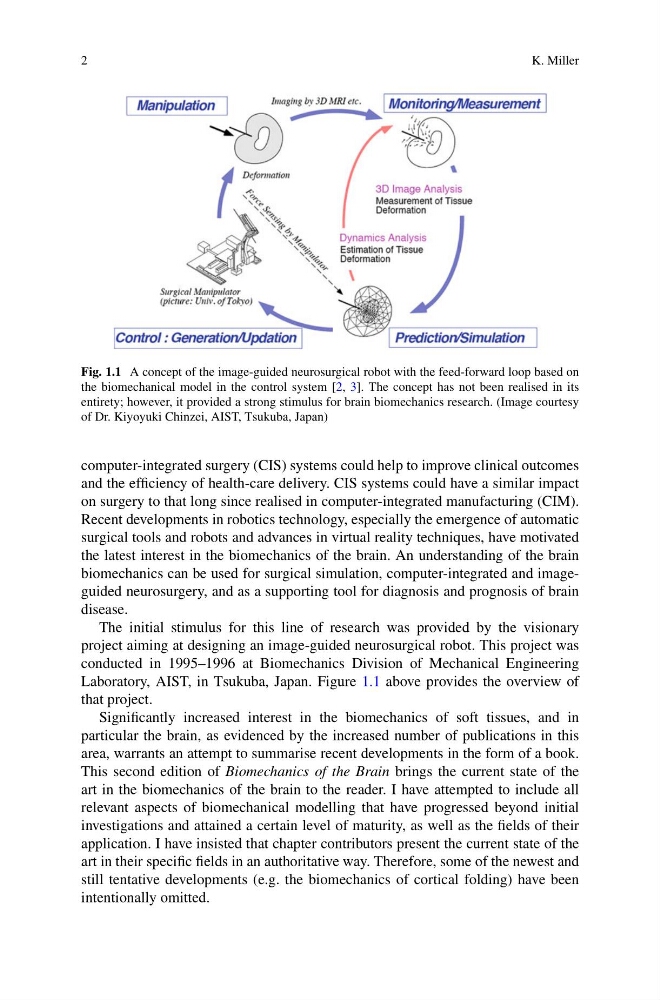
Fig. 1.1 A concept of the image-guided neurosurgical robot with the feed-forward loop based on
the biomechanical model in the control system [2, 3]. The concept has not been realised in its
entirety; however, it provided a strong stimulus for brain biomechanics research. (Image courtesy
of Dr. Kiyoyuki Chinzei, AIST, Tsukuba, Japan)
computer-integrated surgery (CIS) systems could help to improve clinical outcomes
and the efficiency of health-care delivery. CIS systems could have a similar impact
on surgery to that long since realised in computer-integrated manufacturing (CIM).
Recent developments in robotics technology, especially the emergence of automatic
surgical tools and robots and advances in virtual reality techniques, have motivated
the latest interest in the biomechanics of the brain. An understanding of the brain
biomechanics can be used for surgical simulation, computer-integrated and imageguided neurosurgery, and as a supporting tool for diagnosis and prognosis of brain
disease.
The initial stimulus for this line of research was provided by the visionary
project aiming at designing an image-guided neurosurgical robot. This project was
conducted in 1995–1996 at Biomechanics Division of Mechanical Engineering
Laboratory, AIST, in Tsukuba, Japan. Figure 1.1 above provides the overview of
that project.
Significantly increased interest in the biomechanics of soft tissues, and in
particular the brain, as evidenced by the increased number of publications in this
area, warrants an attempt to summarise recent developments in the form of a book.
This second edition of Biomechanics of the Brain brings the current state of the
art in the biomechanics of the brain to the reader. I have attempted to include all
relevant aspects of biomechanical modelling that have progressed beyond initial
investigations and attained a certain level of maturity, as well as the fields of their
application. I have insisted that chapter contributors present the current state of the
art in their specific fields in an authoritative way. Therefore, some of the newest and
still tentative developments (e.g. the biomechanics of cortical folding) have been
intentionally omitted.
K. Miller
Fig. 1.1 A concept of the image-guided neurosurgical robot with the feed-forward loop based on
the biomechanical model in the control system [2, 3]. The concept has not been realised in its
entirety; however, it provided a strong stimulus for brain biomechanics research. (Image courtesy
of Dr. Kiyoyuki Chinzei, AIST, Tsukuba, Japan)
computer-integrated surgery (CIS) systems could help to improve clinical outcomes
and the efficiency of health-care delivery. CIS systems could have a similar impact
on surgery to that long since realised in computer-integrated manufacturing (CIM).
Recent developments in robotics technology, especially the emergence of automatic
surgical tools and robots and advances in virtual reality techniques, have motivated
the latest interest in the biomechanics of the brain. An understanding of the brain
biomechanics can be used for surgical simulation, computer-integrated and imageguided neurosurgery, and as a supporting tool for diagnosis and prognosis of brain
disease.
The initial stimulus for this line of research was provided by the visionary
project aiming at designing an image-guided neurosurgical robot. This project was
conducted in 1995–1996 at Biomechanics Division of Mechanical Engineering
Laboratory, AIST, in Tsukuba, Japan. Figure 1.1 above provides the overview of
that project.
Significantly increased interest in the biomechanics of soft tissues, and in
particular the brain, as evidenced by the increased number of publications in this
area, warrants an attempt to summarise recent developments in the form of a book.
This second edition of Biomechanics of the Brain brings the current state of the
art in the biomechanics of the brain to the reader. I have attempted to include all
relevant aspects of biomechanical modelling that have progressed beyond initial
investigations and attained a certain level of maturity, as well as the fields of their
application. I have insisted that chapter contributors present the current state of the
art in their specific fields in an authoritative way. Therefore, some of the newest and
still tentative developments (e.g. the biomechanics of cortical folding) have been
intentionally omitted.