

211
and electronic devices in mobile phones, laptops, toys, cordless phones, personal
computers, etc. The batteries are to be disassembled and recycled in a specific manner. Spent batteries are the secondary source of metals with high concentration levels. Metals such as cobalt and nickel are found in lesser amounts in nickel-cadmium,
nickel-metal hydride, and lithium-ion batteries. Safe disposal includes landfills, stabilization, incineration and other recycling processes. Incineration of batteries is
found to be expensive, and some toxins like mercury, cadmium, and dioxin are
emitted during the incineration. Two main steps are involved in recycling, and they
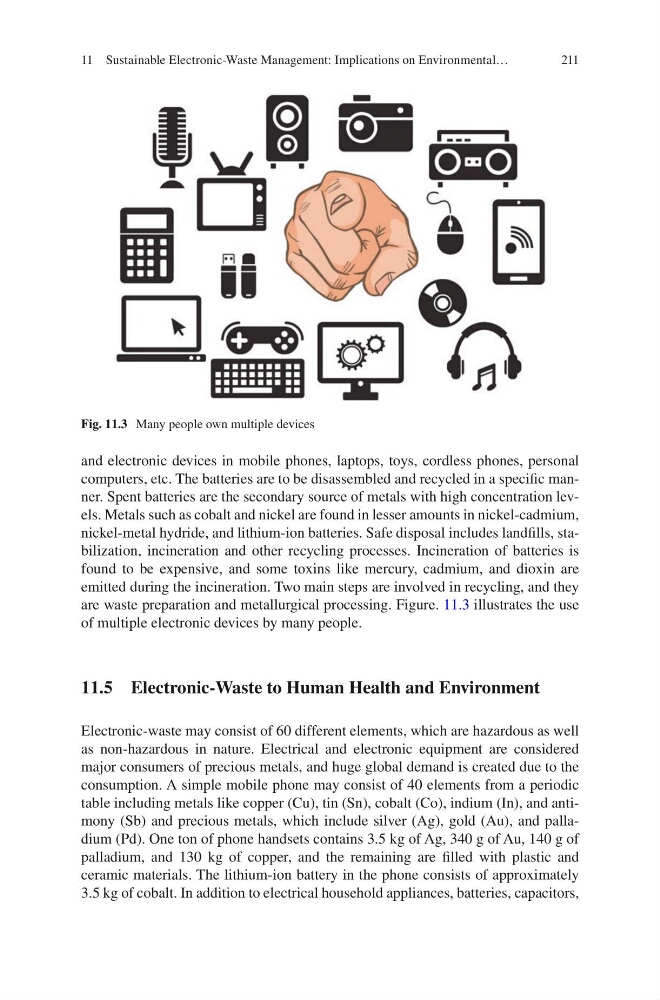
are waste preparation and metallurgical processing. Figure. 11.3 illustrates the use
of multiple electronic devices by many people.
11.5 Electronic-Waste to Human Health and Environment
Electronic-waste may consist of 60 different elements, which are hazardous as well
as non-hazardous in nature. Electrical and electronic equipment are considered
major consumers of precious metals, and huge global demand is created due to the
consumption. A simple mobile phone may consist of 40 elements from a periodic
table including metals like copper (Cu), tin (Sn), cobalt (Co), indium (In), and antimony (Sb) and precious metals, which include silver (Ag), gold (Au), and palladium (Pd). One ton of phone handsets contains 3.5 kg of Ag, 340 g of Au, 140 g of
palladium, and 130 kg of copper, and the remaining are filled with plastic and
ceramic materials. The lithium-ion battery in the phone consists of approximately
3.5 kg of cobalt. In addition to electrical household appliances, batteries, capacitors,
Fig. 11.3 Many people own multiple devices
11 Sustainable Electronic-Waste Management: Implications on Environmental…
and electronic devices in mobile phones, laptops, toys, cordless phones, personal
computers, etc. The batteries are to be disassembled and recycled in a specific manner. Spent batteries are the secondary source of metals with high concentration levels. Metals such as cobalt and nickel are found in lesser amounts in nickel-cadmium,
nickel-metal hydride, and lithium-ion batteries. Safe disposal includes landfills, stabilization, incineration and other recycling processes. Incineration of batteries is
found to be expensive, and some toxins like mercury, cadmium, and dioxin are
emitted during the incineration. Two main steps are involved in recycling, and they
are waste preparation and metallurgical processing. Figure. 11.3 illustrates the use
of multiple electronic devices by many people.
11.5 Electronic-Waste to Human Health and Environment
Electronic-waste may consist of 60 different elements, which are hazardous as well
as non-hazardous in nature. Electrical and electronic equipment are considered
major consumers of precious metals, and huge global demand is created due to the
consumption. A simple mobile phone may consist of 40 elements from a periodic
table including metals like copper (Cu), tin (Sn), cobalt (Co), indium (In), and antimony (Sb) and precious metals, which include silver (Ag), gold (Au), and palladium (Pd). One ton of phone handsets contains 3.5 kg of Ag, 340 g of Au, 140 g of
palladium, and 130 kg of copper, and the remaining are filled with plastic and
ceramic materials. The lithium-ion battery in the phone consists of approximately
3.5 kg of cobalt. In addition to electrical household appliances, batteries, capacitors,
Fig. 11.3 Many people own multiple devices
11 Sustainable Electronic-Waste Management: Implications on Environmental…