

190
environmental awareness (UNEP 2015). A study carried out by the USEPA revealed
that it is ten times cheaper to export E-waste to Asia than process it in the USA
(Lundgren Lundgreen 2012).
The management and fate of E-waste are approached differently in developing
and developed nations. In numerous cases, the main approach to dispose of E-waste
is the straightforward dumping in common landfills. The potential environmental
hazards caused by E-waste include the contamination of soil and water bodies due
to the increased mobility of metals and organic compounds in landfills, even after
these are closed (Tansel 2017).
The exact dimension of the illegal E-waste trade worldwide is not known (UNEP
2015). As a rule, E-waste flows to historically disempowered, low-income populations. According to the UNEP (2015), recycling of E-waste is a flourishing business
in several parts of the world but mainly in Southeast Asia, India, and Pakistan.
More specifically in West Africa, the main importers of E-waste are Ghana, Nigeria,
and Benin.
For Lundgreen (2012), the main substances that may be released during the
recovery and recycling of E-waste fall within three main groups: (i) original components of the equipment (lead and mercury), (ii) substances that may be added during
recovery processes (cyanide), and (iii) substances that may form during recycling
(dioxins, which may be released during the burning of plastics in computer housings and cables). If E-waste management is not carried out properly, such substances
may pose significant hazards to the environment and human health. Lundgreen
(2012) claims that toxic substances may also be released during informal E-waste
recycling processes, including leaching, physical disassembly (which generates
particulate material and effluents, some of which may contain cyanide), burning
(which generates ash), and heating (which releases mercury during desoldering).
Risks to human health include difficulty to breathe, respiratory irritation, cough,
asphyxia, pneumonitis, tremors, neurological problems, convulsion, coma, and
even death (Yu et al. 2006).
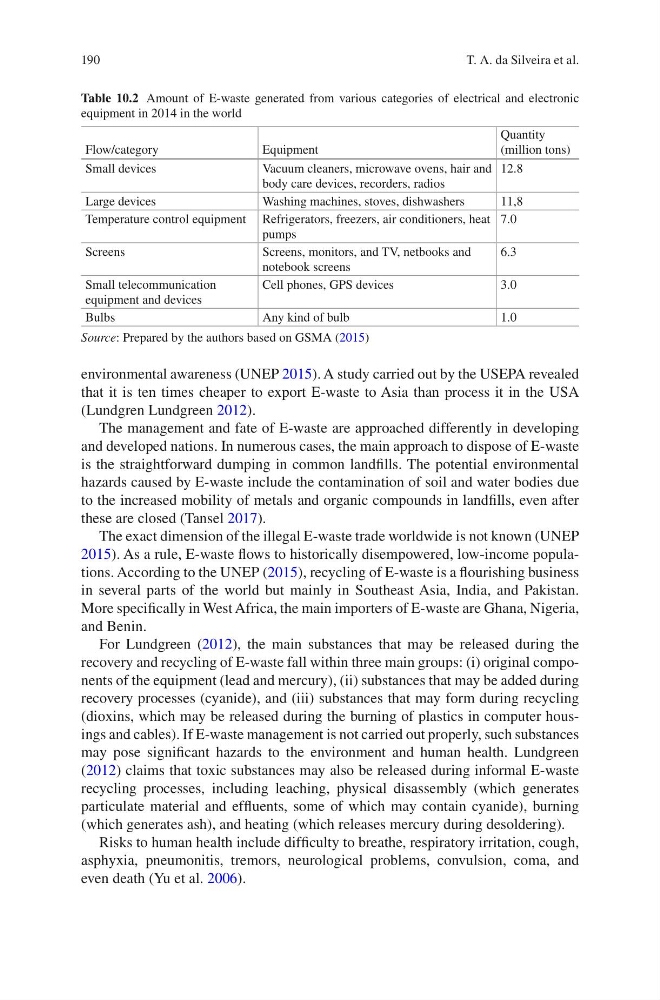
Table 10.2 Amount of E-waste generated from various categories of electrical and electronic
equipment in 2014 in the world
Flow/category
Equipment
Quantity
(million tons)
Small devices
Vacuum cleaners, microwave ovens, hair and
body care devices, recorders, radios
12.8
Large devices
Washing machines, stoves, dishwashers
11,8
Temperature control equipment Refrigerators, freezers, air conditioners, heat
pumps
7.0
Screens
Screens, monitors, and TV, netbooks and
notebook screens
6.3
Small telecommunication
equipment and devices
Cell phones, GPS devices
3.0
Bulbs
Any kind of bulb
1.0
Source: Prepared by the authors based on GSMA (2015)
T. A. da Silveira et al.
environmental awareness (UNEP 2015). A study carried out by the USEPA revealed
that it is ten times cheaper to export E-waste to Asia than process it in the USA
(Lundgren Lundgreen 2012).
The management and fate of E-waste are approached differently in developing
and developed nations. In numerous cases, the main approach to dispose of E-waste
is the straightforward dumping in common landfills. The potential environmental
hazards caused by E-waste include the contamination of soil and water bodies due
to the increased mobility of metals and organic compounds in landfills, even after
these are closed (Tansel 2017).
The exact dimension of the illegal E-waste trade worldwide is not known (UNEP
2015). As a rule, E-waste flows to historically disempowered, low-income populations. According to the UNEP (2015), recycling of E-waste is a flourishing business
in several parts of the world but mainly in Southeast Asia, India, and Pakistan.
More specifically in West Africa, the main importers of E-waste are Ghana, Nigeria,
and Benin.
For Lundgreen (2012), the main substances that may be released during the
recovery and recycling of E-waste fall within three main groups: (i) original components of the equipment (lead and mercury), (ii) substances that may be added during
recovery processes (cyanide), and (iii) substances that may form during recycling
(dioxins, which may be released during the burning of plastics in computer housings and cables). If E-waste management is not carried out properly, such substances
may pose significant hazards to the environment and human health. Lundgreen
(2012) claims that toxic substances may also be released during informal E-waste
recycling processes, including leaching, physical disassembly (which generates
particulate material and effluents, some of which may contain cyanide), burning
(which generates ash), and heating (which releases mercury during desoldering).
Risks to human health include difficulty to breathe, respiratory irritation, cough,
asphyxia, pneumonitis, tremors, neurological problems, convulsion, coma, and
even death (Yu et al. 2006).
Table 10.2 Amount of E-waste generated from various categories of electrical and electronic
equipment in 2014 in the world
Flow/category
Equipment
Quantity
(million tons)
Small devices
Vacuum cleaners, microwave ovens, hair and
body care devices, recorders, radios
12.8
Large devices
Washing machines, stoves, dishwashers
11,8
Temperature control equipment Refrigerators, freezers, air conditioners, heat
pumps
7.0
Screens
Screens, monitors, and TV, netbooks and
notebook screens
6.3
Small telecommunication
equipment and devices
Cell phones, GPS devices
3.0
Bulbs
Any kind of bulb
1.0
Source: Prepared by the authors based on GSMA (2015)
T. A. da Silveira et al.