

129
WEEE for compliance with the collection requirements and for the achievement of
the recycling and recovery targets. Therefore, taking this idea as our starting point,
the objective of this study is to analyze the performance of the European framework
for WEEE management across different European Union countries, a subject yet to
be examined in depth as we will see in the following paragraphs.
To date, since environmental concerns about WEEE first emerged, many researchers
have investigated the situation of WEEE management from different points of view and
contexts.
3
Indeed, we can find a large body of literature covering different areas such as
consumer behavior toward WEEE (e.g., Saphores et al. 2006; Chi et al. 2014; Colesca
et al. 2014; Wang et al. 2016; Borthakur and Govind 2017; Pérez-Belis et al. 2017),
producers’ positions toward legislative requirements (e.g., Stevels et al. 1999; Goosey
2004; Yu et al. 2006), the environmental and human health impacts of end-of-life WEEE
(e.g., Wang and Guo 2006; Barba-Gutiérrez et al. 2008; Robinson 2009; Wäger et al.
2011; Kiddee et al. 2013), or the economic and environmental feasibility of recycling
and reuse (e.g., Truttmann and Rechberger 2006; Gregory and Kirchain 2008;
Kiatkittipong et al. 2008; Liu et al. 2009; Achillas et al. 2013; Cucchiella et al. 2015).
Moreover, other studies focused on the different management practices for treating WEEE (e.g., Townsend 2011; Kiddee et al. 2013; Shumon et al. 2014) or the
legislation and regulation management systems in each country (e.g., Ongondo et al.
2011; Khetriwal et al. 2011; Zeng et al. 2013; Li et al. 2013) and its effective application (e.g., De Oliveira et al. 2012; Torretta et al. 2013; Popescu 2014; Ylä- Mella et al.
2014). However, to the best of our knowledge, the quantitative comparison of the
effective management of WEEE of different countries according to the targets set by
environmental regulations has not been measured before.
3 See Pérez-Belis et al. (2015) for a comprehensive literature review on the main areas of research
on WEEE, including studies published between 1992 and August 2014.
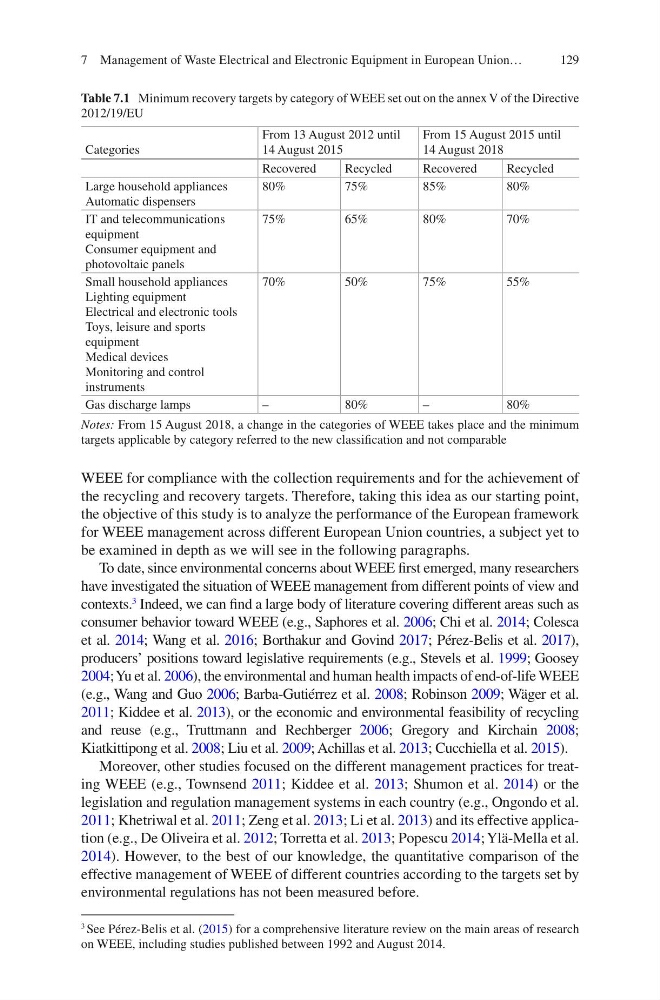
Table 7.1 Minimum recovery targets by category of WEEE set out on the annex V of the Directive
2012/19/EU
Categories
From 13 August 2012 until
14 August 2015
From 15 August 2015 until
14 August 2018
Recovered
Recycled
Recovered
Recycled
Large household appliances
Automatic dispensers
80%
75%
85%
80%
IT and telecommunications
equipment
Consumer equipment and
photovoltaic panels
75%
65%
80%
70%
Small household appliances
Lighting equipment
Electrical and electronic tools
Toys, leisure and sports
equipment
Medical devices
Monitoring and control
instruments
70%
50%
75%
55%
Gas discharge lamps
–
80%
–
80%
Notes: From 15 August 2018, a change in the categories of WEEE takes place and the minimum
targets applicable by category referred to the new classification and not comparable
7 Management of Waste Electrical and Electronic Equipment in European Union…
WEEE for compliance with the collection requirements and for the achievement of
the recycling and recovery targets. Therefore, taking this idea as our starting point,
the objective of this study is to analyze the performance of the European framework
for WEEE management across different European Union countries, a subject yet to
be examined in depth as we will see in the following paragraphs.
To date, since environmental concerns about WEEE first emerged, many researchers
have investigated the situation of WEEE management from different points of view and
contexts.
3
Indeed, we can find a large body of literature covering different areas such as
consumer behavior toward WEEE (e.g., Saphores et al. 2006; Chi et al. 2014; Colesca
et al. 2014; Wang et al. 2016; Borthakur and Govind 2017; Pérez-Belis et al. 2017),
producers’ positions toward legislative requirements (e.g., Stevels et al. 1999; Goosey
2004; Yu et al. 2006), the environmental and human health impacts of end-of-life WEEE
(e.g., Wang and Guo 2006; Barba-Gutiérrez et al. 2008; Robinson 2009; Wäger et al.
2011; Kiddee et al. 2013), or the economic and environmental feasibility of recycling
and reuse (e.g., Truttmann and Rechberger 2006; Gregory and Kirchain 2008;
Kiatkittipong et al. 2008; Liu et al. 2009; Achillas et al. 2013; Cucchiella et al. 2015).
Moreover, other studies focused on the different management practices for treating WEEE (e.g., Townsend 2011; Kiddee et al. 2013; Shumon et al. 2014) or the
legislation and regulation management systems in each country (e.g., Ongondo et al.
2011; Khetriwal et al. 2011; Zeng et al. 2013; Li et al. 2013) and its effective application (e.g., De Oliveira et al. 2012; Torretta et al. 2013; Popescu 2014; Ylä- Mella et al.
2014). However, to the best of our knowledge, the quantitative comparison of the
effective management of WEEE of different countries according to the targets set by
environmental regulations has not been measured before.
3 See Pérez-Belis et al. (2015) for a comprehensive literature review on the main areas of research
on WEEE, including studies published between 1992 and August 2014.
Table 7.1 Minimum recovery targets by category of WEEE set out on the annex V of the Directive
2012/19/EU
Categories
From 13 August 2012 until
14 August 2015
From 15 August 2015 until
14 August 2018
Recovered
Recycled
Recovered
Recycled
Large household appliances
Automatic dispensers
80%
75%
85%
80%
IT and telecommunications
equipment
Consumer equipment and
photovoltaic panels
75%
65%
80%
70%
Small household appliances
Lighting equipment
Electrical and electronic tools
Toys, leisure and sports
equipment
Medical devices
Monitoring and control
instruments
70%
50%
75%
55%
Gas discharge lamps
–
80%
–
80%
Notes: From 15 August 2018, a change in the categories of WEEE takes place and the minimum
targets applicable by category referred to the new classification and not comparable
7 Management of Waste Electrical and Electronic Equipment in European Union…