

26
S.-P. Kim
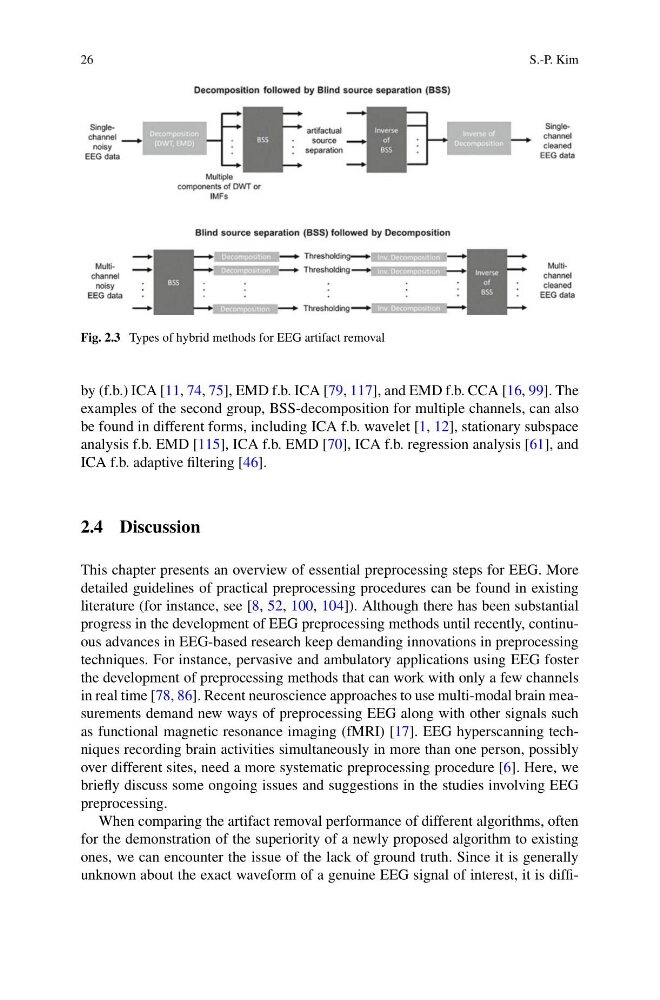
Fig. 2.3 Types of hybrid methods for EEG artifact removal
by (f.b.) ICA [11, 74, 75], EMD f.b. ICA [79, 117], and EMD f.b. CCA [16, 99]. The
examples of the second group, BSS-decomposition for multiple channels, can also
be found in different forms, including ICA f.b. wavelet [1, 12], stationary subspace
analysis f.b. EMD [115], ICA f.b. EMD [70], ICA f.b. regression analysis [61], and
ICA f.b. adaptive filtering [46].
2.4 Discussion
This chapter presents an overview of essential preprocessing steps for EEG. More
detailed guidelines of practical preprocessing procedures can be found in existing
literature (for instance, see [8, 52, 100, 104]). Although there has been substantial
progress in the development of EEG preprocessing methods until recently, continuous advances in EEG-based research keep demanding innovations in preprocessing
techniques. For instance, pervasive and ambulatory applications using EEG foster
the development of preprocessing methods that can work with only a few channels
in real time [78, 86]. Recent neuroscience approaches to use multi-modal brain measurements demand new ways of preprocessing EEG along with other signals such
as functional magnetic resonance imaging (fMRI) [17]. EEG hyperscanning techniques recording brain activities simultaneously in more than one person, possibly
over different sites, need a more systematic preprocessing procedure [6]. Here, we
briefly discuss some ongoing issues and suggestions in the studies involving EEG
preprocessing.
When comparing the artifact removal performance of different algorithms, often
for the demonstration of the superiority of a newly proposed algorithm to existing
ones, we can encounter the issue of the lack of ground truth. Since it is generally
unknown about the exact waveform of a genuine EEG signal of interest, it is diffi-
S.-P. Kim
Fig. 2.3 Types of hybrid methods for EEG artifact removal
by (f.b.) ICA [11, 74, 75], EMD f.b. ICA [79, 117], and EMD f.b. CCA [16, 99]. The
examples of the second group, BSS-decomposition for multiple channels, can also
be found in different forms, including ICA f.b. wavelet [1, 12], stationary subspace
analysis f.b. EMD [115], ICA f.b. EMD [70], ICA f.b. regression analysis [61], and
ICA f.b. adaptive filtering [46].
2.4 Discussion
This chapter presents an overview of essential preprocessing steps for EEG. More
detailed guidelines of practical preprocessing procedures can be found in existing
literature (for instance, see [8, 52, 100, 104]). Although there has been substantial
progress in the development of EEG preprocessing methods until recently, continuous advances in EEG-based research keep demanding innovations in preprocessing
techniques. For instance, pervasive and ambulatory applications using EEG foster
the development of preprocessing methods that can work with only a few channels
in real time [78, 86]. Recent neuroscience approaches to use multi-modal brain measurements demand new ways of preprocessing EEG along with other signals such
as functional magnetic resonance imaging (fMRI) [17]. EEG hyperscanning techniques recording brain activities simultaneously in more than one person, possibly
over different sites, need a more systematic preprocessing procedure [6]. Here, we
briefly discuss some ongoing issues and suggestions in the studies involving EEG
preprocessing.
When comparing the artifact removal performance of different algorithms, often
for the demonstration of the superiority of a newly proposed algorithm to existing
ones, we can encounter the issue of the lack of ground truth. Since it is generally
unknown about the exact waveform of a genuine EEG signal of interest, it is diffi-