

7 Computational EEG Analysis for the Diagnosis of Psychiatric …
161
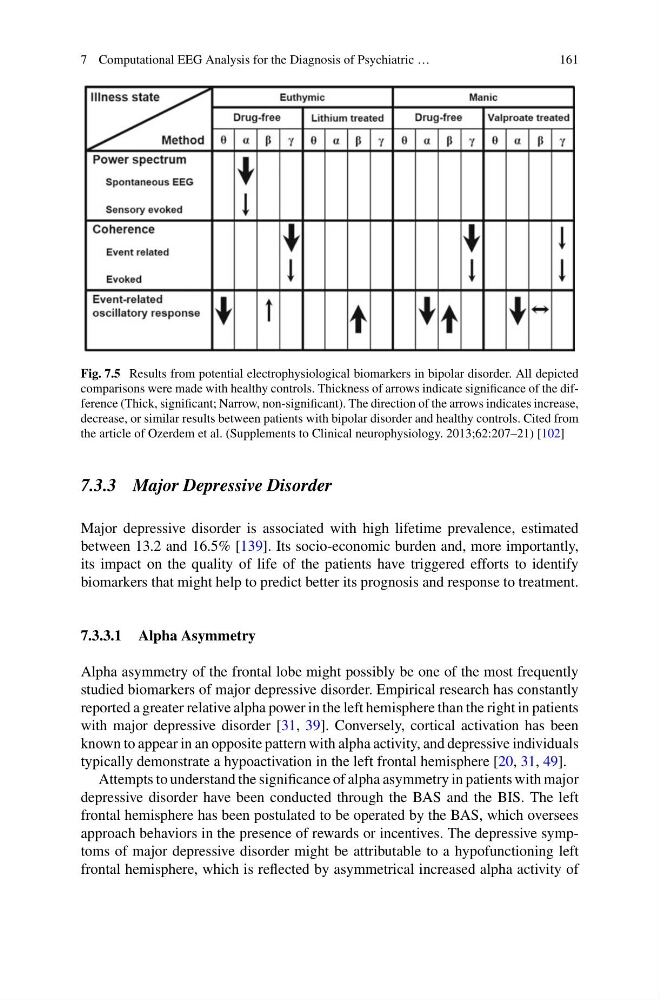
Fig. 7.5 Results from potential electrophysiological biomarkers in bipolar disorder. All depicted
comparisons were made with healthy controls. Thickness of arrows indicate significance of the difference (Thick, significant; Narrow, non-significant). The direction of the arrows indicates increase,
decrease, or similar results between patients with bipolar disorder and healthy controls. Cited from
the article of Ozerdem et al. (Supplements to Clinical neurophysiology. 2013;62:207–21) [102]
7.3.3 Major Depressive Disorder
Major depressive disorder is associated with high lifetime prevalence, estimated
between 13.2 and 16.5% [139]. Its socio-economic burden and, more importantly,
its impact on the quality of life of the patients have triggered efforts to identify
biomarkers that might help to predict better its prognosis and response to treatment.
7.3.3.1 Alpha Asymmetry
Alpha asymmetry of the frontal lobe might possibly be one of the most frequently
studied biomarkers of major depressive disorder. Empirical research has constantly
reported a greater relative alpha power in the left hemisphere than the right in patients
with major depressive disorder [31, 39]. Conversely, cortical activation has been
known to appear in an opposite pattern with alpha activity, and depressive individuals
typically demonstrate a hypoactivation in the left frontal hemisphere [20, 31, 49].
Attempts to understand the significance of alpha asymmetry in patients with major
depressive disorder have been conducted through the BAS and the BIS. The left
frontal hemisphere has been postulated to be operated by the BAS, which oversees
approach behaviors in the presence of rewards or incentives. The depressive symptoms of major depressive disorder might be attributable to a hypofunctioning left
frontal hemisphere, which is reflected by asymmetrical increased alpha activity of
161
Fig. 7.5 Results from potential electrophysiological biomarkers in bipolar disorder. All depicted
comparisons were made with healthy controls. Thickness of arrows indicate significance of the difference (Thick, significant; Narrow, non-significant). The direction of the arrows indicates increase,
decrease, or similar results between patients with bipolar disorder and healthy controls. Cited from
the article of Ozerdem et al. (Supplements to Clinical neurophysiology. 2013;62:207–21) [102]
7.3.3 Major Depressive Disorder
Major depressive disorder is associated with high lifetime prevalence, estimated
between 13.2 and 16.5% [139]. Its socio-economic burden and, more importantly,
its impact on the quality of life of the patients have triggered efforts to identify
biomarkers that might help to predict better its prognosis and response to treatment.
7.3.3.1 Alpha Asymmetry
Alpha asymmetry of the frontal lobe might possibly be one of the most frequently
studied biomarkers of major depressive disorder. Empirical research has constantly
reported a greater relative alpha power in the left hemisphere than the right in patients
with major depressive disorder [31, 39]. Conversely, cortical activation has been
known to appear in an opposite pattern with alpha activity, and depressive individuals
typically demonstrate a hypoactivation in the left frontal hemisphere [20, 31, 49].
Attempts to understand the significance of alpha asymmetry in patients with major
depressive disorder have been conducted through the BAS and the BIS. The left
frontal hemisphere has been postulated to be operated by the BAS, which oversees
approach behaviors in the presence of rewards or incentives. The depressive symptoms of major depressive disorder might be attributable to a hypofunctioning left
frontal hemisphere, which is reflected by asymmetrical increased alpha activity of