

136
J. W. Choi and K. H. Kim
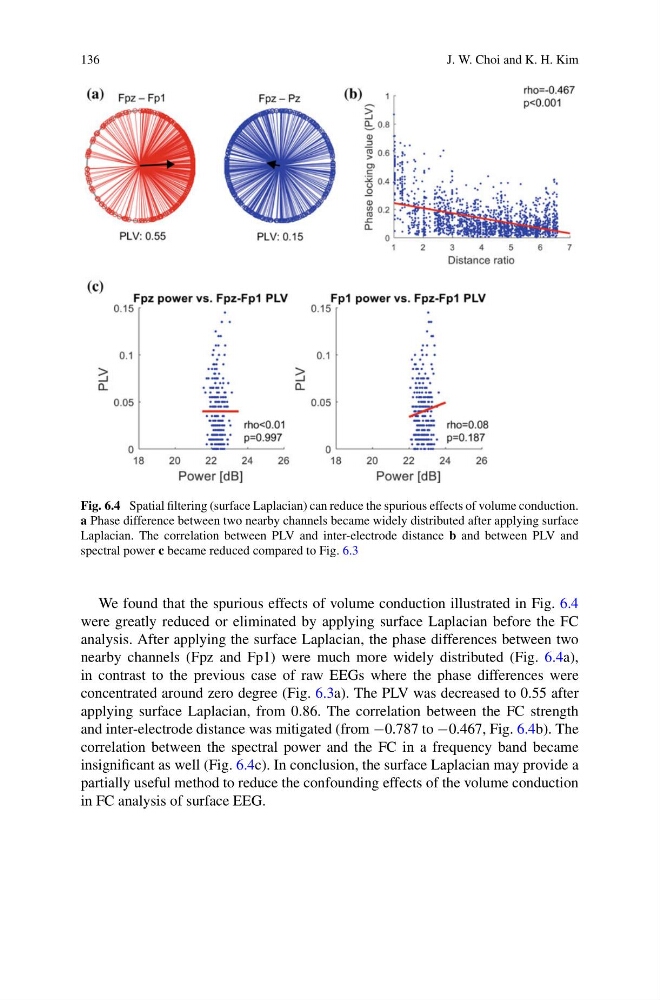
Fig. 6.4 Spatial filtering (surface Laplacian) can reduce the spurious effects of volume conduction.
a Phase difference between two nearby channels became widely distributed after applying surface
Laplacian. The correlation between PLV and inter-electrode distance b and between PLV and
spectral power c became reduced compared to Fig. 6.3
We found that the spurious effects of volume conduction illustrated in Fig. 6.4
were greatly reduced or eliminated by applying surface Laplacian before the FC
analysis. After applying the surface Laplacian, the phase differences between two
nearby channels (Fpz and Fp1) were much more widely distributed (Fig. 6.4a),
in contrast to the previous case of raw EEGs where the phase differences were
concentrated around zero degree (Fig. 6.3a). The PLV was decreased to 0.55 after
applying surface Laplacian, from 0.86. The correlation between the FC strength
and inter-electrode distance was mitigated (from −0.787 to −0.467, Fig. 6.4b). The
correlation between the spectral power and the FC in a frequency band became
insignificant as well (Fig. 6.4c). In conclusion, the surface Laplacian may provide a
partially useful method to reduce the confounding effects of the volume conduction
in FC analysis of surface EEG.
J. W. Choi and K. H. Kim
Fig. 6.4 Spatial filtering (surface Laplacian) can reduce the spurious effects of volume conduction.
a Phase difference between two nearby channels became widely distributed after applying surface
Laplacian. The correlation between PLV and inter-electrode distance b and between PLV and
spectral power c became reduced compared to Fig. 6.3
We found that the spurious effects of volume conduction illustrated in Fig. 6.4
were greatly reduced or eliminated by applying surface Laplacian before the FC
analysis. After applying the surface Laplacian, the phase differences between two
nearby channels (Fpz and Fp1) were much more widely distributed (Fig. 6.4a),
in contrast to the previous case of raw EEGs where the phase differences were
concentrated around zero degree (Fig. 6.3a). The PLV was decreased to 0.55 after
applying surface Laplacian, from 0.86. The correlation between the FC strength
and inter-electrode distance was mitigated (from −0.787 to −0.467, Fig. 6.4b). The
correlation between the spectral power and the FC in a frequency band became
insignificant as well (Fig. 6.4c). In conclusion, the surface Laplacian may provide a
partially useful method to reduce the confounding effects of the volume conduction
in FC analysis of surface EEG.