

Chen et al. [131] reported, through in vivo radiostability tests, that chelator-free
89 Zr binding to non-porous SiNPs was weak and the isotope detached from the NPs
within a day of intravenous administration, with images showing relatively high
accumulation in the bones (“free”
89 Zr is an osteophile). Interestingly, in the same
paper, the authors demonstrated that MSNs, since the mesochannels protected the
isotope from transmetallation by intrinsic protein chelators in the body, could be a
more reliable platform for radiolabeling oxophilic radiometals when compared to
dense SiNPs [131]. The same group synthesized CD105-targeted, dendritic,
biodegradable mesoporous silica NPs (bMSNs) with hierarchically organized,
spoke-like porous network, that could self-degrade over time [21]. Intrinsic
89 Zr
labeling demonstrated excellent yields (%94.7% and 98.6% for CD105-targeted and
non-targeted MSNs, respectively). In vivo biodistribution studies in mice with 4T1
xenografts showed a quick accumulation of the the NPs in the targeted group, with
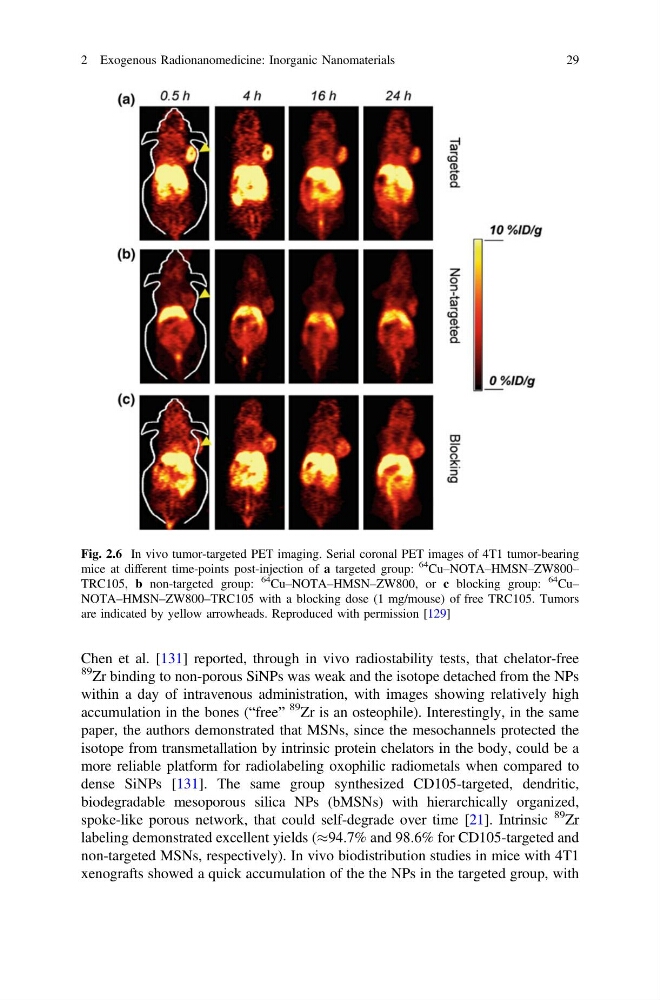
Fig. 2.6 In vivo tumor-targeted PET imaging. Serial coronal PET images of 4T1 tumor-bearing
mice at different time-points post-injection of a targeted group:
64 Cu–NOTA–HMSN–ZW800–
TRC105, b non-targeted group:
64
Cu–NOTA–HMSN–ZW800, or c blocking group:
64
Cu–
NOTA–HMSN–ZW800–TRC105 with a blocking dose (1 mg/mouse) of free TRC105. Tumors
are indicated by yellow arrowheads. Reproduced with permission [129]
2 Exogenous Radionanomedicine: Inorganic Nanomaterials
29
89 Zr binding to non-porous SiNPs was weak and the isotope detached from the NPs
within a day of intravenous administration, with images showing relatively high
accumulation in the bones (“free”
89 Zr is an osteophile). Interestingly, in the same
paper, the authors demonstrated that MSNs, since the mesochannels protected the
isotope from transmetallation by intrinsic protein chelators in the body, could be a
more reliable platform for radiolabeling oxophilic radiometals when compared to
dense SiNPs [131]. The same group synthesized CD105-targeted, dendritic,
biodegradable mesoporous silica NPs (bMSNs) with hierarchically organized,
spoke-like porous network, that could self-degrade over time [21]. Intrinsic
89 Zr
labeling demonstrated excellent yields (%94.7% and 98.6% for CD105-targeted and
non-targeted MSNs, respectively). In vivo biodistribution studies in mice with 4T1
xenografts showed a quick accumulation of the the NPs in the targeted group, with
Fig. 2.6 In vivo tumor-targeted PET imaging. Serial coronal PET images of 4T1 tumor-bearing
mice at different time-points post-injection of a targeted group:
64 Cu–NOTA–HMSN–ZW800–
TRC105, b non-targeted group:
64
Cu–NOTA–HMSN–ZW800, or c blocking group:
64
Cu–
NOTA–HMSN–ZW800–TRC105 with a blocking dose (1 mg/mouse) of free TRC105. Tumors
are indicated by yellow arrowheads. Reproduced with permission [129]
2 Exogenous Radionanomedicine: Inorganic Nanomaterials
29