

production of capsule was the most elaborate step and further procedure was just as
simple as mixing, vortexing and separation, which takes advantage of van der
Waals’ force interaction. This physical labeling interestingly stabilized the labeling
even after being administered to the systemic circulation and elimination was via
hepatobiliary tract without detachment of capsules, i.e., as an integral entity [58].
Investigators have tried to understand the immune responses to biologics
especially liposomes and found that the liposome-drug-conjugates could eliminate
IgM-mediated accelerated blood clearance. Oxaloplatin within the liposome
delivered to the spleen, if taken up by the MZMUs or MMMUs, it could abrogate
the antibody-production responses [59]. We expect that therapeutic radioisotopelabeled nanomaterials would mimic this phenomenon because
177 Lu or
90 Y reach
and kill macrophages and might abrogate further generation of innate or adaptive
immunity.
Investigators have tried to predict the biodistribution of biologics especially
therapeutic antibodies using the murine experimental data of pharmacokinetics for
therapeutic antibodies [60, 61]. They first developed allometry-based conversion
equations and found that they worked well in gross terms [60]. However, the
problems of the species differences between mouse and human ranged from differences in mouse/human target receptors, mouse/human antibody affinity for the
target, mouse/human FcRn to yield differences in half-lives of administered therapeutic antibodies [46]. Pharmacokinetics of newly-developed therapeutic
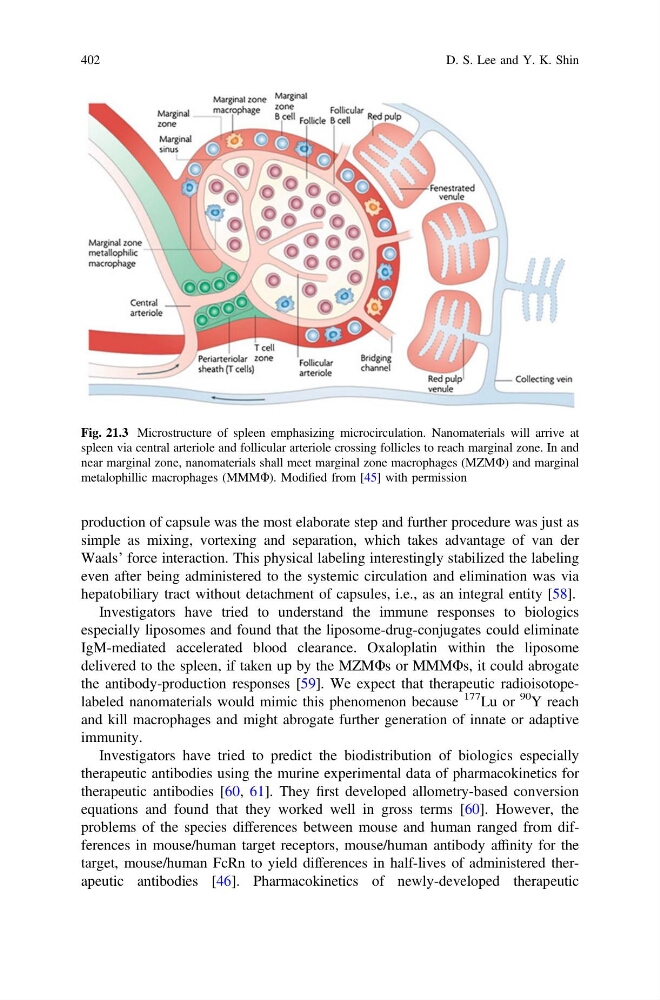
Fig. 21.3 Microstructure of spleen emphasizing microcirculation. Nanomaterials will arrive at
spleen via central arteriole and follicular arteriole crossing follicles to reach marginal zone. In and
near marginal zone, nanomaterials shall meet marginal zone macrophages (MZMU) and marginal
metalophillic macrophages (MMMU). Modified from [45] with permission
402
D. S. Lee and Y. K. Shin
simple as mixing, vortexing and separation, which takes advantage of van der
Waals’ force interaction. This physical labeling interestingly stabilized the labeling
even after being administered to the systemic circulation and elimination was via
hepatobiliary tract without detachment of capsules, i.e., as an integral entity [58].
Investigators have tried to understand the immune responses to biologics
especially liposomes and found that the liposome-drug-conjugates could eliminate
IgM-mediated accelerated blood clearance. Oxaloplatin within the liposome
delivered to the spleen, if taken up by the MZMUs or MMMUs, it could abrogate
the antibody-production responses [59]. We expect that therapeutic radioisotopelabeled nanomaterials would mimic this phenomenon because
177 Lu or
90 Y reach
and kill macrophages and might abrogate further generation of innate or adaptive
immunity.
Investigators have tried to predict the biodistribution of biologics especially
therapeutic antibodies using the murine experimental data of pharmacokinetics for
therapeutic antibodies [60, 61]. They first developed allometry-based conversion
equations and found that they worked well in gross terms [60]. However, the
problems of the species differences between mouse and human ranged from differences in mouse/human target receptors, mouse/human antibody affinity for the
target, mouse/human FcRn to yield differences in half-lives of administered therapeutic antibodies [46]. Pharmacokinetics of newly-developed therapeutic
Fig. 21.3 Microstructure of spleen emphasizing microcirculation. Nanomaterials will arrive at
spleen via central arteriole and follicular arteriole crossing follicles to reach marginal zone. In and
near marginal zone, nanomaterials shall meet marginal zone macrophages (MZMU) and marginal
metalophillic macrophages (MMMU). Modified from [45] with permission
402
D. S. Lee and Y. K. Shin