

Zwitterionic materials, keeping electric neutrality with equivalent positive and
negative charged groups, have been recently challenged for their stealth-inducing
ability [85, 86]. Surface modification of nanocarriers and/or proteins with the
zwitterionic material, poly(carboxybetaine) (PCB), has been acknowledged for
extending the blood circulating characteristics of conjugated material [87]. In
addition, immunological studies on rat proteins conjugated with either PEG or PCB
polymers have emphasized the lack of immunogenicity of PCB-conjugated proteins, as manifested by the absence of anti-PCB IgM and IgG, while, the corresponding anti-PEG immunity were clearly identified [83].
XTEN technology, the conjugation of polypeptide to a protein, has been verified
to extend the circulation half-life of the conjugated product [88]. The polypeptide
used is composed of threonine, serine, proline, glycine, glutamic acid and alanine.
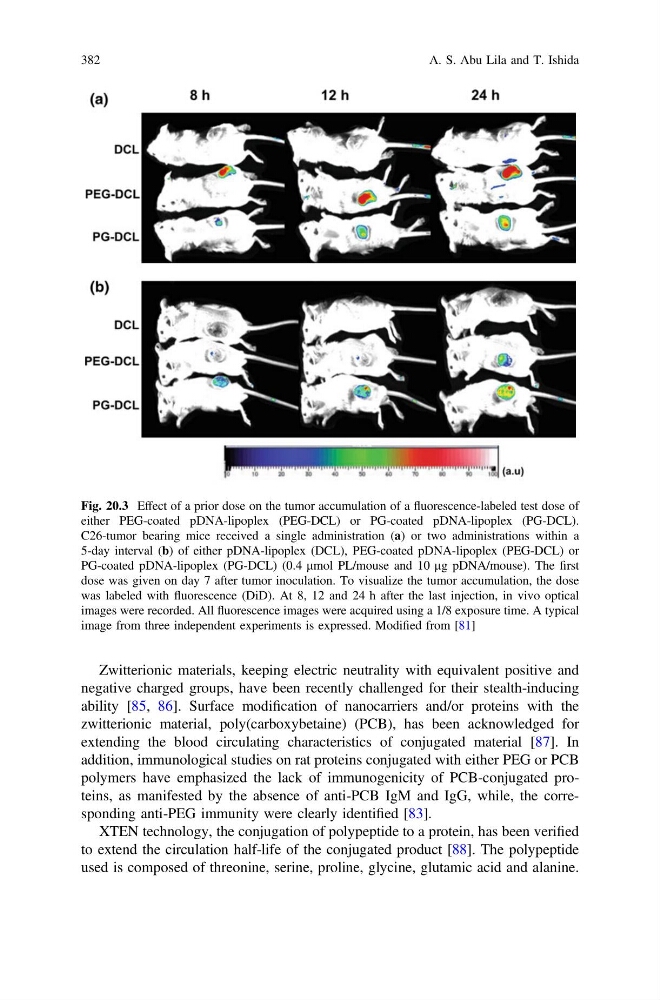
Fig. 20.3 Effect of a prior dose on the tumor accumulation of a fluorescence-labeled test dose of
either PEG-coated pDNA-lipoplex (PEG-DCL) or PG-coated pDNA-lipoplex (PG-DCL).
C26-tumor bearing mice received a single administration (a) or two administrations within a
5-day interval (b) of either pDNA-lipoplex (DCL), PEG-coated pDNA-lipoplex (PEG-DCL) or
PG-coated pDNA-lipoplex (PG-DCL) (0.4 lmol PL/mouse and 10 lg pDNA/mouse). The first
dose was given on day 7 after tumor inoculation. To visualize the tumor accumulation, the dose
was labeled with fluorescence (DiD). At 8, 12 and 24 h after the last injection, in vivo optical
images were recorded. All fluorescence images were acquired using a 1/8 exposure time. A typical
image from three independent experiments is expressed. Modified from [81]
382
A. S. Abu Lila and T. Ishida
negative charged groups, have been recently challenged for their stealth-inducing
ability [85, 86]. Surface modification of nanocarriers and/or proteins with the
zwitterionic material, poly(carboxybetaine) (PCB), has been acknowledged for
extending the blood circulating characteristics of conjugated material [87]. In
addition, immunological studies on rat proteins conjugated with either PEG or PCB
polymers have emphasized the lack of immunogenicity of PCB-conjugated proteins, as manifested by the absence of anti-PCB IgM and IgG, while, the corresponding anti-PEG immunity were clearly identified [83].
XTEN technology, the conjugation of polypeptide to a protein, has been verified
to extend the circulation half-life of the conjugated product [88]. The polypeptide
used is composed of threonine, serine, proline, glycine, glutamic acid and alanine.
Fig. 20.3 Effect of a prior dose on the tumor accumulation of a fluorescence-labeled test dose of
either PEG-coated pDNA-lipoplex (PEG-DCL) or PG-coated pDNA-lipoplex (PG-DCL).
C26-tumor bearing mice received a single administration (a) or two administrations within a
5-day interval (b) of either pDNA-lipoplex (DCL), PEG-coated pDNA-lipoplex (PEG-DCL) or
PG-coated pDNA-lipoplex (PG-DCL) (0.4 lmol PL/mouse and 10 lg pDNA/mouse). The first
dose was given on day 7 after tumor inoculation. To visualize the tumor accumulation, the dose
was labeled with fluorescence (DiD). At 8, 12 and 24 h after the last injection, in vivo optical
images were recorded. All fluorescence images were acquired using a 1/8 exposure time. A typical
image from three independent experiments is expressed. Modified from [81]
382
A. S. Abu Lila and T. Ishida