

compared with the control group, demonstrating the potential of applying this
nanodevice in internal radiotherapy.
Another preferred radionuclide for internal radiotherapy is
177 Lu with a half-life
time of 161 h. Yook et al. [69] reported that administration of 4.5 MBq
177 Lu
labeled gold nanoparticles, which exhibited an excellent tumor uptake (as high as
300–400%ID/g) via intratumorally injection, could successfully arrest the growth of
breast cancer tumor in CD-1 athymic mice for over 90 days, indicating the feasibility of developing
177 Lu labeled nanoparticles into therapeutic reagents for cancer
treatment.
It has been proved by several studies that immune system activation is crucial for
the success of the traditional radiotherapy [70, 71]. Therefore, nanoparticles had
been engineered into immune response modifiers (IRM) as the vehicle for delivering radiation dose, and such strategy could further enhance the therapeutic effect
of the nanoparticle based internal radiation therapy. Vanpouille-Box et al. [72]
reported the application of
188 Re carried nanoparticles in the cancer treatment,
which possessed the strong capability of stimulating the immune response.
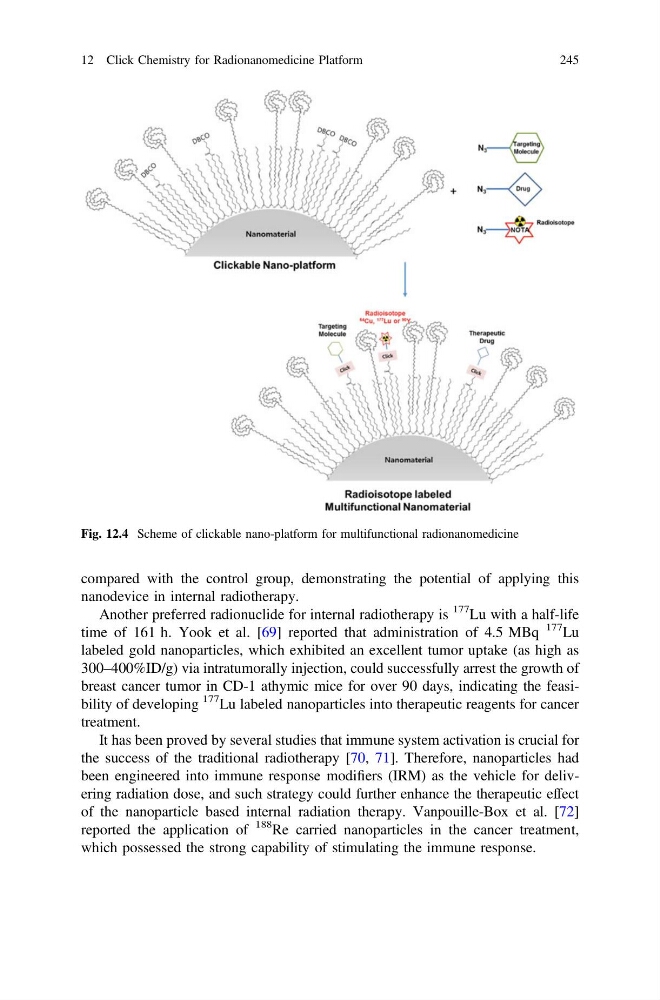
Fig. 12.4 Scheme of clickable nano-platform for multifunctional radionanomedicine
12 Click Chemistry for Radionanomedicine Platform
245
nanodevice in internal radiotherapy.
Another preferred radionuclide for internal radiotherapy is
177 Lu with a half-life
time of 161 h. Yook et al. [69] reported that administration of 4.5 MBq
177 Lu
labeled gold nanoparticles, which exhibited an excellent tumor uptake (as high as
300–400%ID/g) via intratumorally injection, could successfully arrest the growth of
breast cancer tumor in CD-1 athymic mice for over 90 days, indicating the feasibility of developing
177 Lu labeled nanoparticles into therapeutic reagents for cancer
treatment.
It has been proved by several studies that immune system activation is crucial for
the success of the traditional radiotherapy [70, 71]. Therefore, nanoparticles had
been engineered into immune response modifiers (IRM) as the vehicle for delivering radiation dose, and such strategy could further enhance the therapeutic effect
of the nanoparticle based internal radiation therapy. Vanpouille-Box et al. [72]
reported the application of
188 Re carried nanoparticles in the cancer treatment,
which possessed the strong capability of stimulating the immune response.
Fig. 12.4 Scheme of clickable nano-platform for multifunctional radionanomedicine
12 Click Chemistry for Radionanomedicine Platform
245