

ligands and the surface of the NPs if antibodies, aptamer ligands, PEG-chelators,
and PEGs were used. Micelle-encapsulation method was employed for iron oxide
particles with a diameter of 5 nm [90, 91], upconverting NPs with a diameter of
50 nm, and other compounds [92]. SERS dots [88, 93] or QD-dot-embedded silica
NPs [89] are other examples of successful encapsulation. If a specific antibody or
related peptide/nucleic acid affinity tool is chosen as ligand, chelators and ligands
can be used in parallel to surface-label NPs.
This method also could be the solution to the challenge for the preparation or
radiolabeling of multifunctional NPs. In a previous study, a multifunctional NPs
that has two or more different types of targeting ligands enabled specific and
effective agent delivery [94]. Jeong’s micelle-encapsulation method proposed a
quick and easy method to prepare multifunctional NP in one-step under mild
conditions, which could preserve ligand integrity. The multifunctional NP can be
used for multi-radioisotope labeling or a multitargeting strategy. Here, we can
suggest the use of this multifunctional NP for theragnosis (
68 Ga/
64 Cu and
177 Lu) or
dual-energy combined internal therapy using (
177 Lu and
90 Y) dual radioisotope
tagging (Fig. 11.5a, b). Further suggestion of multifunctional NPs for clinical
application can be expected by multiple ligands for efficient tumor targeting {e.g.,
prostate-specific membrane antigen (PSMA) [95], Arg-Gly-Asp (RGD) [96], etc.},
and
64 Cu for biologic effective dose prediction and validation, and
177 Lu for
radionuclide therapy (Fig. 11.5c).
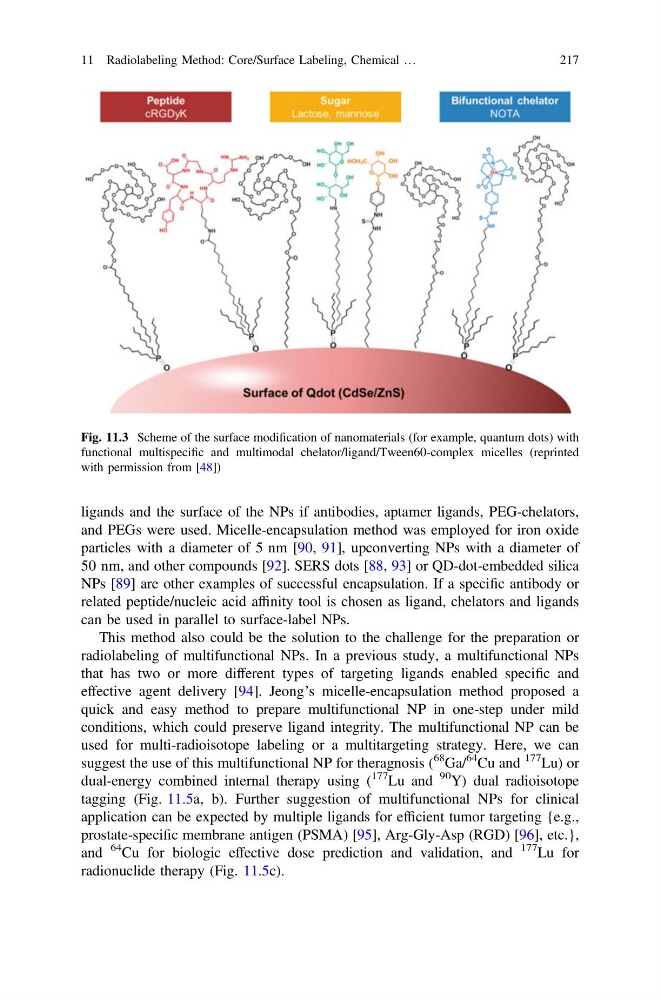
Fig. 11.3 Scheme of the surface modification of nanomaterials (for example, quantum dots) with
functional multispecific and multimodal chelator/ligand/Tween60-complex micelles (reprinted
with permission from [48])
11 Radiolabeling Method: Core/Surface Labeling, Chemical …
217
and PEGs were used. Micelle-encapsulation method was employed for iron oxide
particles with a diameter of 5 nm [90, 91], upconverting NPs with a diameter of
50 nm, and other compounds [92]. SERS dots [88, 93] or QD-dot-embedded silica
NPs [89] are other examples of successful encapsulation. If a specific antibody or
related peptide/nucleic acid affinity tool is chosen as ligand, chelators and ligands
can be used in parallel to surface-label NPs.
This method also could be the solution to the challenge for the preparation or
radiolabeling of multifunctional NPs. In a previous study, a multifunctional NPs
that has two or more different types of targeting ligands enabled specific and
effective agent delivery [94]. Jeong’s micelle-encapsulation method proposed a
quick and easy method to prepare multifunctional NP in one-step under mild
conditions, which could preserve ligand integrity. The multifunctional NP can be
used for multi-radioisotope labeling or a multitargeting strategy. Here, we can
suggest the use of this multifunctional NP for theragnosis (
68 Ga/
64 Cu and
177 Lu) or
dual-energy combined internal therapy using (
177 Lu and
90 Y) dual radioisotope
tagging (Fig. 11.5a, b). Further suggestion of multifunctional NPs for clinical
application can be expected by multiple ligands for efficient tumor targeting {e.g.,
prostate-specific membrane antigen (PSMA) [95], Arg-Gly-Asp (RGD) [96], etc.},
and
64 Cu for biologic effective dose prediction and validation, and
177 Lu for
radionuclide therapy (Fig. 11.5c).
Fig. 11.3 Scheme of the surface modification of nanomaterials (for example, quantum dots) with
functional multispecific and multimodal chelator/ligand/Tween60-complex micelles (reprinted
with permission from [48])
11 Radiolabeling Method: Core/Surface Labeling, Chemical …
217