

Albumin-based nanoparticle is another most investigated protein-based
nanoparticles that hold many advantages as drug delivery system, such as good
biodegradability, excellent biocompatibility, non-immunogenicity [106–108].
Albumins have been widely reported as nanocarriers for the delivery of quite a few
of drugs or imaging contrasted agents [109]. Zhou et al. reported size-tunable
Gd 2 O 3 @albumin nanoparticle conjugating chlorin e6 (Ce6) for MRI-guided phototherapy [110]. Hollow albumin was employed as the nanoreactor to control the
growth of Gd 2 O 3 crystals, whose sizes were well regulated with the reaction time.
Next, the protein corona of Gd 2 O 3 @BSA was functionalized with chlorin e6
through conjugating the carboxylic group on Ce6 with free amine groups in BSA.
The obtained Gd 2 O 3 @albumin nanoparticle conjugating Ce6 nanoparticles
demonstrated high photostability, excellent T1 contrast ability and remarkable
photothermal and photodynamic property.
The surface modification of protein nanoparticles can introduce functional
groups that endow the nanoparticles with targeting property or helps the
nanoparticles to cross physiological barriers in vivo. For example, Lin and colleagues reported an albumin-based drug delivery system for the treatment of glioma
[111]. The albumin nanoparticle could cross the blood-brain-barrier (BBB) via the
mechanism of albumin-binding proteins (SPAC and gp60) pathway. The BBB
penetration efficiency was further enhanced by conjugating a cell-penetrating
peptide, LMWP, to the surface.
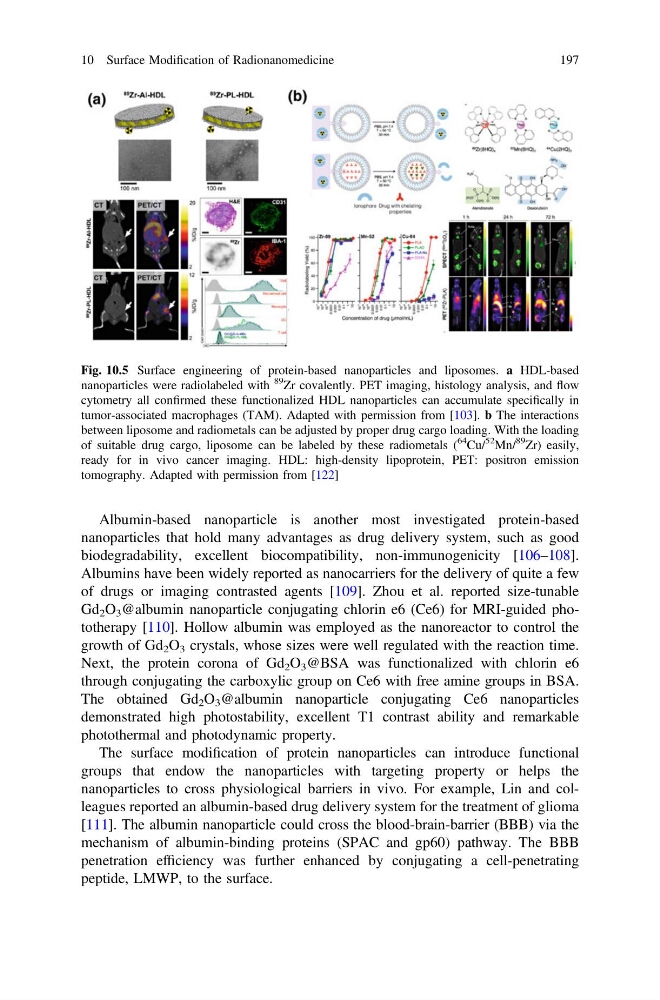
Fig. 10.5 Surface engineering of protein-based nanoparticles and liposomes. a HDL-based
nanoparticles were radiolabeled with
89
Zr covalently. PET imaging, histology analysis, and flow
cytometry all confirmed these functionalized HDL nanoparticles can accumulate specifically in
tumor-associated macrophages (TAM). Adapted with permission from [103]. b The interactions
between liposome and radiometals can be adjusted by proper drug cargo loading. With the loading
of suitable drug cargo, liposome can be labeled by these radiometals (
64
Cu/
52
Mn/
89
Zr) easily,
ready for in vivo cancer imaging. HDL: high-density lipoprotein, PET: positron emission
tomography. Adapted with permission from [122]
10 Surface Modification of Radionanomedicine
197
nanoparticles that hold many advantages as drug delivery system, such as good
biodegradability, excellent biocompatibility, non-immunogenicity [106–108].
Albumins have been widely reported as nanocarriers for the delivery of quite a few
of drugs or imaging contrasted agents [109]. Zhou et al. reported size-tunable
Gd 2 O 3 @albumin nanoparticle conjugating chlorin e6 (Ce6) for MRI-guided phototherapy [110]. Hollow albumin was employed as the nanoreactor to control the
growth of Gd 2 O 3 crystals, whose sizes were well regulated with the reaction time.
Next, the protein corona of Gd 2 O 3 @BSA was functionalized with chlorin e6
through conjugating the carboxylic group on Ce6 with free amine groups in BSA.
The obtained Gd 2 O 3 @albumin nanoparticle conjugating Ce6 nanoparticles
demonstrated high photostability, excellent T1 contrast ability and remarkable
photothermal and photodynamic property.
The surface modification of protein nanoparticles can introduce functional
groups that endow the nanoparticles with targeting property or helps the
nanoparticles to cross physiological barriers in vivo. For example, Lin and colleagues reported an albumin-based drug delivery system for the treatment of glioma
[111]. The albumin nanoparticle could cross the blood-brain-barrier (BBB) via the
mechanism of albumin-binding proteins (SPAC and gp60) pathway. The BBB
penetration efficiency was further enhanced by conjugating a cell-penetrating
peptide, LMWP, to the surface.
Fig. 10.5 Surface engineering of protein-based nanoparticles and liposomes. a HDL-based
nanoparticles were radiolabeled with
89
Zr covalently. PET imaging, histology analysis, and flow
cytometry all confirmed these functionalized HDL nanoparticles can accumulate specifically in
tumor-associated macrophages (TAM). Adapted with permission from [103]. b The interactions
between liposome and radiometals can be adjusted by proper drug cargo loading. With the loading
of suitable drug cargo, liposome can be labeled by these radiometals (
64
Cu/
52
Mn/
89
Zr) easily,
ready for in vivo cancer imaging. HDL: high-density lipoprotein, PET: positron emission
tomography. Adapted with permission from [122]
10 Surface Modification of Radionanomedicine
197