

cargo release or pH-controllable surface property/size change [33]. The carboxylicamine reaction (resultant amide bond) or thiol-involved reaction (e.g. with maleimide) can usually result in chemical bonds with satisfactory in vivo stability, thus
they are commonly adopted in surface modification of various inorganic/organic
nanomaterials [32, 34]. Post the initial surface coating, click chemistry is another
dominant approach for further surface modification [35]. The most popular reactions include azide-alkyne cycloaddition (copper catalyzed or strain promoted), the
inverse electron demand Diels-Alder cycloaddition [e.g. between tetrazine (Tz) and
trans-cyclooctene (TCO)], or more rarely, the Staudinger ligation. These chemical
modification methods are usually fast, in very high chemical yields, and the product
separation is relatively simple.
Another unique surface reaction is based on coverage of original nanomaterials
in silica. Afterwards, silane coupling agents can be used for surface modification [8]
since the silica shell usually has abundant silanol groups on the surface [36]. These
agents usually have bifunctional structures with one end attached to the silica shell
(via reaction with silanol groups) while the other end can provide reaction sites for
conjugation of other molecules. For example, metalloporphyrins were successfully
immobilized onto the surface of silica-coated iron oxide particles using this method
and click chemistry [37].
An underexplored area for surface modification is to use enzyme-mediated
reaction. Especially when sensitive peptide or protein ligands were attempted to
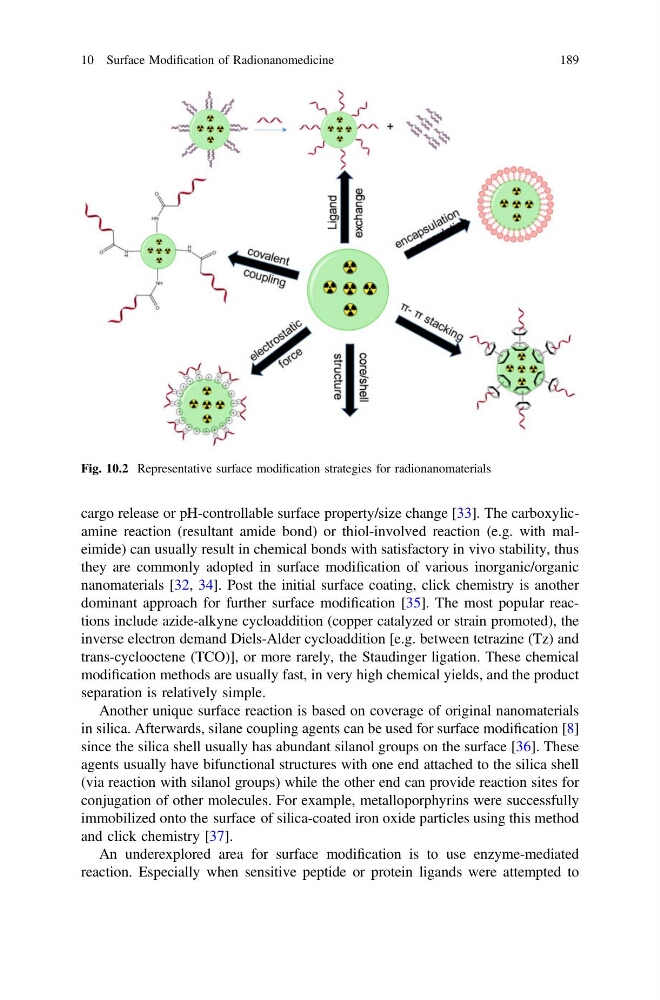
Fig. 10.2 Representative surface modification strategies for radionanomaterials
10 Surface Modification of Radionanomedicine
189
they are commonly adopted in surface modification of various inorganic/organic
nanomaterials [32, 34]. Post the initial surface coating, click chemistry is another
dominant approach for further surface modification [35]. The most popular reactions include azide-alkyne cycloaddition (copper catalyzed or strain promoted), the
inverse electron demand Diels-Alder cycloaddition [e.g. between tetrazine (Tz) and
trans-cyclooctene (TCO)], or more rarely, the Staudinger ligation. These chemical
modification methods are usually fast, in very high chemical yields, and the product
separation is relatively simple.
Another unique surface reaction is based on coverage of original nanomaterials
in silica. Afterwards, silane coupling agents can be used for surface modification [8]
since the silica shell usually has abundant silanol groups on the surface [36]. These
agents usually have bifunctional structures with one end attached to the silica shell
(via reaction with silanol groups) while the other end can provide reaction sites for
conjugation of other molecules. For example, metalloporphyrins were successfully
immobilized onto the surface of silica-coated iron oxide particles using this method
and click chemistry [37].
An underexplored area for surface modification is to use enzyme-mediated
reaction. Especially when sensitive peptide or protein ligands were attempted to
Fig. 10.2 Representative surface modification strategies for radionanomaterials
10 Surface Modification of Radionanomedicine
189