

et al. 2013). However, humidification tended to alleviate drought stress during a dry
season, particularly at the end of summer 2011 (Niglas et al. 2014). The reduction in
growth rate and biomass production in response to humidification was more pronounced in aspen than in birch (Rosenvald et al. 2014). The slower growth rate under
elevated humidity was confirmed in the second-generation stump sprouts of hybrid
aspen (Rohula et al. 2017; Sellin et al. 2017b). In addition, the growth and biomass
partitioning of the understory vegetation responded to humidification treatment, but
the responses varied based on study year and tree species (Torga et al. 2017). In the
birch stands, the aboveground biomass of the understory vegetation was lower and
the belowground biomass higher under humidification in 2010 (Torga et al. 2017).
The competitive status of trees affected their growth responses to humidification
treatment (Tullus et al. 2017) indicating potential impacts of decreasing VPD on
forest species composition and forestry practices in the future.
Reduced leaf photosynthetic capacity was detected for silver birch (Sellin et al.
2013), along with the decline in foliar P and N contents and nutrient imbalance (P:N
ratio in particular). Humidification treatment reduced the concentrations of N and P
mostly in the upper canopy (Sellin et al. 2015) indicating changes in the nutrient
allocation. On the other hand, higher content of N and P was detected in the stem
wood under low VPD which may have resulted from the enhanced resorption of
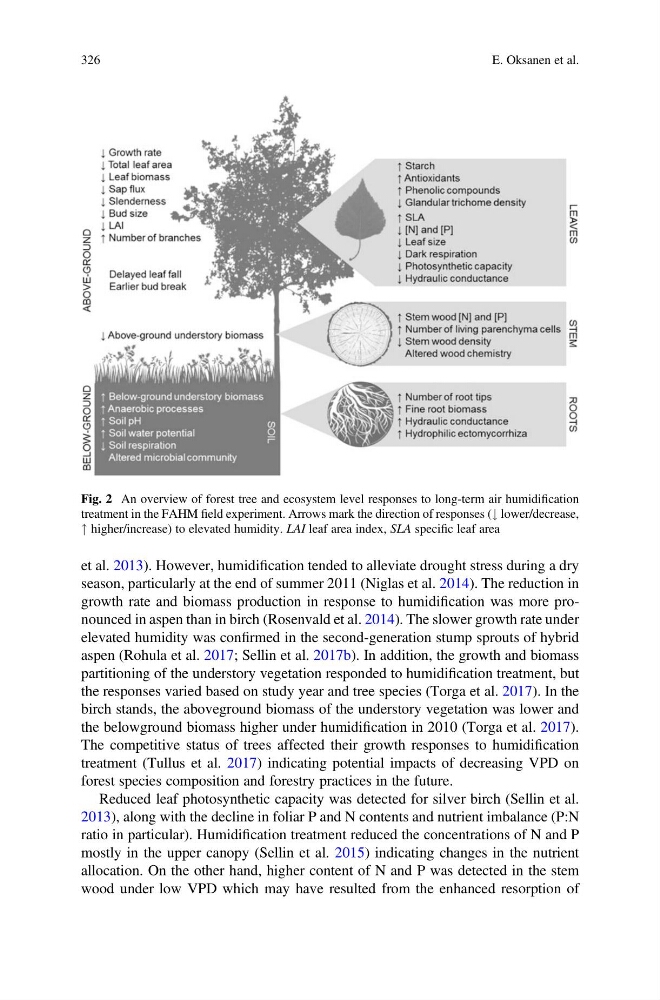
Fig. 2 An overview of forest tree and ecosystem level responses to long-term air humidification
treatment in the FAHM field experiment. Arrows mark the direction of responses (# lower/decrease,
" higher/increase) to elevated humidity. LAI leaf area index, SLA specific leaf area
326
E. Oksanen et al.
season, particularly at the end of summer 2011 (Niglas et al. 2014). The reduction in
growth rate and biomass production in response to humidification was more pronounced in aspen than in birch (Rosenvald et al. 2014). The slower growth rate under
elevated humidity was confirmed in the second-generation stump sprouts of hybrid
aspen (Rohula et al. 2017; Sellin et al. 2017b). In addition, the growth and biomass
partitioning of the understory vegetation responded to humidification treatment, but
the responses varied based on study year and tree species (Torga et al. 2017). In the
birch stands, the aboveground biomass of the understory vegetation was lower and
the belowground biomass higher under humidification in 2010 (Torga et al. 2017).
The competitive status of trees affected their growth responses to humidification
treatment (Tullus et al. 2017) indicating potential impacts of decreasing VPD on
forest species composition and forestry practices in the future.
Reduced leaf photosynthetic capacity was detected for silver birch (Sellin et al.
2013), along with the decline in foliar P and N contents and nutrient imbalance (P:N
ratio in particular). Humidification treatment reduced the concentrations of N and P
mostly in the upper canopy (Sellin et al. 2015) indicating changes in the nutrient
allocation. On the other hand, higher content of N and P was detected in the stem
wood under low VPD which may have resulted from the enhanced resorption of
Fig. 2 An overview of forest tree and ecosystem level responses to long-term air humidification
treatment in the FAHM field experiment. Arrows mark the direction of responses (# lower/decrease,
" higher/increase) to elevated humidity. LAI leaf area index, SLA specific leaf area
326
E. Oksanen et al.