

6 Use of Olefinic Glycine Inhibitors in Ethylene
Biosynthesis: The Devious Trap
Since the 1970s, olefinic glycine analogues have been used as small bioactive
molecules to inhibit specifically in vitro and in vivo PLP-dependent aminotransferases involved in the methionine biosynthetic pathway and ethylene biosynthesis
(Rando 1974a, b; Berkowitz et al. 2006). In fact, this family of compounds acts
as terminal inhibitors of subgroup I of aminotransferases belonging to the α family
(Christen and Mehta 2001). The subgroup I contains ACC, aspartate, alanine, and
aromatic (His, Phe, Tyr, Trp) aminotransferases (Christen and Mehta 2001). Recent
findings have highlighted the non-specificity of these compounds in ACS and
0
Threonine
Lysine
Isoleucine Methionine Histidine
1
2
3
4
5
6
7
KNO3
AVG
AVG + Glu
Aspartate
0
2
4
6
8
10
12
14
ROOTS
A
0
0.5
1
1.5
2
2.5
Threonine
Lysine
Isoleucine Methionine
Histidine
0
2
4
6
8
10
12
Aspartate
KNO3
AVG
AVG + Glu
SHOOTS
B
Amino acids content ( moles. organ DW -1
)
Amino acids content ( moles. organ DW -1
)
***
***
*
***
***
***
***
μ
μ
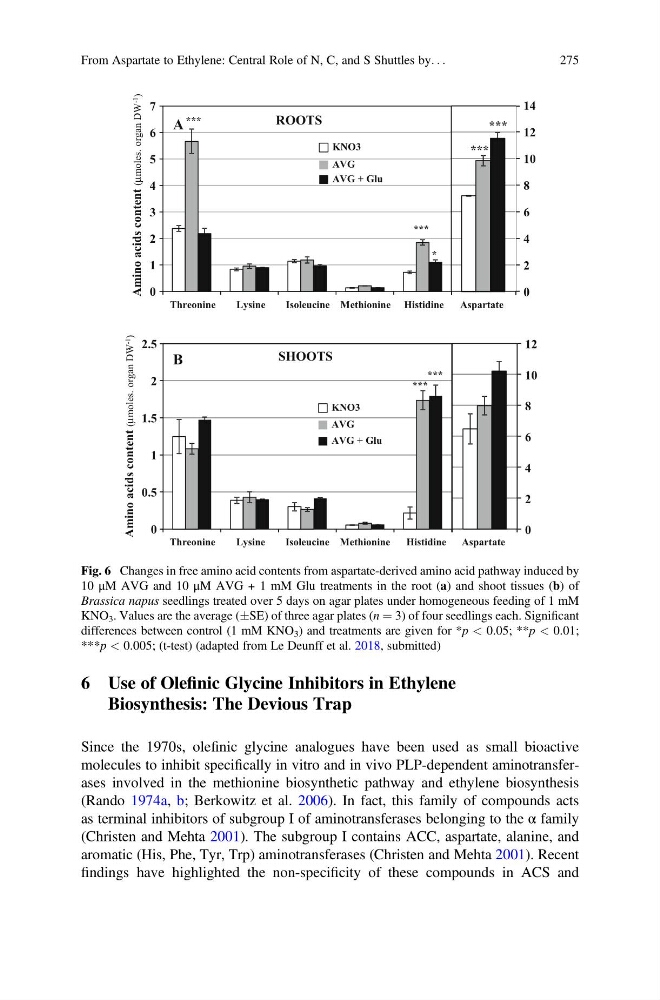
Fig. 6 Changes in free amino acid contents from aspartate-derived amino acid pathway induced by
10 μM AVG and 10 μM AVG + 1 mM Glu treatments in the root (a) and shoot tissues (b) of
Brassica napus seedlings treated over 5 days on agar plates under homogeneous feeding of 1 mM
KNO 3 . Values are the average (ÆSE) of three agar plates (n ¼ 3) of four seedlings each. Significant
differences between control (1 mM KNO 3 ) and treatments are given for *p < 0.05; **p < 0.01;
***p < 0.005; (t-test) (adapted from Le Deunff et al. 2018, submitted)
From Aspartate to Ethylene: Central Role of N, C, and S Shuttles by. . .
275
Biosynthesis: The Devious Trap
Since the 1970s, olefinic glycine analogues have been used as small bioactive
molecules to inhibit specifically in vitro and in vivo PLP-dependent aminotransferases involved in the methionine biosynthetic pathway and ethylene biosynthesis
(Rando 1974a, b; Berkowitz et al. 2006). In fact, this family of compounds acts
as terminal inhibitors of subgroup I of aminotransferases belonging to the α family
(Christen and Mehta 2001). The subgroup I contains ACC, aspartate, alanine, and
aromatic (His, Phe, Tyr, Trp) aminotransferases (Christen and Mehta 2001). Recent
findings have highlighted the non-specificity of these compounds in ACS and
0
Threonine
Lysine
Isoleucine Methionine Histidine
1
2
3
4
5
6
7
KNO3
AVG
AVG + Glu
Aspartate
0
2
4
6
8
10
12
14
ROOTS
A
0
0.5
1
1.5
2
2.5
Threonine
Lysine
Isoleucine Methionine
Histidine
0
2
4
6
8
10
12
Aspartate
KNO3
AVG
AVG + Glu
SHOOTS
B
Amino acids content ( moles. organ DW -1
)
Amino acids content ( moles. organ DW -1
)
***
***
*
***
***
***
***
μ
μ
Fig. 6 Changes in free amino acid contents from aspartate-derived amino acid pathway induced by
10 μM AVG and 10 μM AVG + 1 mM Glu treatments in the root (a) and shoot tissues (b) of
Brassica napus seedlings treated over 5 days on agar plates under homogeneous feeding of 1 mM
KNO 3 . Values are the average (ÆSE) of three agar plates (n ¼ 3) of four seedlings each. Significant
differences between control (1 mM KNO 3 ) and treatments are given for *p < 0.05; **p < 0.01;
***p < 0.005; (t-test) (adapted from Le Deunff et al. 2018, submitted)
From Aspartate to Ethylene: Central Role of N, C, and S Shuttles by. . .
275