

Only a few functions have been assigned to TRXh isoforms based on gene
expression and genetic studies. Tissue-specific gene expression analyses of TRXh
isoforms have revealed overlapping expression patterns in Arabidopsis (Reichheld
et al. 2002; Belin et al. 2015). Overlapping gene expression between TRXh isoforms
is likely explaining the lack of phenotype of most of the trxh knock-out mutants
analyzed so far (our personal data). However, the characterization of a ntra ntrb
double mutant deficient in the reduction of TRXh isoforms has revealed several plant
development functions like pollen fitness, seed development, and plant growth
(Reichheld et al. 2007). Moreover, it also shed light on cross talks acting between
TRX and GRX systems in flower development and hormonal signaling (Reichheld
et al. 2007; Marty et al. 2009; Bashandy et al. 2009, 2010).
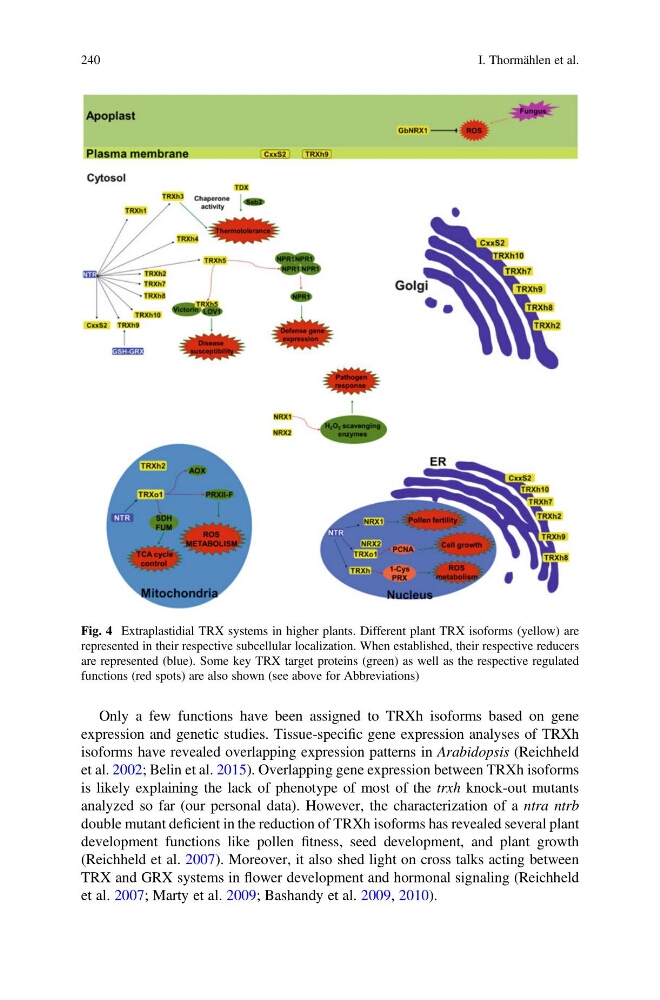
Fig. 4 Extraplastidial TRX systems in higher plants. Different plant TRX isoforms (yellow) are
represented in their respective subcellular localization. When established, their respective reducers
are represented (blue). Some key TRX target proteins (green) as well as the respective regulated
functions (red spots) are also shown (see above for Abbreviations)
240
I. Thormählen et al.
expression and genetic studies. Tissue-specific gene expression analyses of TRXh
isoforms have revealed overlapping expression patterns in Arabidopsis (Reichheld
et al. 2002; Belin et al. 2015). Overlapping gene expression between TRXh isoforms
is likely explaining the lack of phenotype of most of the trxh knock-out mutants
analyzed so far (our personal data). However, the characterization of a ntra ntrb
double mutant deficient in the reduction of TRXh isoforms has revealed several plant
development functions like pollen fitness, seed development, and plant growth
(Reichheld et al. 2007). Moreover, it also shed light on cross talks acting between
TRX and GRX systems in flower development and hormonal signaling (Reichheld
et al. 2007; Marty et al. 2009; Bashandy et al. 2009, 2010).
Fig. 4 Extraplastidial TRX systems in higher plants. Different plant TRX isoforms (yellow) are
represented in their respective subcellular localization. When established, their respective reducers
are represented (blue). Some key TRX target proteins (green) as well as the respective regulated
functions (red spots) are also shown (see above for Abbreviations)
240
I. Thormählen et al.