

lack of one of them might be complemented by the other, while the combined
deficiency of both systems would cause the severe impairment of the redox regulation of these targets, hence with strong consequences on plant phenotype. In support
of this notion, Nikkanen et al. (2016) showed the interaction of NTRC in planta with
well-established TRX targets such as FBPase. However, in vitro assay analyses
showed that NTRC is unable to reduce FBPase (Ojeda et al. 2017), suggesting that
the effect of NTRC on the redox regulation of this enzyme might be indirect. In a
recent report it was shown that the content of 2-Cys PRX affects the phenotype of
Arabidopsis mutants devoid of NTRC, so that decreased contents of 2-Cys PRX
alleviated the phenotype while increased contents had the opposite effect (PerezTRX-dependent regulation
Starch, ATP, chlorophyll biosynthesis
Oxidative stress response
Cyclic electron transport
Calvin-Benson cycle
Malate valve
H2O
PSII
½ O2 + 2H +
PQ
Cyt
b6f
H +
PC
PSI
ATP
ase
FDX
H +
H +
H +
ATP
ADP + Pi
PGR
FTR
FNR
NTRC
NADPH
NADP +
NADPH
Malate
OAA
NADP +
NADP + -MDH
CalvinBenson
cycle
TRXy
TRXm
TRXz
TRXf
Lumen
Stroma
Glucose 1-P
CO2
ADP-glucose
AGPase
AMP + PPi
Starch
PRK
SBP
ase
FBP
ase
Triose-P
Pi
O2 -
O2
NO2
Glutamate
Protoporphyrin IX
Mg-chelatase
CHLM
Mg-protoporphyrin IX
Mg-protoMME
Chlorophyll
NADPH
NADP +
ATP
ADP
NADPH
NADP +
ATP
ADP
2-Cys PRX
H2O + ½ O2
H2O2
O2 -
Methionine
Met-SO
MSR
TRXx
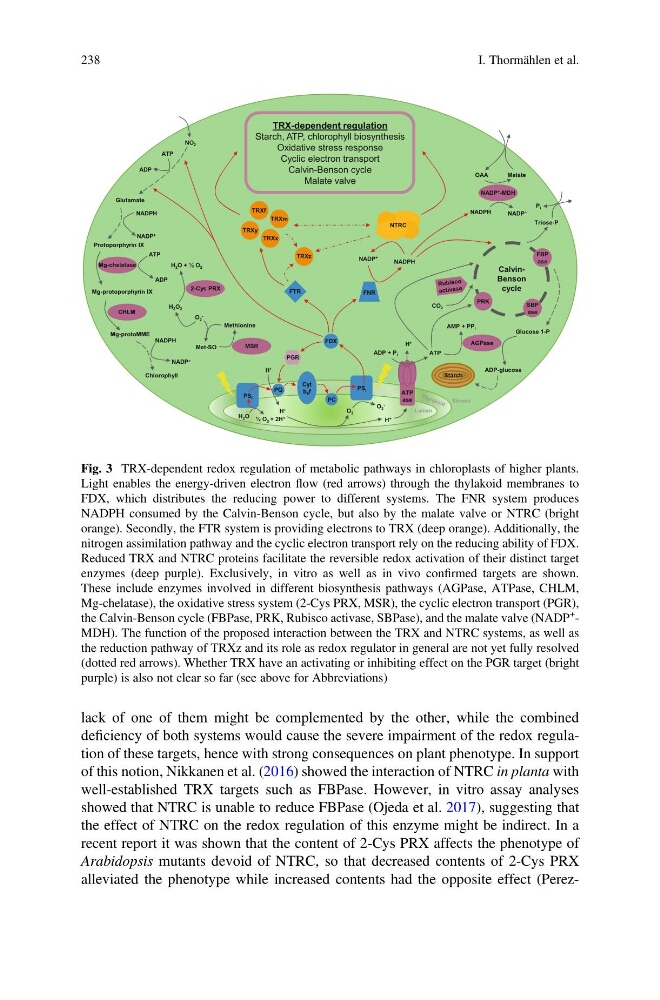
Fig. 3 TRX-dependent redox regulation of metabolic pathways in chloroplasts of higher plants.
Light enables the energy-driven electron flow (red arrows) through the thylakoid membranes to
FDX, which distributes the reducing power to different systems. The FNR system produces
NADPH consumed by the Calvin-Benson cycle, but also by the malate valve or NTRC (bright
orange). Secondly, the FTR system is providing electrons to TRX (deep orange). Additionally, the
nitrogen assimilation pathway and the cyclic electron transport rely on the reducing ability of FDX.
Reduced TRX and NTRC proteins facilitate the reversible redox activation of their distinct target
enzymes (deep purple). Exclusively, in vitro as well as in vivo confirmed targets are shown.
These include enzymes involved in different biosynthesis pathways (AGPase, ATPase, CHLM,
Mg-chelatase), the oxidative stress system (2-Cys PRX, MSR), the cyclic electron transport (PGR),
the Calvin-Benson cycle (FBPase, PRK, Rubisco activase, SBPase), and the malate valve (NADP
+ -
MDH). The function of the proposed interaction between the TRX and NTRC systems, as well as
the reduction pathway of TRXz and its role as redox regulator in general are not yet fully resolved
(dotted red arrows). Whether TRX have an activating or inhibiting effect on the PGR target (bright
purple) is also not clear so far (see above for Abbreviations)
238
I. Thormählen et al.
deficiency of both systems would cause the severe impairment of the redox regulation of these targets, hence with strong consequences on plant phenotype. In support
of this notion, Nikkanen et al. (2016) showed the interaction of NTRC in planta with
well-established TRX targets such as FBPase. However, in vitro assay analyses
showed that NTRC is unable to reduce FBPase (Ojeda et al. 2017), suggesting that
the effect of NTRC on the redox regulation of this enzyme might be indirect. In a
recent report it was shown that the content of 2-Cys PRX affects the phenotype of
Arabidopsis mutants devoid of NTRC, so that decreased contents of 2-Cys PRX
alleviated the phenotype while increased contents had the opposite effect (PerezTRX-dependent regulation
Starch, ATP, chlorophyll biosynthesis
Oxidative stress response
Cyclic electron transport
Calvin-Benson cycle
Malate valve
H2O
PSII
½ O2 + 2H +
PQ
Cyt
b6f
H +
PC
PSI
ATP
ase
FDX
H +
H +
H +
ATP
ADP + Pi
PGR
FTR
FNR
NTRC
NADPH
NADP +
NADPH
Malate
OAA
NADP +
NADP + -MDH
CalvinBenson
cycle
TRXy
TRXm
TRXz
TRXf
Lumen
Stroma
Glucose 1-P
CO2
ADP-glucose
AGPase
AMP + PPi
Starch
PRK
SBP
ase
FBP
ase
Triose-P
Pi
O2 -
O2
NO2
Glutamate
Protoporphyrin IX
Mg-chelatase
CHLM
Mg-protoporphyrin IX
Mg-protoMME
Chlorophyll
NADPH
NADP +
ATP
ADP
NADPH
NADP +
ATP
ADP
2-Cys PRX
H2O + ½ O2
H2O2
O2 -
Methionine
Met-SO
MSR
TRXx
Fig. 3 TRX-dependent redox regulation of metabolic pathways in chloroplasts of higher plants.
Light enables the energy-driven electron flow (red arrows) through the thylakoid membranes to
FDX, which distributes the reducing power to different systems. The FNR system produces
NADPH consumed by the Calvin-Benson cycle, but also by the malate valve or NTRC (bright
orange). Secondly, the FTR system is providing electrons to TRX (deep orange). Additionally, the
nitrogen assimilation pathway and the cyclic electron transport rely on the reducing ability of FDX.
Reduced TRX and NTRC proteins facilitate the reversible redox activation of their distinct target
enzymes (deep purple). Exclusively, in vitro as well as in vivo confirmed targets are shown.
These include enzymes involved in different biosynthesis pathways (AGPase, ATPase, CHLM,
Mg-chelatase), the oxidative stress system (2-Cys PRX, MSR), the cyclic electron transport (PGR),
the Calvin-Benson cycle (FBPase, PRK, Rubisco activase, SBPase), and the malate valve (NADP
+ -
MDH). The function of the proposed interaction between the TRX and NTRC systems, as well as
the reduction pathway of TRXz and its role as redox regulator in general are not yet fully resolved
(dotted red arrows). Whether TRX have an activating or inhibiting effect on the PGR target (bright
purple) is also not clear so far (see above for Abbreviations)
238
I. Thormählen et al.