

Well diameter does not influence long-term DNAPL recovery, but allows highvolume pumping. Indeed, small diameter wells result in lower DNAPL–water
mixtures. Wells equipped with strainers located upward from the portion affected
by pure DNAPL will result in higher product recovery and limited water intake
(Schmidtke et al. 1992).
Different pumping techniques can be implemented with the aim to improve the
efficiency of pure product recovery: upwelling, waterflooding, and trench systems
(Connor et al. 1989). These different approaches must be optimized via feasibility/
treatability tests, and when possible, ad hoc modeling to secure the sites where
remediation will take place.
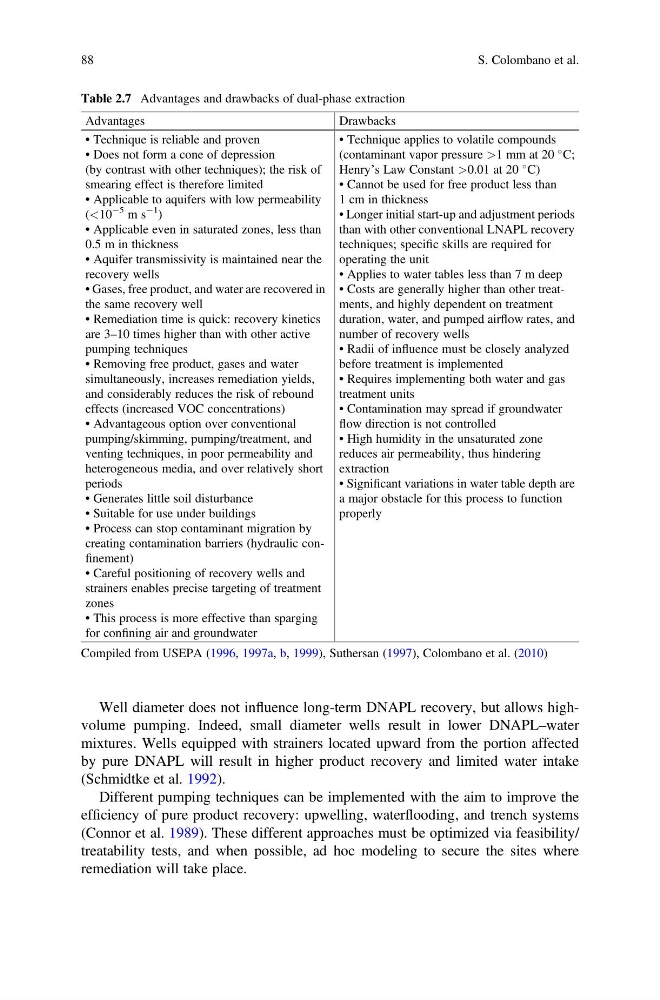
Table 2.7 Advantages and drawbacks of dual-phase extraction
Advantages
Drawbacks
• Technique is reliable and proven
• Does not form a cone of depression
(by contrast with other techniques); the risk of
smearing effect is therefore limited
• Applicable to aquifers with low permeability
(<10
À5 m s
À1
)
• Applicable even in saturated zones, less than
0.5 m in thickness
• Aquifer transmissivity is maintained near the
recovery wells
• Gases, free product, and water are recovered in
the same recovery well
• Remediation time is quick: recovery kinetics
are 3–10 times higher than with other active
pumping techniques
• Removing free product, gases and water
simultaneously, increases remediation yields,
and considerably reduces the risk of rebound
effects (increased VOC concentrations)
• Advantageous option over conventional
pumping/skimming, pumping/treatment, and
venting techniques, in poor permeability and
heterogeneous media, and over relatively short
periods
• Generates little soil disturbance
• Suitable for use under buildings
• Process can stop contaminant migration by
creating contamination barriers (hydraulic confinement)
• Careful positioning of recovery wells and
strainers enables precise targeting of treatment
zones
• This process is more effective than sparging
for confining air and groundwater
• Technique applies to volatile compounds
(contaminant vapor pressure >1 mm at 20
C;
Henry’s Law Constant >0.01 at 20
C)
• Cannot be used for free product less than
1 cm in thickness
• Longer initial start-up and adjustment periods
than with other conventional LNAPL recovery
techniques; specific skills are required for
operating the unit
• Applies to water tables less than 7 m deep
• Costs are generally higher than other treatments, and highly dependent on treatment
duration, water, and pumped airflow rates, and
number of recovery wells
• Radii of influence must be closely analyzed
before treatment is implemented
• Requires implementing both water and gas
treatment units
• Contamination may spread if groundwater
flow direction is not controlled
• High humidity in the unsaturated zone
reduces air permeability, thus hindering
extraction
• Significant variations in water table depth are
a major obstacle for this process to function
properly
Compiled from USEPA (1996, 1997a, b, 1999), Suthersan (1997), Colombano et al. (2010)
88
S. Colombano et al.
mixtures. Wells equipped with strainers located upward from the portion affected
by pure DNAPL will result in higher product recovery and limited water intake
(Schmidtke et al. 1992).
Different pumping techniques can be implemented with the aim to improve the
efficiency of pure product recovery: upwelling, waterflooding, and trench systems
(Connor et al. 1989). These different approaches must be optimized via feasibility/
treatability tests, and when possible, ad hoc modeling to secure the sites where
remediation will take place.
Table 2.7 Advantages and drawbacks of dual-phase extraction
Advantages
Drawbacks
• Technique is reliable and proven
• Does not form a cone of depression
(by contrast with other techniques); the risk of
smearing effect is therefore limited
• Applicable to aquifers with low permeability
(<10
À5 m s
À1
)
• Applicable even in saturated zones, less than
0.5 m in thickness
• Aquifer transmissivity is maintained near the
recovery wells
• Gases, free product, and water are recovered in
the same recovery well
• Remediation time is quick: recovery kinetics
are 3–10 times higher than with other active
pumping techniques
• Removing free product, gases and water
simultaneously, increases remediation yields,
and considerably reduces the risk of rebound
effects (increased VOC concentrations)
• Advantageous option over conventional
pumping/skimming, pumping/treatment, and
venting techniques, in poor permeability and
heterogeneous media, and over relatively short
periods
• Generates little soil disturbance
• Suitable for use under buildings
• Process can stop contaminant migration by
creating contamination barriers (hydraulic confinement)
• Careful positioning of recovery wells and
strainers enables precise targeting of treatment
zones
• This process is more effective than sparging
for confining air and groundwater
• Technique applies to volatile compounds
(contaminant vapor pressure >1 mm at 20
C;
Henry’s Law Constant >0.01 at 20
C)
• Cannot be used for free product less than
1 cm in thickness
• Longer initial start-up and adjustment periods
than with other conventional LNAPL recovery
techniques; specific skills are required for
operating the unit
• Applies to water tables less than 7 m deep
• Costs are generally higher than other treatments, and highly dependent on treatment
duration, water, and pumped airflow rates, and
number of recovery wells
• Radii of influence must be closely analyzed
before treatment is implemented
• Requires implementing both water and gas
treatment units
• Contamination may spread if groundwater
flow direction is not controlled
• High humidity in the unsaturated zone
reduces air permeability, thus hindering
extraction
• Significant variations in water table depth are
a major obstacle for this process to function
properly
Compiled from USEPA (1996, 1997a, b, 1999), Suthersan (1997), Colombano et al. (2010)
88
S. Colombano et al.