

Water pumps are placed below the LNAPL/water interface. Depending on their
positioning, the water will contain more or less hydrocarbons. If positioned several
meters below this interface, they will contain little dissolved product. Conversely,
when the water pumps are positioned higher than the LNAPL/water interface,
they usually contain more dissolved hydrocarbons (Suthersan 1997; Sale 2001;
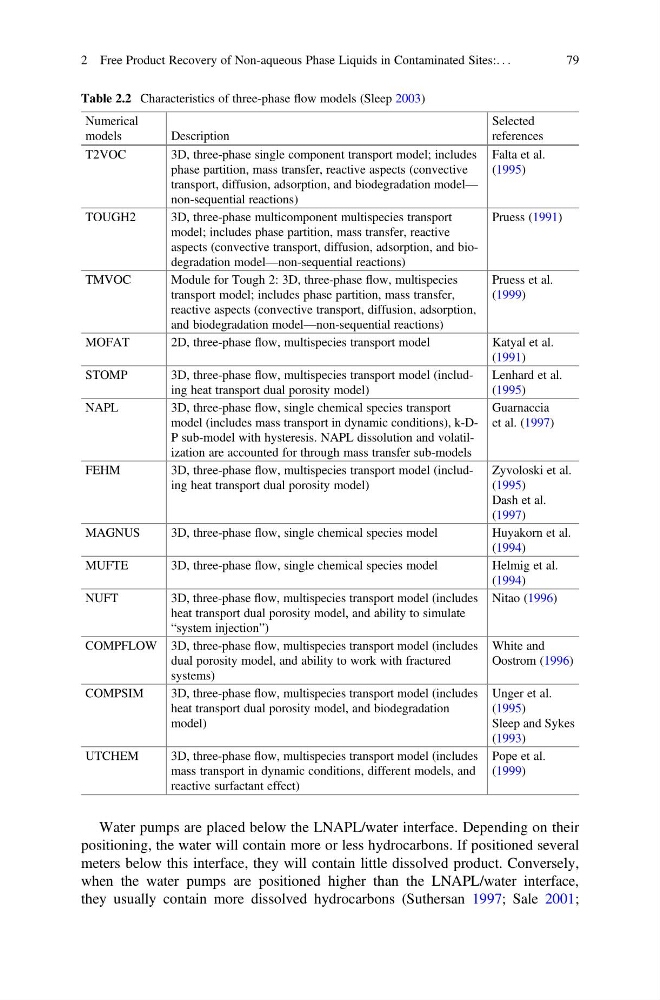
Table 2.2 Characteristics of three-phase flow models (Sleep 2003)
Numerical
models
Description
Selected
references
T2VOC
3D, three-phase single component transport model; includes
phase partition, mass transfer, reactive aspects (convective
transport, diffusion, adsorption, and biodegradation model—
non-sequential reactions)
Falta et al.
(1995)
TOUGH2
3D, three-phase multicomponent multispecies transport
model; includes phase partition, mass transfer, reactive
aspects (convective transport, diffusion, adsorption, and biodegradation model—non-sequential reactions)
Pruess (1991)
TMVOC
Module for Tough 2: 3D, three-phase flow, multispecies
transport model; includes phase partition, mass transfer,
reactive aspects (convective transport, diffusion, adsorption,
and biodegradation model—non-sequential reactions)
Pruess et al.
(1999)
MOFAT
2D, three-phase flow, multispecies transport model
Katyal et al.
(1991)
STOMP
3D, three-phase flow, multispecies transport model (including heat transport dual porosity model)
Lenhard et al.
(1995)
NAPL
3D, three-phase flow, single chemical species transport
model (includes mass transport in dynamic conditions), k-DP sub-model with hysteresis. NAPL dissolution and volatilization are accounted for through mass transfer sub-models
Guarnaccia
et al. (1997)
FEHM
3D, three-phase flow, multispecies transport model (including heat transport dual porosity model)
Zyvoloski et al.
(1995)
Dash et al.
(1997)
MAGNUS
3D, three-phase flow, single chemical species model
Huyakorn et al.
(1994)
MUFTE
3D, three-phase flow, single chemical species model
Helmig et al.
(1994)
NUFT
3D, three-phase flow, multispecies transport model (includes
heat transport dual porosity model, and ability to simulate
“system injection”)
Nitao (1996)
COMPFLOW 3D, three-phase flow, multispecies transport model (includes
dual porosity model, and ability to work with fractured
systems)
White and
Oostrom (1996)
COMPSIM
3D, three-phase flow, multispecies transport model (includes
heat transport dual porosity model, and biodegradation
model)
Unger et al.
(1995)
Sleep and Sykes
(1993)
UTCHEM
3D, three-phase flow, multispecies transport model (includes
mass transport in dynamic conditions, different models, and
reactive surfactant effect)
Pope et al.
(1999)
2 Free Product Recovery of Non-aqueous Phase Liquids in Contaminated Sites:. . .
79
positioning, the water will contain more or less hydrocarbons. If positioned several
meters below this interface, they will contain little dissolved product. Conversely,
when the water pumps are positioned higher than the LNAPL/water interface,
they usually contain more dissolved hydrocarbons (Suthersan 1997; Sale 2001;
Table 2.2 Characteristics of three-phase flow models (Sleep 2003)
Numerical
models
Description
Selected
references
T2VOC
3D, three-phase single component transport model; includes
phase partition, mass transfer, reactive aspects (convective
transport, diffusion, adsorption, and biodegradation model—
non-sequential reactions)
Falta et al.
(1995)
TOUGH2
3D, three-phase multicomponent multispecies transport
model; includes phase partition, mass transfer, reactive
aspects (convective transport, diffusion, adsorption, and biodegradation model—non-sequential reactions)
Pruess (1991)
TMVOC
Module for Tough 2: 3D, three-phase flow, multispecies
transport model; includes phase partition, mass transfer,
reactive aspects (convective transport, diffusion, adsorption,
and biodegradation model—non-sequential reactions)
Pruess et al.
(1999)
MOFAT
2D, three-phase flow, multispecies transport model
Katyal et al.
(1991)
STOMP
3D, three-phase flow, multispecies transport model (including heat transport dual porosity model)
Lenhard et al.
(1995)
NAPL
3D, three-phase flow, single chemical species transport
model (includes mass transport in dynamic conditions), k-DP sub-model with hysteresis. NAPL dissolution and volatilization are accounted for through mass transfer sub-models
Guarnaccia
et al. (1997)
FEHM
3D, three-phase flow, multispecies transport model (including heat transport dual porosity model)
Zyvoloski et al.
(1995)
Dash et al.
(1997)
MAGNUS
3D, three-phase flow, single chemical species model
Huyakorn et al.
(1994)
MUFTE
3D, three-phase flow, single chemical species model
Helmig et al.
(1994)
NUFT
3D, three-phase flow, multispecies transport model (includes
heat transport dual porosity model, and ability to simulate
“system injection”)
Nitao (1996)
COMPFLOW 3D, three-phase flow, multispecies transport model (includes
dual porosity model, and ability to work with fractured
systems)
White and
Oostrom (1996)
COMPSIM
3D, three-phase flow, multispecies transport model (includes
heat transport dual porosity model, and biodegradation
model)
Unger et al.
(1995)
Sleep and Sykes
(1993)
UTCHEM
3D, three-phase flow, multispecies transport model (includes
mass transport in dynamic conditions, different models, and
reactive surfactant effect)
Pope et al.
(1999)
2 Free Product Recovery of Non-aqueous Phase Liquids in Contaminated Sites:. . .
79