

its constituents (Mahato et al. 2010; Stengl et al. 2012). Several studies have shown
that MnO 2 nanosheets or nanotubes are efficient to treat chemical warfare agents
(e.g., Prasad et al. 2007a), except Soman since its decomposition is very slow (Stengl
et al. 2012). However, it has been reported that other types of Mn oxides can
sometimes destroy the chemical warfare agents, but the detoxification reactions are
slower than that occurring on the surface of nanoaggregates. For instance, the halflife of sulfur mustard treated by Mn nanoaggregates was found to be around 9 h,
whereas this half-life increases to ~30 h with a bulk Mn hydroxide treatment (Prasad
et al. 2007b). The reactions involve sorption and hydrolysis of the chemical warfare
agents, generally with a pseudo-first-order behavior (Prasad et al. 2007a, b). For
hydrolysis, no excess water is needed, since the water content present at the surface
of the Mn oxide nanoaggregates is often suitable. The Mn oxide nanoaggregates
offer large surface area and facilitate faster adsorption and encapsulation of the
chemical warfare agents and intercalation of water, isolated hydroxyl groups, and
Lewis acid sites. It is important to note that Mn oxide nanoaggregates could not
oxidize the sulfur mustard and only hydrolysis reaction occurs (Prasad et al. 2007b).
However, the degradation rates of sulfur mustard by Mn oxide nanoaggregates can
be enhanced by photocatalysis with sunlight (Ramacharyulu et al. 2013). In this
case, reaction pathways involve oxidation, cleavage of C-S bond, elimination of HCl
facilitated by hydroxyl radicals, and superoxide anion radicals which were formed
on the surface of Mn oxide nanoaggregates. The final products are considered
nontoxic. A wide variety of compounds can be produced, depending on the initial
chemical warfare agent treated: methyl phosphonic acid, thiodiglycol, ethyl
2-hydroxyethyl sulfide, acetaldehyde, carbon dioxide, sulfoxide, chloroethyl vinyl
sulfide (Mahato et al. 2010; Ramacharyulu et al. 2013).
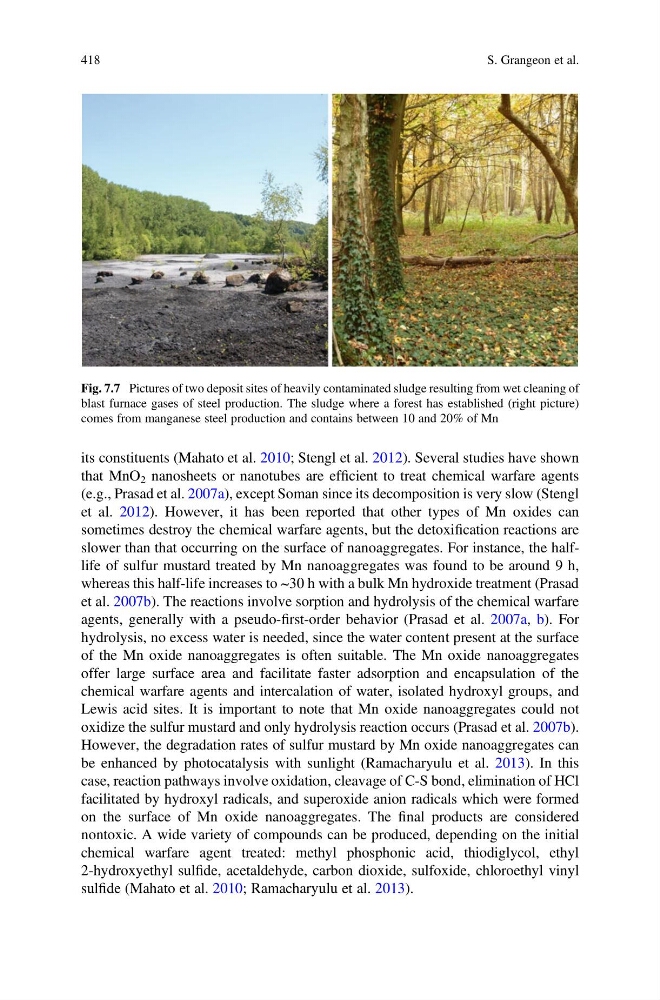
Fig. 7.7 Pictures of two deposit sites of heavily contaminated sludge resulting from wet cleaning of
blast furnace gases of steel production. The sludge where a forest has established (right picture)
comes from manganese steel production and contains between 10 and 20% of Mn
418
S. Grangeon et al.
that MnO 2 nanosheets or nanotubes are efficient to treat chemical warfare agents
(e.g., Prasad et al. 2007a), except Soman since its decomposition is very slow (Stengl
et al. 2012). However, it has been reported that other types of Mn oxides can
sometimes destroy the chemical warfare agents, but the detoxification reactions are
slower than that occurring on the surface of nanoaggregates. For instance, the halflife of sulfur mustard treated by Mn nanoaggregates was found to be around 9 h,
whereas this half-life increases to ~30 h with a bulk Mn hydroxide treatment (Prasad
et al. 2007b). The reactions involve sorption and hydrolysis of the chemical warfare
agents, generally with a pseudo-first-order behavior (Prasad et al. 2007a, b). For
hydrolysis, no excess water is needed, since the water content present at the surface
of the Mn oxide nanoaggregates is often suitable. The Mn oxide nanoaggregates
offer large surface area and facilitate faster adsorption and encapsulation of the
chemical warfare agents and intercalation of water, isolated hydroxyl groups, and
Lewis acid sites. It is important to note that Mn oxide nanoaggregates could not
oxidize the sulfur mustard and only hydrolysis reaction occurs (Prasad et al. 2007b).
However, the degradation rates of sulfur mustard by Mn oxide nanoaggregates can
be enhanced by photocatalysis with sunlight (Ramacharyulu et al. 2013). In this
case, reaction pathways involve oxidation, cleavage of C-S bond, elimination of HCl
facilitated by hydroxyl radicals, and superoxide anion radicals which were formed
on the surface of Mn oxide nanoaggregates. The final products are considered
nontoxic. A wide variety of compounds can be produced, depending on the initial
chemical warfare agent treated: methyl phosphonic acid, thiodiglycol, ethyl
2-hydroxyethyl sulfide, acetaldehyde, carbon dioxide, sulfoxide, chloroethyl vinyl
sulfide (Mahato et al. 2010; Ramacharyulu et al. 2013).
Fig. 7.7 Pictures of two deposit sites of heavily contaminated sludge resulting from wet cleaning of
blast furnace gases of steel production. The sludge where a forest has established (right picture)
comes from manganese steel production and contains between 10 and 20% of Mn
418
S. Grangeon et al.