

P ¼
V
2
R
ð3:37Þ
where,
P: power (W)
V: voltage (V)
R: resistance (Ω)
The temperature increase with ERH depends on (Dablow et al. 2000; Kendall and
Wolf 1999; USEPA 2004):
• Energy applied, meaning the voltage difference between electrodes, electrode
spacing, and soil resistance (itself related to the thermal characteristics of the
soils, moisture, concentration of dissolved salts, and ion exchange capacity).
• Heat losses (related to porous media, fluid flow, and thermal characteristics of
fluids).
The voltages applied vary from 100 to 1500 volts depending on the various
contexts described above (USEPA 2004).
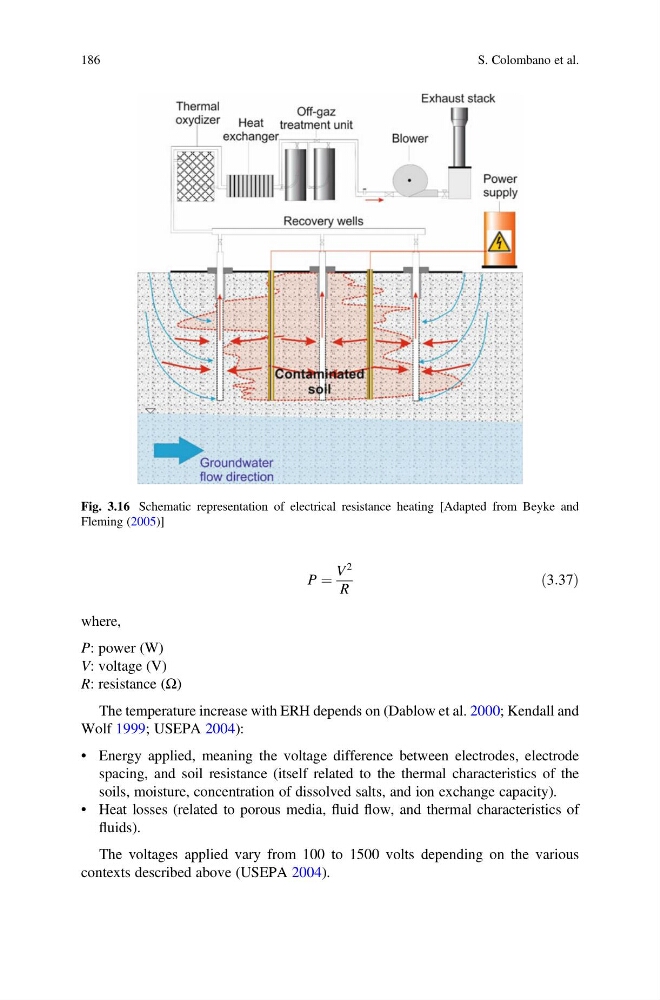
Fig. 3.16 Schematic representation of electrical resistance heating [Adapted from Beyke and
Fleming (2005)]
186
S. Colombano et al.
V
2
R
ð3:37Þ
where,
P: power (W)
V: voltage (V)
R: resistance (Ω)
The temperature increase with ERH depends on (Dablow et al. 2000; Kendall and
Wolf 1999; USEPA 2004):
• Energy applied, meaning the voltage difference between electrodes, electrode
spacing, and soil resistance (itself related to the thermal characteristics of the
soils, moisture, concentration of dissolved salts, and ion exchange capacity).
• Heat losses (related to porous media, fluid flow, and thermal characteristics of
fluids).
The voltages applied vary from 100 to 1500 volts depending on the various
contexts described above (USEPA 2004).
Fig. 3.16 Schematic representation of electrical resistance heating [Adapted from Beyke and
Fleming (2005)]
186
S. Colombano et al.