

Apart from food crops, many SSA countries produce crops that have non-food
uses for fibre, bioenergy and other industrial products (Singh 2010). These industrial
crops
2 cannot be usually used for food consumption (e.g. cotton, tobacco, jatropha)
or that have non-food uses but are also integral components of the food industry
without being staple crops (e.g. oil palm, sugarcane) (Wiggins et al. 2015; Singh
2010; Jarzebski et al. 2019). Many SSA governments perceive industrial crops as
opportunities for modernizing and diversifying the agricultural sector, and thus as
potent engines of economic growth and rural development (Schoneveld et al. 2011;
Gasparatos et al. 2015). Thus, many SSA countries have opened up their rural
frontiers for foreign direct investments (FDIs) related to industrial crop production
(Giovannetti and Ticci 2016) (Chap. 4 Vol. 1). This was especially pronounced
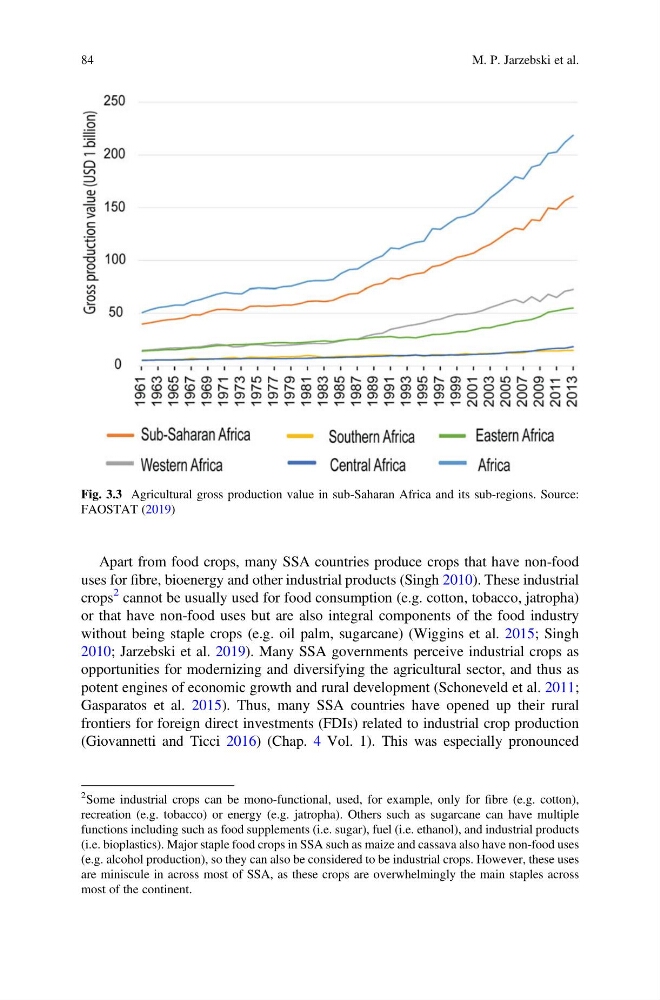
Fig. 3.3 Agricultural gross production value in sub-Saharan Africa and its sub-regions. Source:
FAOSTAT (2019)
2 Some industrial crops can be mono-functional, used, for example, only for fibre (e.g. cotton),
recreation (e.g. tobacco) or energy (e.g. jatropha). Others such as sugarcane can have multiple
functions including such as food supplements (i.e. sugar), fuel (i.e. ethanol), and industrial products
(i.e. bioplastics). Major staple food crops in SSA such as maize and cassava also have non-food uses
(e.g. alcohol production), so they can also be considered to be industrial crops. However, these uses
are miniscule in across most of SSA, as these crops are overwhelmingly the main staples across
most of the continent.
84
M. P. Jarzebski et al.
uses for fibre, bioenergy and other industrial products (Singh 2010). These industrial
crops
2 cannot be usually used for food consumption (e.g. cotton, tobacco, jatropha)
or that have non-food uses but are also integral components of the food industry
without being staple crops (e.g. oil palm, sugarcane) (Wiggins et al. 2015; Singh
2010; Jarzebski et al. 2019). Many SSA governments perceive industrial crops as
opportunities for modernizing and diversifying the agricultural sector, and thus as
potent engines of economic growth and rural development (Schoneveld et al. 2011;
Gasparatos et al. 2015). Thus, many SSA countries have opened up their rural
frontiers for foreign direct investments (FDIs) related to industrial crop production
(Giovannetti and Ticci 2016) (Chap. 4 Vol. 1). This was especially pronounced
Fig. 3.3 Agricultural gross production value in sub-Saharan Africa and its sub-regions. Source:
FAOSTAT (2019)
2 Some industrial crops can be mono-functional, used, for example, only for fibre (e.g. cotton),
recreation (e.g. tobacco) or energy (e.g. jatropha). Others such as sugarcane can have multiple
functions including such as food supplements (i.e. sugar), fuel (i.e. ethanol), and industrial products
(i.e. bioplastics). Major staple food crops in SSA such as maize and cassava also have non-food uses
(e.g. alcohol production), so they can also be considered to be industrial crops. However, these uses
are miniscule in across most of SSA, as these crops are overwhelmingly the main staples across
most of the continent.
84
M. P. Jarzebski et al.