

cocoyam and maize (39%), mixed food crops (22%) or C. mannii (ngon), plantain
and cocoyam systems. Black–brown (evindi-avie si) and sandy soils (neslek si) are
generally less associated with these agricultural systems (Table 10.5).
In essence, agricultural activities are managed locally through a multi-criteria
approach based on the presence of a series of local bio-indicators defined as markers
used to trace land suitability of lands for agriculture and associated practices. These
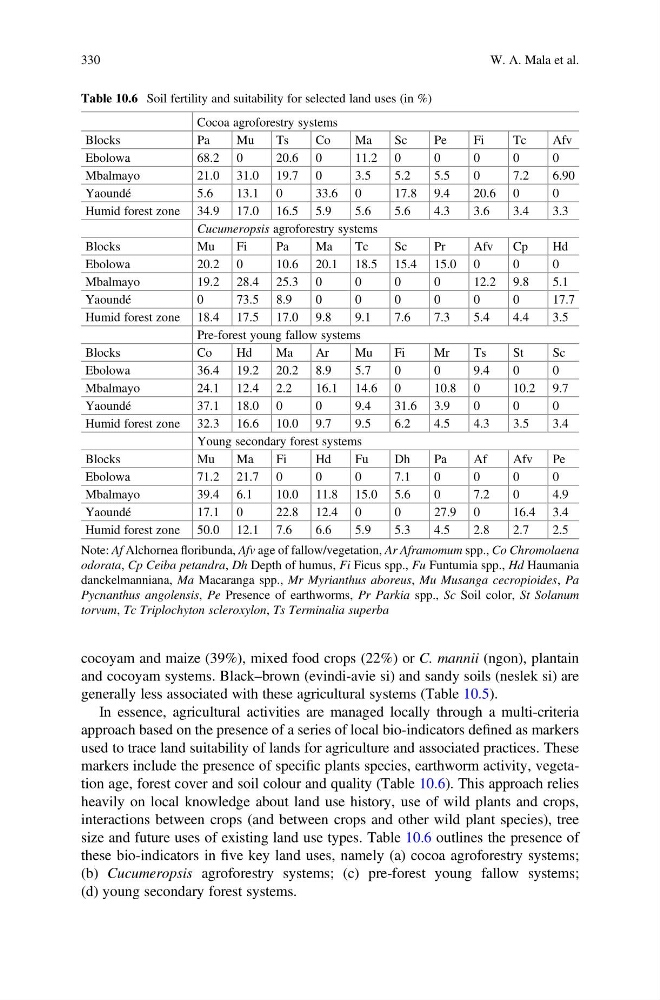
markers include the presence of specific plants species, earthworm activity, vegetation age, forest cover and soil colour and quality (Table 10.6). This approach relies
heavily on local knowledge about land use history, use of wild plants and crops,
interactions between crops (and between crops and other wild plant species), tree
size and future uses of existing land use types. Table 10.6 outlines the presence of
these bio-indicators in five key land uses, namely (a) cocoa agroforestry systems;
(b) Cucumeropsis agroforestry systems; (c) pre-forest young fallow systems;
(d) young secondary forest systems.
Table 10.6 Soil fertility and suitability for selected land uses (in %)
Cocoa agroforestry systems
Blocks
Pa
Mu
Ts
Co
Ma
Sc
Pe
Fi
Tc
Afv
Ebolowa
68.2 0
20.6 0
11.2 0
0
0
0
0
Mbalmayo
21.0 31.0 19.7 0
3.5
5.2
5.5
0
7.2
6.90
Yaoundé
5.6
13.1 0
33.6 0
17.8 9.4
20.6 0
0
Humid forest zone 34.9 17.0 16.5 5.9
5.6
5.6
4.3
3.6
3.4
3.3
Cucumeropsis agroforestry systems
Blocks
Mu
Fi
Pa
Ma
Tc
Sc
Pr
Afv
Cp
Hd
Ebolowa
20.2 0
10.6 20.1 18.5 15.4 15.0 0
0
0
Mbalmayo
19.2 28.4 25.3 0
0
0
0
12.2 9.8
5.1
Yaoundé
0
73.5 8.9
0
0
0
0
0
0
17.7
Humid forest zone 18.4 17.5 17.0 9.8
9.1
7.6
7.3
5.4
4.4
3.5
Pre-forest young fallow systems
Blocks
Co
Hd
Ma
Ar
Mu
Fi
Mr
Ts
St
Sc
Ebolowa
36.4 19.2 20.2 8.9
5.7
0
0
9.4
0
0
Mbalmayo
24.1 12.4 2.2
16.1 14.6 0
10.8 0
10.2 9.7
Yaoundé
37.1 18.0 0
0
9.4
31.6 3.9
0
0
0
Humid forest zone 32.3 16.6 10.0 9.7
9.5
6.2
4.5
4.3
3.5
3.4
Young secondary forest systems
Blocks
Mu
Ma
Fi
Hd
Fu
Dh
Pa
Af
Afv
Pe
Ebolowa
71.2 21.7 0
0
0
7 . 1
0
0
0
0
Mbalmayo
39.4 6.1
10.0 11.8 15.0 5.6
0
7.2
0
4.9
Yaoundé
17.1 0
22.8 12.4 0
0
27.9 0
16.4 3.4
Humid forest zone 50.0 12.1 7.6
6.6
5.9
5.3
4.5
2.8
2.7
2.5
Note: Af Alchornea floribunda, Afv age of fallow/vegetation, Ar Aframomum spp., Co Chromolaena
odorata, Cp Ceiba petandra, Dh Depth of humus, Fi Ficus spp., Fu Funtumia spp., Hd Haumania
danckelmanniana, Ma Macaranga spp., Mr Myrianthus aboreus, Mu Musanga cecropioides, Pa
Pycnanthus angolensis, Pe Presence of earthworms, Pr Parkia spp., Sc Soil color, St Solanum
torvum, Tc Triplochyton scleroxylon, Ts Terminalia superba
330
W. A. Mala et al.
and cocoyam systems. Black–brown (evindi-avie si) and sandy soils (neslek si) are
generally less associated with these agricultural systems (Table 10.5).
In essence, agricultural activities are managed locally through a multi-criteria
approach based on the presence of a series of local bio-indicators defined as markers
used to trace land suitability of lands for agriculture and associated practices. These
markers include the presence of specific plants species, earthworm activity, vegetation age, forest cover and soil colour and quality (Table 10.6). This approach relies
heavily on local knowledge about land use history, use of wild plants and crops,
interactions between crops (and between crops and other wild plant species), tree
size and future uses of existing land use types. Table 10.6 outlines the presence of
these bio-indicators in five key land uses, namely (a) cocoa agroforestry systems;
(b) Cucumeropsis agroforestry systems; (c) pre-forest young fallow systems;
(d) young secondary forest systems.
Table 10.6 Soil fertility and suitability for selected land uses (in %)
Cocoa agroforestry systems
Blocks
Pa
Mu
Ts
Co
Ma
Sc
Pe
Fi
Tc
Afv
Ebolowa
68.2 0
20.6 0
11.2 0
0
0
0
0
Mbalmayo
21.0 31.0 19.7 0
3.5
5.2
5.5
0
7.2
6.90
Yaoundé
5.6
13.1 0
33.6 0
17.8 9.4
20.6 0
0
Humid forest zone 34.9 17.0 16.5 5.9
5.6
5.6
4.3
3.6
3.4
3.3
Cucumeropsis agroforestry systems
Blocks
Mu
Fi
Pa
Ma
Tc
Sc
Pr
Afv
Cp
Hd
Ebolowa
20.2 0
10.6 20.1 18.5 15.4 15.0 0
0
0
Mbalmayo
19.2 28.4 25.3 0
0
0
0
12.2 9.8
5.1
Yaoundé
0
73.5 8.9
0
0
0
0
0
0
17.7
Humid forest zone 18.4 17.5 17.0 9.8
9.1
7.6
7.3
5.4
4.4
3.5
Pre-forest young fallow systems
Blocks
Co
Hd
Ma
Ar
Mu
Fi
Mr
Ts
St
Sc
Ebolowa
36.4 19.2 20.2 8.9
5.7
0
0
9.4
0
0
Mbalmayo
24.1 12.4 2.2
16.1 14.6 0
10.8 0
10.2 9.7
Yaoundé
37.1 18.0 0
0
9.4
31.6 3.9
0
0
0
Humid forest zone 32.3 16.6 10.0 9.7
9.5
6.2
4.5
4.3
3.5
3.4
Young secondary forest systems
Blocks
Mu
Ma
Fi
Hd
Fu
Dh
Pa
Af
Afv
Pe
Ebolowa
71.2 21.7 0
0
0
7 . 1
0
0
0
0
Mbalmayo
39.4 6.1
10.0 11.8 15.0 5.6
0
7.2
0
4.9
Yaoundé
17.1 0
22.8 12.4 0
0
27.9 0
16.4 3.4
Humid forest zone 50.0 12.1 7.6
6.6
5.9
5.3
4.5
2.8
2.7
2.5
Note: Af Alchornea floribunda, Afv age of fallow/vegetation, Ar Aframomum spp., Co Chromolaena
odorata, Cp Ceiba petandra, Dh Depth of humus, Fi Ficus spp., Fu Funtumia spp., Hd Haumania
danckelmanniana, Ma Macaranga spp., Mr Myrianthus aboreus, Mu Musanga cecropioides, Pa
Pycnanthus angolensis, Pe Presence of earthworms, Pr Parkia spp., Sc Soil color, St Solanum
torvum, Tc Triplochyton scleroxylon, Ts Terminalia superba
330
W. A. Mala et al.