

biomass fuels to more diversified energy portfolios in the domestic sector and
(b) improved energy generation and efficiency (Leimbach et al. 2018). However,
many challenges prohibit the transition of the current energy systems and the
increased penetration of modern energy technologies, including the inadequate and
unsupportive energy policies, poor technological diffusion, underdeveloped/crumbling energy infrastructure, low awareness about the benefits of modern energy
technologies, last-mile distribution constraints, low end-user affordability and a
series of other context-specific cultural, technical and environmental factors
(ESMAP 2019; Davies 2018; Mohammed et al. 2013; Schwerhoff and Sy 2017;
Karanja and Gasparatos 2019; IEA 2019).
1.2.8 SDG 8: Decent Work and Economic Growth
Many SSA countries have had robust economic growth since the 1990s, expanding
substantially their national economies and moving millions of people out of poverty
(Sect. 1.2.1) (AfDB 2019a; Arndt et al. 2016). However, this economic growth has
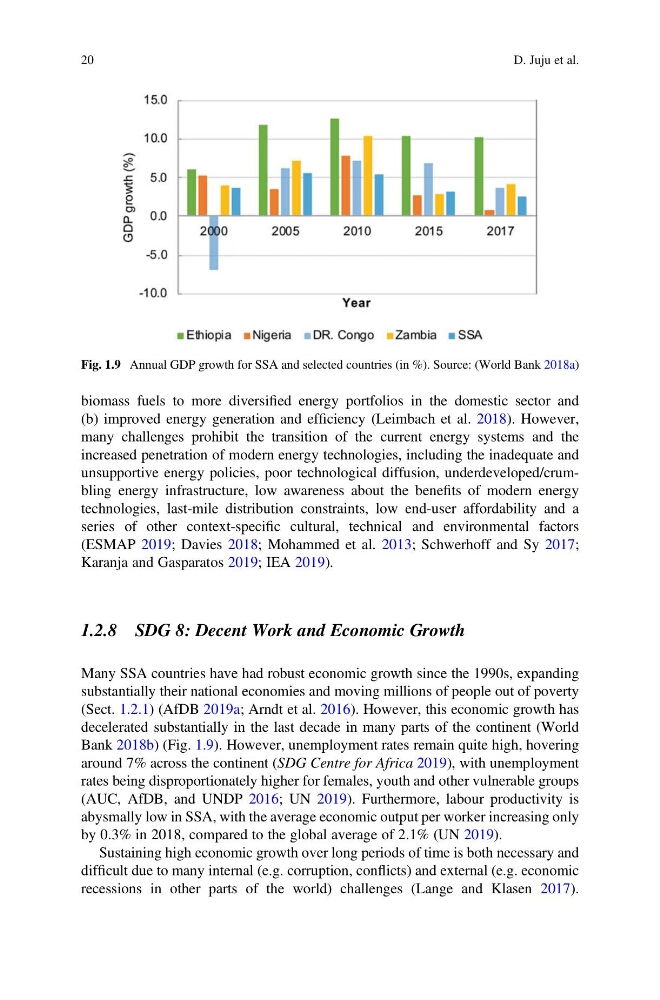
decelerated substantially in the last decade in many parts of the continent (World
Bank 2018b) (Fig. 1.9). However, unemployment rates remain quite high, hovering
around 7% across the continent (SDG Centre for Africa 2019), with unemployment
rates being disproportionately higher for females, youth and other vulnerable groups
(AUC, AfDB, and UNDP 2016; UN 2019). Furthermore, labour productivity is
abysmally low in SSA, with the average economic output per worker increasing only
by 0.3% in 2018, compared to the global average of 2.1% (UN 2019).
Sustaining high economic growth over long periods of time is both necessary and
difficult due to many internal (e.g. corruption, conflicts) and external (e.g. economic
recessions in other parts of the world) challenges (Lange and Klasen 2017).
Fig. 1.9 Annual GDP growth for SSA and selected countries (in %). Source: (World Bank 2018a)
20
D. Juju et al.
(b) improved energy generation and efficiency (Leimbach et al. 2018). However,
many challenges prohibit the transition of the current energy systems and the
increased penetration of modern energy technologies, including the inadequate and
unsupportive energy policies, poor technological diffusion, underdeveloped/crumbling energy infrastructure, low awareness about the benefits of modern energy
technologies, last-mile distribution constraints, low end-user affordability and a
series of other context-specific cultural, technical and environmental factors
(ESMAP 2019; Davies 2018; Mohammed et al. 2013; Schwerhoff and Sy 2017;
Karanja and Gasparatos 2019; IEA 2019).
1.2.8 SDG 8: Decent Work and Economic Growth
Many SSA countries have had robust economic growth since the 1990s, expanding
substantially their national economies and moving millions of people out of poverty
(Sect. 1.2.1) (AfDB 2019a; Arndt et al. 2016). However, this economic growth has
decelerated substantially in the last decade in many parts of the continent (World
Bank 2018b) (Fig. 1.9). However, unemployment rates remain quite high, hovering
around 7% across the continent (SDG Centre for Africa 2019), with unemployment
rates being disproportionately higher for females, youth and other vulnerable groups
(AUC, AfDB, and UNDP 2016; UN 2019). Furthermore, labour productivity is
abysmally low in SSA, with the average economic output per worker increasing only
by 0.3% in 2018, compared to the global average of 2.1% (UN 2019).
Sustaining high economic growth over long periods of time is both necessary and
difficult due to many internal (e.g. corruption, conflicts) and external (e.g. economic
recessions in other parts of the world) challenges (Lange and Klasen 2017).
Fig. 1.9 Annual GDP growth for SSA and selected countries (in %). Source: (World Bank 2018a)
20
D. Juju et al.