

(~21,000 cal yr BP) was a period of very low rainfall and temperature, while the
subsequent Younger Dryas period (from ~12,900 to ~11,700 cal yr BP) was a short,
but intensely dry, period. During these two periods, forests in central Africa were
supposedly reduced to small patches (Maley 1989, 1996). Rainfall started increasing
at the beginning of the Holocene (~11,700 cal yr BP), reaching higher rainfall levels
than currently observed, with this period commonly referred to as the African Humid
Period (de Menocal et al. 2000; Shanahan et al. 2015). During this period, tropical
forests were more widespread across central Africa than currently (Vincens et al.
2010, 1998; Lebamba et al. 2016).
The African Humid Period ended abruptly at ~4000 cal yr BP, and was followed
by the “third millennium rainforest crisis.” This period was characterized by low
rainfall and major droughts that lasted until 1200 cal yr BP (Vincens et al. 1999),
resulting in major perturbations across the Congo forest block. The relative roles of
climate and people during the third millennium crisis have been hotly debated in the
literature. Some scholars favor the climate hypothesis (Maley et al. 2012; Neumann
et al. 2012b; Lézine et al. 2013; Giresse et al. 2018), and others suggest that the
migration of Bantu people from the border of Cameroon and Nigeria also contributed to large-scale forest disturbances (Bayon et al. 2012; Garcin et al. 2018). The
Bantu people were farmers and metallurgists (Bostoen et al. 2015) who used slashand-burn farming techniques and required large quantities of wood for metal
processing. They tended to farm pearl millet (Neumann et al. 2012a) and raise cattle
(Grollemund et al. 2015) within the tropical forest of western and central Africa.
Even if they were not responsible for this large-scale event, they may have caused
more localized perturbations (Garcin et al. 2018), through canopy opening and wood
collection (Van Gemerden et al. 2003; Neumann et al. 2012a). Additionally, charcoal has been found in lakes, wetlands and soils, in the deepest parts of the forest,
suggesting localized forest burning (Hubau et al. 2013; Tovar et al. 2014; Biwolé
et al. 2015; Morin-Rivat et al. 2016). There was an increasing occurrence of
charcoals, as seasonality increased drastically in ~2500 cal yr BP (Hubau et al.
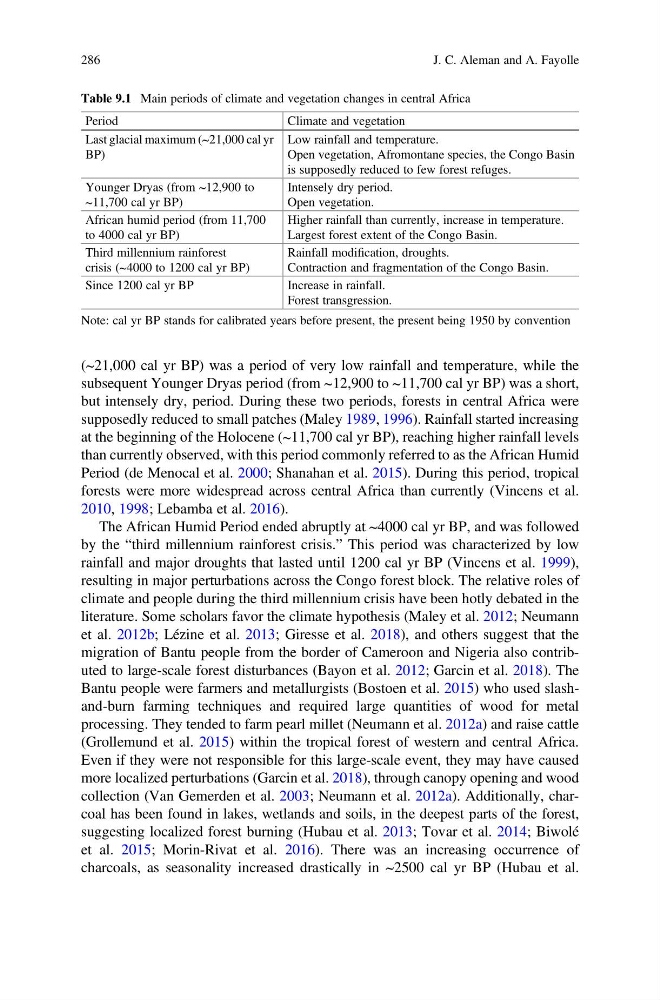
Table 9.1 Main periods of climate and vegetation changes in central Africa
Period
Climate and vegetation
Last glacial maximum (~21,000 cal yr
BP)
Low rainfall and temperature.
Open vegetation, Afromontane species, the Congo Basin
is supposedly reduced to few forest refuges.
Younger Dryas (from ~12,900 to
~11,700 cal yr BP)
Intensely dry period.
Open vegetation.
African humid period (from 11,700
to 4000 cal yr BP)
Higher rainfall than currently, increase in temperature.
Largest forest extent of the Congo Basin.
Third millennium rainforest
crisis (~4000 to 1200 cal yr BP)
Rainfall modification, droughts.
Contraction and fragmentation of the Congo Basin.
Since 1200 cal yr BP
Increase in rainfall.
Forest transgression.
Note: cal yr BP stands for calibrated years before present, the present being 1950 by convention
286
J. C. Aleman and A. Fayolle
subsequent Younger Dryas period (from ~12,900 to ~11,700 cal yr BP) was a short,
but intensely dry, period. During these two periods, forests in central Africa were
supposedly reduced to small patches (Maley 1989, 1996). Rainfall started increasing
at the beginning of the Holocene (~11,700 cal yr BP), reaching higher rainfall levels
than currently observed, with this period commonly referred to as the African Humid
Period (de Menocal et al. 2000; Shanahan et al. 2015). During this period, tropical
forests were more widespread across central Africa than currently (Vincens et al.
2010, 1998; Lebamba et al. 2016).
The African Humid Period ended abruptly at ~4000 cal yr BP, and was followed
by the “third millennium rainforest crisis.” This period was characterized by low
rainfall and major droughts that lasted until 1200 cal yr BP (Vincens et al. 1999),
resulting in major perturbations across the Congo forest block. The relative roles of
climate and people during the third millennium crisis have been hotly debated in the
literature. Some scholars favor the climate hypothesis (Maley et al. 2012; Neumann
et al. 2012b; Lézine et al. 2013; Giresse et al. 2018), and others suggest that the
migration of Bantu people from the border of Cameroon and Nigeria also contributed to large-scale forest disturbances (Bayon et al. 2012; Garcin et al. 2018). The
Bantu people were farmers and metallurgists (Bostoen et al. 2015) who used slashand-burn farming techniques and required large quantities of wood for metal
processing. They tended to farm pearl millet (Neumann et al. 2012a) and raise cattle
(Grollemund et al. 2015) within the tropical forest of western and central Africa.
Even if they were not responsible for this large-scale event, they may have caused
more localized perturbations (Garcin et al. 2018), through canopy opening and wood
collection (Van Gemerden et al. 2003; Neumann et al. 2012a). Additionally, charcoal has been found in lakes, wetlands and soils, in the deepest parts of the forest,
suggesting localized forest burning (Hubau et al. 2013; Tovar et al. 2014; Biwolé
et al. 2015; Morin-Rivat et al. 2016). There was an increasing occurrence of
charcoals, as seasonality increased drastically in ~2500 cal yr BP (Hubau et al.
Table 9.1 Main periods of climate and vegetation changes in central Africa
Period
Climate and vegetation
Last glacial maximum (~21,000 cal yr
BP)
Low rainfall and temperature.
Open vegetation, Afromontane species, the Congo Basin
is supposedly reduced to few forest refuges.
Younger Dryas (from ~12,900 to
~11,700 cal yr BP)
Intensely dry period.
Open vegetation.
African humid period (from 11,700
to 4000 cal yr BP)
Higher rainfall than currently, increase in temperature.
Largest forest extent of the Congo Basin.
Third millennium rainforest
crisis (~4000 to 1200 cal yr BP)
Rainfall modification, droughts.
Contraction and fragmentation of the Congo Basin.
Since 1200 cal yr BP
Increase in rainfall.
Forest transgression.
Note: cal yr BP stands for calibrated years before present, the present being 1950 by convention
286
J. C. Aleman and A. Fayolle