

impacted by the rampant scarcity of clean water and adequate sanitation, as they
spend disproportionate amount of time fetching water (Demie et al. 2016).
Technical inefficiencies (e.g. poor infrastructure, incompetent staff), corruption,
financial constraints and institutional failures are some further challenges that
impede the expansion of sanitation and drinking water delivery systems, especially
in rural areas (Marson and Savin 2015; Ndikumana and Pickbourn 2017; UNECA
2018). For example, a study in six West African countries (i.e. Nigeria, Niger, Chad,
Togo, Sierra Leone, Mauritania) identified poor infrastructure, bureaucratic inefficiencies and low participation of the private sector in water supply systems as the
primary challenges for achieving the water and sanitation targets (Alagidede and
Alagidede 2016). To overcome the major funding constraints, some SSA countries
try to use the revenue generated from water utilities (mainly in urban areas) to
finance the expansion of water and sanitation services to new areas. Yet ensuring a
fair and efficient utilization of such funds remains a significant challenge in most
countries (Alagidede and Alagidede 2016). Contrary to urban areas, the privatization
of water services in rural areas appears infeasible due to low profit, which possibly
further constraints the delivery of adequate sanitation and drinking water services in
rural areas (Bayliss, 2003; Budds and McGranahan 2003).
With a large and expanding fraction of the SSA urban population living in slums
(Sect. 1.1), ensuring the adequate access to clean water and sanitation in such urban
informal settlements becomes a priority (Mboumboue and Njomo 2016). However,
it is often difficult to find appropriate locations in slums to install water and
sanitation facilities and ensure their proper management. Furthermore, most slum
dwellers cannot afford to pay utility bills and adequately maintain the water and
sanitation facilities (Cobbinah et al. 2015; Tsinda et al. 2013). There are valid
concerns that due to the rapid slum growth and expansion, most of the SSA
governments will not be able to provide these services for free or subsidize them,
unless supported by external donors, which could prove to be difficult considering
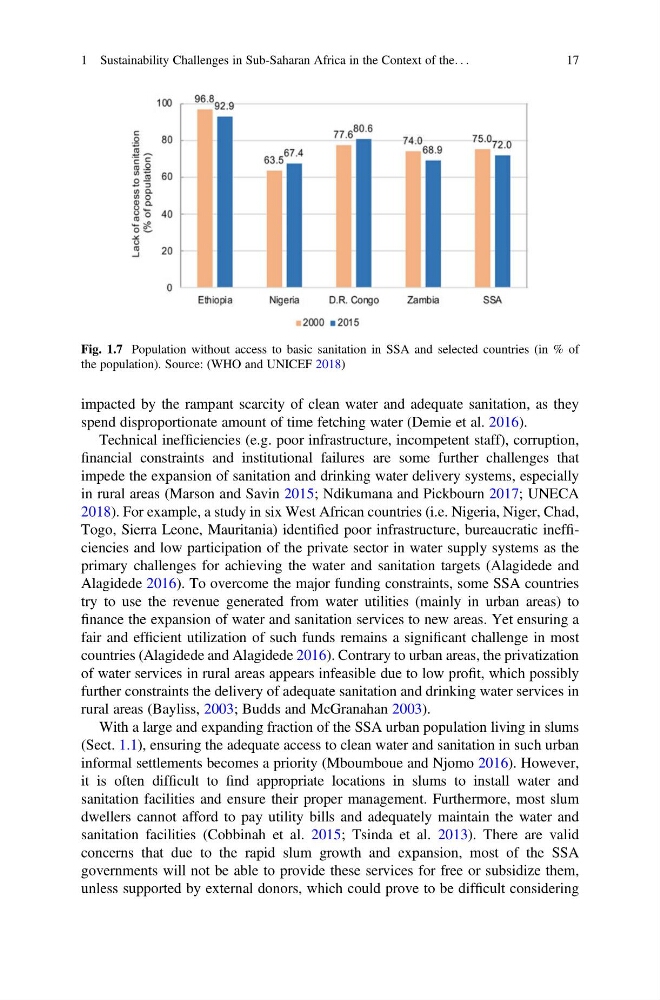
Fig. 1.7 Population without access to basic sanitation in SSA and selected countries (in % of
the population). Source: (WHO and UNICEF 2018)
1 Sustainability Challenges in Sub-Saharan Africa in the Context of the. . .
17
spend disproportionate amount of time fetching water (Demie et al. 2016).
Technical inefficiencies (e.g. poor infrastructure, incompetent staff), corruption,
financial constraints and institutional failures are some further challenges that
impede the expansion of sanitation and drinking water delivery systems, especially
in rural areas (Marson and Savin 2015; Ndikumana and Pickbourn 2017; UNECA
2018). For example, a study in six West African countries (i.e. Nigeria, Niger, Chad,
Togo, Sierra Leone, Mauritania) identified poor infrastructure, bureaucratic inefficiencies and low participation of the private sector in water supply systems as the
primary challenges for achieving the water and sanitation targets (Alagidede and
Alagidede 2016). To overcome the major funding constraints, some SSA countries
try to use the revenue generated from water utilities (mainly in urban areas) to
finance the expansion of water and sanitation services to new areas. Yet ensuring a
fair and efficient utilization of such funds remains a significant challenge in most
countries (Alagidede and Alagidede 2016). Contrary to urban areas, the privatization
of water services in rural areas appears infeasible due to low profit, which possibly
further constraints the delivery of adequate sanitation and drinking water services in
rural areas (Bayliss, 2003; Budds and McGranahan 2003).
With a large and expanding fraction of the SSA urban population living in slums
(Sect. 1.1), ensuring the adequate access to clean water and sanitation in such urban
informal settlements becomes a priority (Mboumboue and Njomo 2016). However,
it is often difficult to find appropriate locations in slums to install water and
sanitation facilities and ensure their proper management. Furthermore, most slum
dwellers cannot afford to pay utility bills and adequately maintain the water and
sanitation facilities (Cobbinah et al. 2015; Tsinda et al. 2013). There are valid
concerns that due to the rapid slum growth and expansion, most of the SSA
governments will not be able to provide these services for free or subsidize them,
unless supported by external donors, which could prove to be difficult considering
Fig. 1.7 Population without access to basic sanitation in SSA and selected countries (in % of
the population). Source: (WHO and UNICEF 2018)
1 Sustainability Challenges in Sub-Saharan Africa in the Context of the. . .
17