

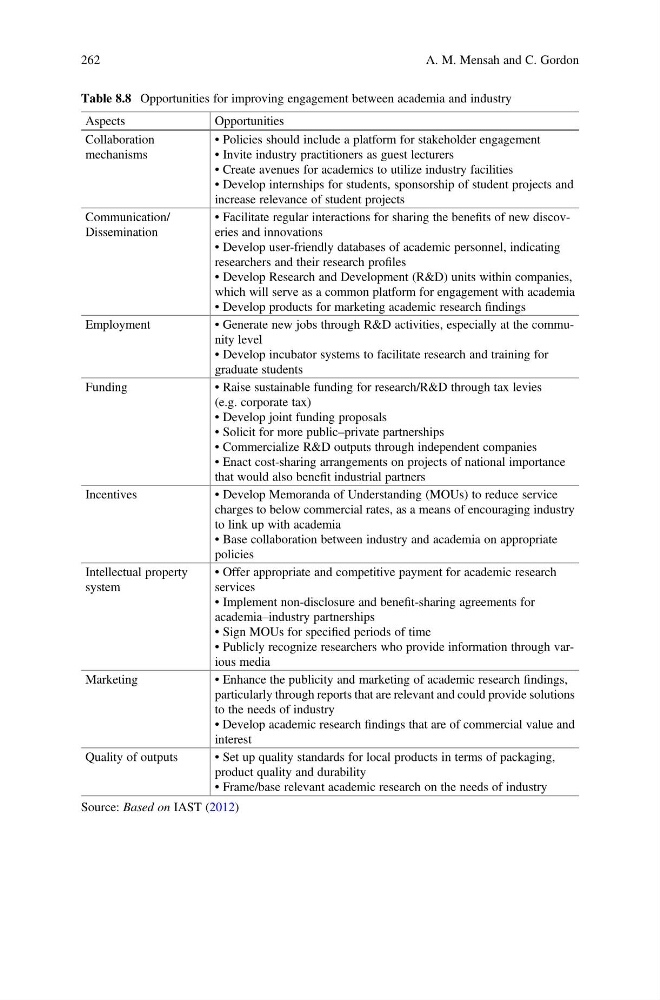
Table 8.8 Opportunities for improving engagement between academia and industry
Aspects
Opportunities
Collaboration
mechanisms
• Policies should include a platform for stakeholder engagement
• Invite industry practitioners as guest lecturers
• Create avenues for academics to utilize industry facilities
• Develop internships for students, sponsorship of student projects and
increase relevance of student projects
Communication/
Dissemination
• Facilitate regular interactions for sharing the benefits of new discoveries and innovations
• Develop user-friendly databases of academic personnel, indicating
researchers and their research profiles
• Develop Research and Development (R&D) units within companies,
which will serve as a common platform for engagement with academia
• Develop products for marketing academic research findings
Employment
• Generate new jobs through R&D activities, especially at the community level
• Develop incubator systems to facilitate research and training for
graduate students
Funding
• Raise sustainable funding for research/R&D through tax levies
(e.g. corporate tax)
• Develop joint funding proposals
• Solicit for more public–private partnerships
• Commercialize R&D outputs through independent companies
• Enact cost-sharing arrangements on projects of national importance
that would also benefit industrial partners
Incentives
• Develop Memoranda of Understanding (MOUs) to reduce service
charges to below commercial rates, as a means of encouraging industry
to link up with academia
• Base collaboration between industry and academia on appropriate
policies
Intellectual property
system
• Offer appropriate and competitive payment for academic research
services
• Implement non-disclosure and benefit-sharing agreements for
academia–industry partnerships
• Sign MOUs for specified periods of time
• Publicly recognize researchers who provide information through various media
Marketing
• Enhance the publicity and marketing of academic research findings,
particularly through reports that are relevant and could provide solutions
to the needs of industry
• Develop academic research findings that are of commercial value and
interest
Quality of outputs
• Set up quality standards for local products in terms of packaging,
product quality and durability
• Frame/base relevant academic research on the needs of industry
Source: Based on IAST (2012)
262
A. M. Mensah and C. Gordon
Aspects
Opportunities
Collaboration
mechanisms
• Policies should include a platform for stakeholder engagement
• Invite industry practitioners as guest lecturers
• Create avenues for academics to utilize industry facilities
• Develop internships for students, sponsorship of student projects and
increase relevance of student projects
Communication/
Dissemination
• Facilitate regular interactions for sharing the benefits of new discoveries and innovations
• Develop user-friendly databases of academic personnel, indicating
researchers and their research profiles
• Develop Research and Development (R&D) units within companies,
which will serve as a common platform for engagement with academia
• Develop products for marketing academic research findings
Employment
• Generate new jobs through R&D activities, especially at the community level
• Develop incubator systems to facilitate research and training for
graduate students
Funding
• Raise sustainable funding for research/R&D through tax levies
(e.g. corporate tax)
• Develop joint funding proposals
• Solicit for more public–private partnerships
• Commercialize R&D outputs through independent companies
• Enact cost-sharing arrangements on projects of national importance
that would also benefit industrial partners
Incentives
• Develop Memoranda of Understanding (MOUs) to reduce service
charges to below commercial rates, as a means of encouraging industry
to link up with academia
• Base collaboration between industry and academia on appropriate
policies
Intellectual property
system
• Offer appropriate and competitive payment for academic research
services
• Implement non-disclosure and benefit-sharing agreements for
academia–industry partnerships
• Sign MOUs for specified periods of time
• Publicly recognize researchers who provide information through various media
Marketing
• Enhance the publicity and marketing of academic research findings,
particularly through reports that are relevant and could provide solutions
to the needs of industry
• Develop academic research findings that are of commercial value and
interest
Quality of outputs
• Set up quality standards for local products in terms of packaging,
product quality and durability
• Frame/base relevant academic research on the needs of industry
Source: Based on IAST (2012)
262
A. M. Mensah and C. Gordon