

population, mainly due to changes in lifestyle (e.g. unhealthy eating habits, sedentary lifestyles) (WHO 2018a). Interestingly SSA has by far the largest fraction of
road accident fatalities globally (UNECA 2017).
Population growth, low health literacy,
1 rapid urbanization and the lack of
comprehensive national civil registration systems and vital statistics, are some of
the many challenges for expanding healthcare systems, improving public health, and
essentially meeting SDG3 across the continent (de Vries et al. 2014; Amoah and
Phillips 2018). For instance, only one-third of the Ghanaian population has adequate
health literacy, which constraints the performance of a national health system that is
considered as one of the most promising in the region (Amoah and Phillips 2018).
Similarly, traditional beliefs and negative perceptions (e.g. newborn babies not
regarded as worthy family members in rural Ethiopia), are major impediments for
expanding health care services to newborns (Onarheim et al., 2017).
Inadequate finance, dysfunctional logistics and poor infrastructure
(e.g. inefficient telecommunication networks) have rendered the delivery and monitoring of healthcare services costly in most SAA countries (Brinkel et al. 2014). For
example, in Namibia the ongoing efforts to deal with pressing health issues such as
HIV/AIDS are constrained by the lack of skilled health professionals, inadequate
health infrastructure and financial resources to reach out to marginalized communities (King et al., 2017). It is expected that the increasing prevalence of
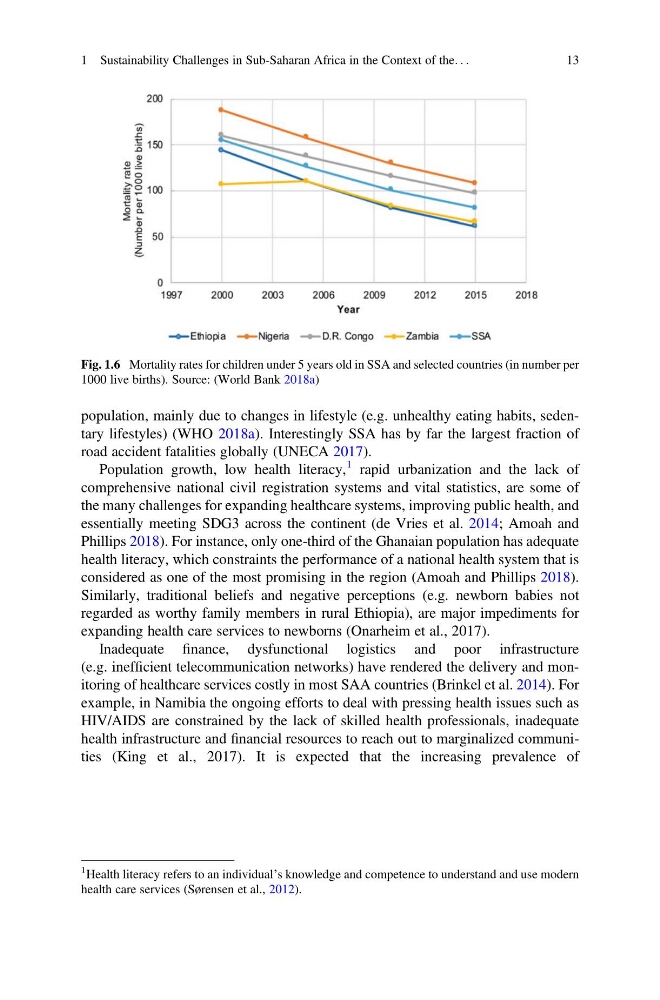
Fig. 1.6 Mortality rates for children under 5 years old in SSA and selected countries (in number per
1000 live births). Source: (World Bank 2018a)
1 Health literacy refers to an individual’s knowledge and competence to understand and use modern
health care services (Sørensen et al., 2012).
1 Sustainability Challenges in Sub-Saharan Africa in the Context of the. . .
13
road accident fatalities globally (UNECA 2017).
Population growth, low health literacy,
1 rapid urbanization and the lack of
comprehensive national civil registration systems and vital statistics, are some of
the many challenges for expanding healthcare systems, improving public health, and
essentially meeting SDG3 across the continent (de Vries et al. 2014; Amoah and
Phillips 2018). For instance, only one-third of the Ghanaian population has adequate
health literacy, which constraints the performance of a national health system that is
considered as one of the most promising in the region (Amoah and Phillips 2018).
Similarly, traditional beliefs and negative perceptions (e.g. newborn babies not
regarded as worthy family members in rural Ethiopia), are major impediments for
expanding health care services to newborns (Onarheim et al., 2017).
Inadequate finance, dysfunctional logistics and poor infrastructure
(e.g. inefficient telecommunication networks) have rendered the delivery and monitoring of healthcare services costly in most SAA countries (Brinkel et al. 2014). For
example, in Namibia the ongoing efforts to deal with pressing health issues such as
HIV/AIDS are constrained by the lack of skilled health professionals, inadequate
health infrastructure and financial resources to reach out to marginalized communities (King et al., 2017). It is expected that the increasing prevalence of
Fig. 1.6 Mortality rates for children under 5 years old in SSA and selected countries (in number per
1000 live births). Source: (World Bank 2018a)
1 Health literacy refers to an individual’s knowledge and competence to understand and use modern
health care services (Sørensen et al., 2012).
1 Sustainability Challenges in Sub-Saharan Africa in the Context of the. . .
13