

and ODA flows in Africa. In particular, the literature views capacity building
(mainly in terms of strengthening institutions and human capital) as a pathway to
avoid/reduce corruption, thus having a positive effect on political stability, infrastructure development and the design and implementation of sound investment
policies (Fig. 5.11). Capacity building thus entails the realization of actions that
improve the ability of relevant stakeholders to make informed decisions, and identify
policy/practice objectives and priorities using reliable/complete information and
appropriate decision support tools (Honadle 1981). In the context of transformative
interventions for improving the ability to attract FDI and ODA, capacity-building
efforts should focus on improving management practices for (a) the delivery of
public goods and services (e.g. infrastructure, health, education) (Cumming et al.
2017; Dupasquier and Osakwe 2006; Gui-Diby and Renard 2015; Yakovleva et al.
2017) and (b) resource mobilization (e.g. through tax system, development/implementation of robust policies) (Dupasquier and Osakwe 2006; Cumming et al. 2017;
Dunning 2004).
Having in place strong domestic regulatory frameworks and incentive conveys an
ability to acquire and use effectively FDIs and ODA, and thus increases the
attractiveness of recipient countries. This is because such regulatory frameworks
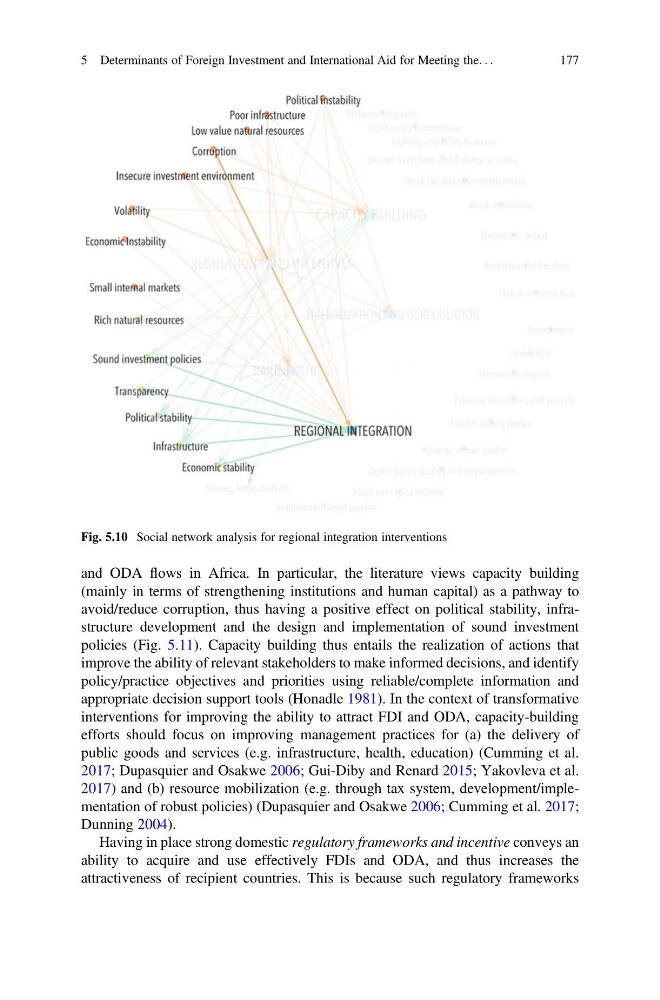
Fig. 5.10 Social network analysis for regional integration interventions
5 Determinants of Foreign Investment and International Aid for Meeting the. . .
177
(mainly in terms of strengthening institutions and human capital) as a pathway to
avoid/reduce corruption, thus having a positive effect on political stability, infrastructure development and the design and implementation of sound investment
policies (Fig. 5.11). Capacity building thus entails the realization of actions that
improve the ability of relevant stakeholders to make informed decisions, and identify
policy/practice objectives and priorities using reliable/complete information and
appropriate decision support tools (Honadle 1981). In the context of transformative
interventions for improving the ability to attract FDI and ODA, capacity-building
efforts should focus on improving management practices for (a) the delivery of
public goods and services (e.g. infrastructure, health, education) (Cumming et al.
2017; Dupasquier and Osakwe 2006; Gui-Diby and Renard 2015; Yakovleva et al.
2017) and (b) resource mobilization (e.g. through tax system, development/implementation of robust policies) (Dupasquier and Osakwe 2006; Cumming et al. 2017;
Dunning 2004).
Having in place strong domestic regulatory frameworks and incentive conveys an
ability to acquire and use effectively FDIs and ODA, and thus increases the
attractiveness of recipient countries. This is because such regulatory frameworks
Fig. 5.10 Social network analysis for regional integration interventions
5 Determinants of Foreign Investment and International Aid for Meeting the. . .
177