

land conversion in most countries (Locke and Henley 2013). Recently, palm oil
production has increased sharply in Central and Western Africa to meet an the
burgeoning regional and global demand (Ordway et al. 2017; Carrere 2013).
The main modes of industrial crop production include (a) smallholder-based
schemes, (b) large plantations and (c) hybrids systems that combine large-scale
and smallholder-based production (Fig. 3.7). These production systems are integrated in radically different land uses, usually representing a mosaic of agricultural
land and natural ecosystems (Gasparatos et al. 2018).
Smallholder-based production is most typically integrated into current farming
practices (e.g. intercropping, hedge growing) or totally displaces prior cropping
practices (e.g. small block plantations within smallholder farms), with the latter
being common in sugarcane production (von Maltitz et al. 2018) (Box 3.1).
Smallholder-based systems are often small in size (usually below 5 ha) using labour
from inside the household (Lowder et al. 2016). In some cases smallholders have
access to agricultural inputs, irrigation and credit, usually through rural development
efforts of the respective governments, organization of smallholders in growers’
groups and/or extension efforts of government and/or industrial crop companies
(von Maltitz et al. 2019; Burney et al. 2013).
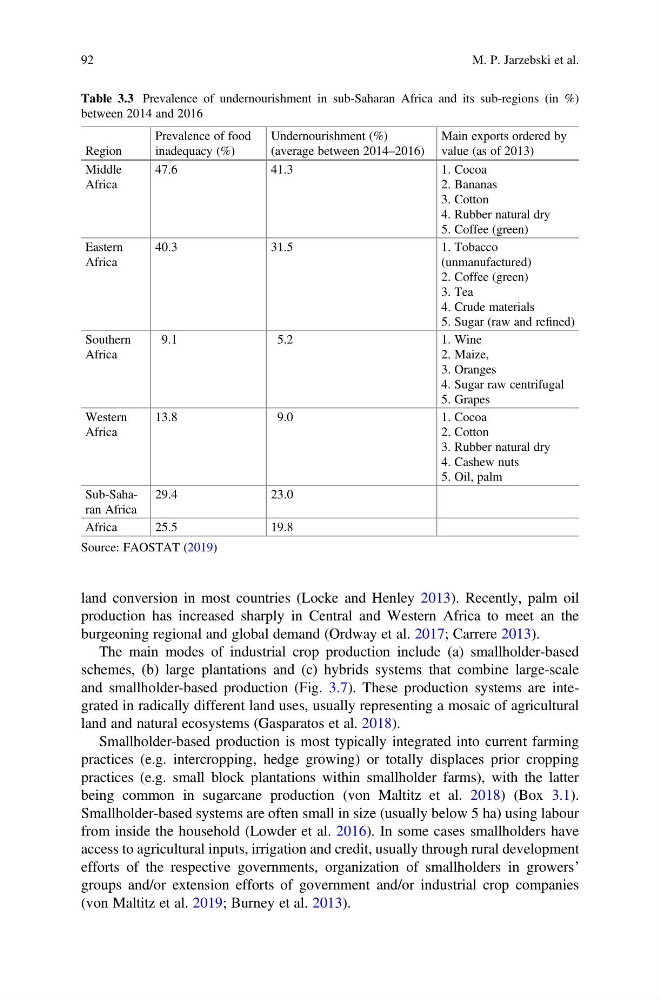
Table 3.3 Prevalence of undernourishment in sub-Saharan Africa and its sub-regions (in %)
between 2014 and 2016
Region
Prevalence of food
inadequacy (%)
Undernourishment (%)
(average between 2014–2016)
Main exports ordered by
value (as of 2013)
Middle
Africa
47.6
41.3
1. Cocoa
2. Bananas
3. Cotton
4. Rubber natural dry
5. Coffee (green)
Eastern
Africa
40.3
31.5
1. Tobacco
(unmanufactured)
2. Coffee (green)
3. Tea
4. Crude materials
5. Sugar (raw and refined)
Southern
Africa
9.1
5.2
1. Wine
2. Maize,
3. Oranges
4. Sugar raw centrifugal
5. Grapes
Western
Africa
13.8
9.0
1. Cocoa
2. Cotton
3. Rubber natural dry
4. Cashew nuts
5. Oil, palm
Sub-Saharan Africa
29.4
23.0
Africa
25.5
19.8
Source: FAOSTAT (2019)
92
M. P. Jarzebski et al.
production has increased sharply in Central and Western Africa to meet an the
burgeoning regional and global demand (Ordway et al. 2017; Carrere 2013).
The main modes of industrial crop production include (a) smallholder-based
schemes, (b) large plantations and (c) hybrids systems that combine large-scale
and smallholder-based production (Fig. 3.7). These production systems are integrated in radically different land uses, usually representing a mosaic of agricultural
land and natural ecosystems (Gasparatos et al. 2018).
Smallholder-based production is most typically integrated into current farming
practices (e.g. intercropping, hedge growing) or totally displaces prior cropping
practices (e.g. small block plantations within smallholder farms), with the latter
being common in sugarcane production (von Maltitz et al. 2018) (Box 3.1).
Smallholder-based systems are often small in size (usually below 5 ha) using labour
from inside the household (Lowder et al. 2016). In some cases smallholders have
access to agricultural inputs, irrigation and credit, usually through rural development
efforts of the respective governments, organization of smallholders in growers’
groups and/or extension efforts of government and/or industrial crop companies
(von Maltitz et al. 2019; Burney et al. 2013).
Table 3.3 Prevalence of undernourishment in sub-Saharan Africa and its sub-regions (in %)
between 2014 and 2016
Region
Prevalence of food
inadequacy (%)
Undernourishment (%)
(average between 2014–2016)
Main exports ordered by
value (as of 2013)
Middle
Africa
47.6
41.3
1. Cocoa
2. Bananas
3. Cotton
4. Rubber natural dry
5. Coffee (green)
Eastern
Africa
40.3
31.5
1. Tobacco
(unmanufactured)
2. Coffee (green)
3. Tea
4. Crude materials
5. Sugar (raw and refined)
Southern
Africa
9.1
5.2
1. Wine
2. Maize,
3. Oranges
4. Sugar raw centrifugal
5. Grapes
Western
Africa
13.8
9.0
1. Cocoa
2. Cotton
3. Rubber natural dry
4. Cashew nuts
5. Oil, palm
Sub-Saharan Africa
29.4
23.0
Africa
25.5
19.8
Source: FAOSTAT (2019)
92
M. P. Jarzebski et al.