

The Feasibility of Using Palm Oil Ash …
53
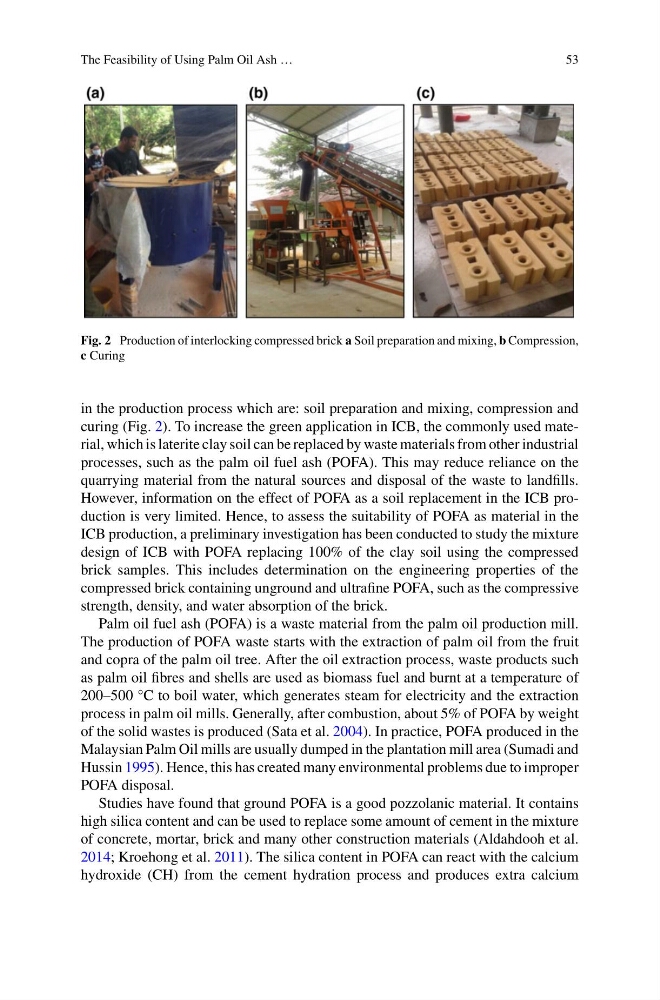
Fig. 2 Production of interlocking compressed brick a Soil preparation and mixing, b Compression,
c Curing
in the production process which are: soil preparation and mixing, compression and
curing (Fig. 2). To increase the green application in ICB, the commonly used material, which is laterite clay soil can be replaced by waste materials from other industrial
processes, such as the palm oil fuel ash (POFA). This may reduce reliance on the
quarrying material from the natural sources and disposal of the waste to landfills.
However, information on the effect of POFA as a soil replacement in the ICB production is very limited. Hence, to assess the suitability of POFA as material in the
ICB production, a preliminary investigation has been conducted to study the mixture
design of ICB with POFA replacing 100% of the clay soil using the compressed
brick samples. This includes determination on the engineering properties of the
compressed brick containing unground and ultrafine POFA, such as the compressive
strength, density, and water absorption of the brick.
Palm oil fuel ash (POFA) is a waste material from the palm oil production mill.
The production of POFA waste starts with the extraction of palm oil from the fruit
and copra of the palm oil tree. After the oil extraction process, waste products such
as palm oil fibres and shells are used as biomass fuel and burnt at a temperature of
200–500 °C to boil water, which generates steam for electricity and the extraction
process in palm oil mills. Generally, after combustion, about 5% of POFA by weight
of the solid wastes is produced (Sata et al. 2004). In practice, POFA produced in the
Malaysian Palm Oil mills are usually dumped in the plantation mill area (Sumadi and
Hussin 1995). Hence, this has created many environmental problems due to improper
POFA disposal.
Studies have found that ground POFA is a good pozzolanic material. It contains
high silica content and can be used to replace some amount of cement in the mixture
of concrete, mortar, brick and many other construction materials (Aldahdooh et al.
2014; Kroehong et al. 2011). The silica content in POFA can react with the calcium
hydroxide (CH) from the cement hydration process and produces extra calcium
53
Fig. 2 Production of interlocking compressed brick a Soil preparation and mixing, b Compression,
c Curing
in the production process which are: soil preparation and mixing, compression and
curing (Fig. 2). To increase the green application in ICB, the commonly used material, which is laterite clay soil can be replaced by waste materials from other industrial
processes, such as the palm oil fuel ash (POFA). This may reduce reliance on the
quarrying material from the natural sources and disposal of the waste to landfills.
However, information on the effect of POFA as a soil replacement in the ICB production is very limited. Hence, to assess the suitability of POFA as material in the
ICB production, a preliminary investigation has been conducted to study the mixture
design of ICB with POFA replacing 100% of the clay soil using the compressed
brick samples. This includes determination on the engineering properties of the
compressed brick containing unground and ultrafine POFA, such as the compressive
strength, density, and water absorption of the brick.
Palm oil fuel ash (POFA) is a waste material from the palm oil production mill.
The production of POFA waste starts with the extraction of palm oil from the fruit
and copra of the palm oil tree. After the oil extraction process, waste products such
as palm oil fibres and shells are used as biomass fuel and burnt at a temperature of
200–500 °C to boil water, which generates steam for electricity and the extraction
process in palm oil mills. Generally, after combustion, about 5% of POFA by weight
of the solid wastes is produced (Sata et al. 2004). In practice, POFA produced in the
Malaysian Palm Oil mills are usually dumped in the plantation mill area (Sumadi and
Hussin 1995). Hence, this has created many environmental problems due to improper
POFA disposal.
Studies have found that ground POFA is a good pozzolanic material. It contains
high silica content and can be used to replace some amount of cement in the mixture
of concrete, mortar, brick and many other construction materials (Aldahdooh et al.
2014; Kroehong et al. 2011). The silica content in POFA can react with the calcium
hydroxide (CH) from the cement hydration process and produces extra calcium