

188
S. Saalah et al.
0
0.5
1
1.5
2
2.5
Odour Scale
Date
OT (1m)
OT (2m)
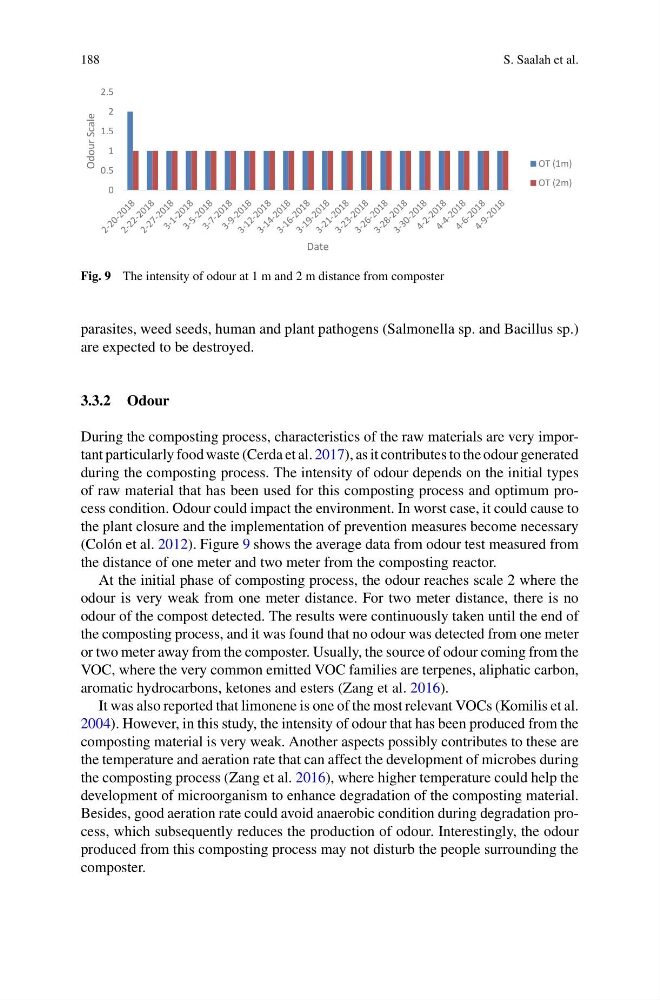
Fig. 9 The intensity of odour at 1 m and 2 m distance from composter
parasites, weed seeds, human and plant pathogens (Salmonella sp. and Bacillus sp.)
are expected to be destroyed.
3.3.2 Odour
During the composting process, characteristics of the raw materials are very important particularly food waste (Cerda et al. 2017), as it contributes to the odour generated
during the composting process. The intensity of odour depends on the initial types
of raw material that has been used for this composting process and optimum process condition. Odour could impact the environment. In worst case, it could cause to
the plant closure and the implementation of prevention measures become necessary
(Colón et al. 2012). Figure 9 shows the average data from odour test measured from
the distance of one meter and two meter from the composting reactor.
At the initial phase of composting process, the odour reaches scale 2 where the
odour is very weak from one meter distance. For two meter distance, there is no
odour of the compost detected. The results were continuously taken until the end of
the composting process, and it was found that no odour was detected from one meter
or two meter away from the composter. Usually, the source of odour coming from the
VOC, where the very common emitted VOC families are terpenes, aliphatic carbon,
aromatic hydrocarbons, ketones and esters (Zang et al. 2016).
It was also reported that limonene is one of the most relevant VOCs (Komilis et al.
2004). However, in this study, the intensity of odour that has been produced from the
composting material is very weak. Another aspects possibly contributes to these are
the temperature and aeration rate that can affect the development of microbes during
the composting process (Zang et al. 2016), where higher temperature could help the
development of microorganism to enhance degradation of the composting material.
Besides, good aeration rate could avoid anaerobic condition during degradation process, which subsequently reduces the production of odour. Interestingly, the odour
produced from this composting process may not disturb the people surrounding the
composter.
S. Saalah et al.
0
0.5
1
1.5
2
2.5
Odour Scale
Date
OT (1m)
OT (2m)
Fig. 9 The intensity of odour at 1 m and 2 m distance from composter
parasites, weed seeds, human and plant pathogens (Salmonella sp. and Bacillus sp.)
are expected to be destroyed.
3.3.2 Odour
During the composting process, characteristics of the raw materials are very important particularly food waste (Cerda et al. 2017), as it contributes to the odour generated
during the composting process. The intensity of odour depends on the initial types
of raw material that has been used for this composting process and optimum process condition. Odour could impact the environment. In worst case, it could cause to
the plant closure and the implementation of prevention measures become necessary
(Colón et al. 2012). Figure 9 shows the average data from odour test measured from
the distance of one meter and two meter from the composting reactor.
At the initial phase of composting process, the odour reaches scale 2 where the
odour is very weak from one meter distance. For two meter distance, there is no
odour of the compost detected. The results were continuously taken until the end of
the composting process, and it was found that no odour was detected from one meter
or two meter away from the composter. Usually, the source of odour coming from the
VOC, where the very common emitted VOC families are terpenes, aliphatic carbon,
aromatic hydrocarbons, ketones and esters (Zang et al. 2016).
It was also reported that limonene is one of the most relevant VOCs (Komilis et al.
2004). However, in this study, the intensity of odour that has been produced from the
composting material is very weak. Another aspects possibly contributes to these are
the temperature and aeration rate that can affect the development of microbes during
the composting process (Zang et al. 2016), where higher temperature could help the
development of microorganism to enhance degradation of the composting material.
Besides, good aeration rate could avoid anaerobic condition during degradation process, which subsequently reduces the production of odour. Interestingly, the odour
produced from this composting process may not disturb the people surrounding the
composter.