

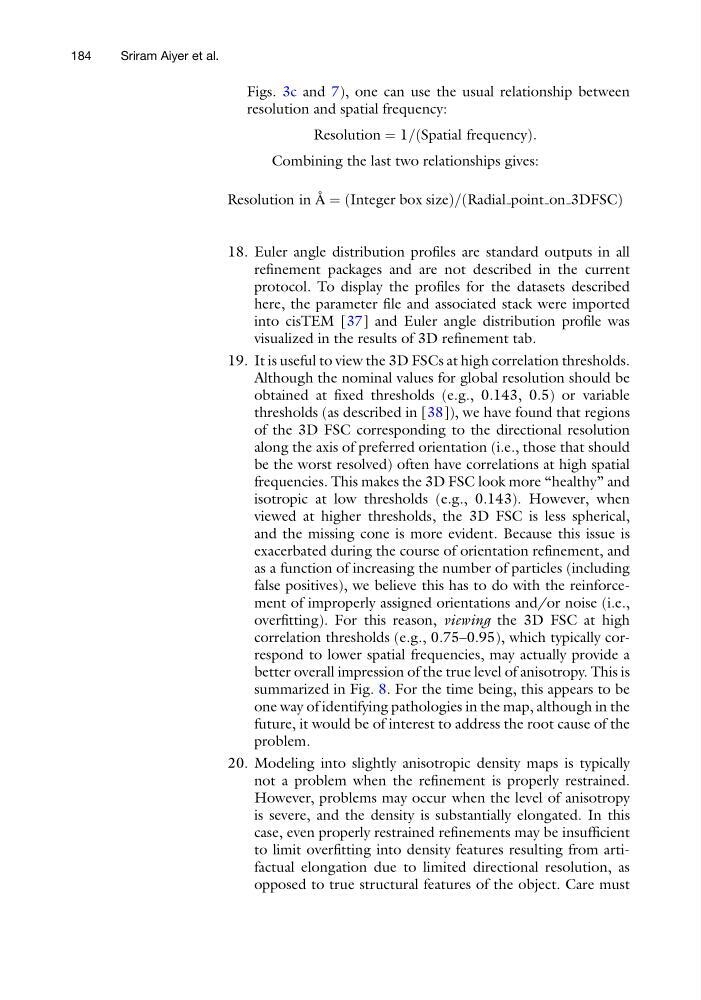
Figs. 3c and 7), one can use the usual relationship between
resolution and spatial frequency:
Resolution ¼ 1= Spatial frequency
ð
Þ :
Combining the last two relationships gives:
Resolution in Å ¼ Integer box size
ð
Þ = Radial point on 3DFSC
ð
Þ
18. Euler angle distribution profiles are standard outputs in all
refinement packages and are not described in the current
protocol. To display the profiles for the datasets described
here, the parameter file and associated stack were imported
into cisTEM [37] and Euler angle distribution profile was
visualized in the results of 3D refinement tab.
19. It is useful to view the 3D FSCs at high correlation thresholds.
Although the nominal values for global resolution should be
obtained at fixed thresholds (e.g., 0.143, 0.5) or variable
thresholds (as described in [38]), we have found that regions
of the 3D FSC corresponding to the directional resolution
along the axis of preferred orientation (i.e., those that should
be the worst resolved) often have correlations at high spatial
frequencies. This makes the 3D FSC look more “healthy” and
isotropic at low thresholds (e.g., 0.143). However, when
viewed at higher thresholds, the 3D FSC is less spherical,
and the missing cone is more evident. Because this issue is
exacerbated during the course of orientation refinement, and
as a function of increasing the number of particles (including
false positives), we believe this has to do with the reinforcement of improperly assigned orientations and/or noise (i.e.,
overfitting). For this reason, viewing the 3D FSC at high
correlation thresholds (e.g., 0.75–0.95), which typically correspond to lower spatial frequencies, may actually provide a
better overall impression of the true level of anisotropy. This is
summarized in Fig. 8. For the time being, this appears to be
one way of identifying pathologies in the map, although in the
future, it would be of interest to address the root cause of the
problem.
20. Modeling into slightly anisotropic density maps is typically
not a problem when the refinement is properly restrained.
However, problems may occur when the level of anisotropy
is severe, and the density is substantially elongated. In this
case, even properly restrained refinements may be insufficient
to limit overfitting into density features resulting from artifactual elongation due to limited directional resolution, as
opposed to true structural features of the object. Care must
184
Sriram Aiyer et al.
resolution and spatial frequency:
Resolution ¼ 1= Spatial frequency
ð
Þ :
Combining the last two relationships gives:
Resolution in Å ¼ Integer box size
ð
Þ = Radial point on 3DFSC
ð
Þ
18. Euler angle distribution profiles are standard outputs in all
refinement packages and are not described in the current
protocol. To display the profiles for the datasets described
here, the parameter file and associated stack were imported
into cisTEM [37] and Euler angle distribution profile was
visualized in the results of 3D refinement tab.
19. It is useful to view the 3D FSCs at high correlation thresholds.
Although the nominal values for global resolution should be
obtained at fixed thresholds (e.g., 0.143, 0.5) or variable
thresholds (as described in [38]), we have found that regions
of the 3D FSC corresponding to the directional resolution
along the axis of preferred orientation (i.e., those that should
be the worst resolved) often have correlations at high spatial
frequencies. This makes the 3D FSC look more “healthy” and
isotropic at low thresholds (e.g., 0.143). However, when
viewed at higher thresholds, the 3D FSC is less spherical,
and the missing cone is more evident. Because this issue is
exacerbated during the course of orientation refinement, and
as a function of increasing the number of particles (including
false positives), we believe this has to do with the reinforcement of improperly assigned orientations and/or noise (i.e.,
overfitting). For this reason, viewing the 3D FSC at high
correlation thresholds (e.g., 0.75–0.95), which typically correspond to lower spatial frequencies, may actually provide a
better overall impression of the true level of anisotropy. This is
summarized in Fig. 8. For the time being, this appears to be
one way of identifying pathologies in the map, although in the
future, it would be of interest to address the root cause of the
problem.
20. Modeling into slightly anisotropic density maps is typically
not a problem when the refinement is properly restrained.
However, problems may occur when the level of anisotropy
is severe, and the density is substantially elongated. In this
case, even properly restrained refinements may be insufficient
to limit overfitting into density features resulting from artifactual elongation due to limited directional resolution, as
opposed to true structural features of the object. Care must
184
Sriram Aiyer et al.