

were less committed to measuring and managing sustainability risk. They also
discovered that the companies treated sustainability risks separately from other
types of risk in the ERM process because these risks were managed by the health,
safety, and environment (HSE) management. Furthermore, Subramaniam et al.
(2015) analysed the factors that affect the integration of carbon-related risks and
opportunities into the ERM system among Australian companies from various
sectors such as energy/utility, financial services, manufacturing, retail, transportation, mining, and others. Their study discovered that the involvement of senior
management, internal audit oversight, resource availability, and energy sector membership influence the extent of carbon risk integration into the ERM system.
SRM is becoming an important component of corporate governance and a means
of creating value for all stakeholders. Following the Malaysian Code of Corporate
Governance (MCCG, 2012), companies listed under Bursa Malaysia are required to
integrate sustainability in their core decision-making for serving the stakeholder
needs. In point of fact, MCCG 2012 encouraged listed companies to embrace
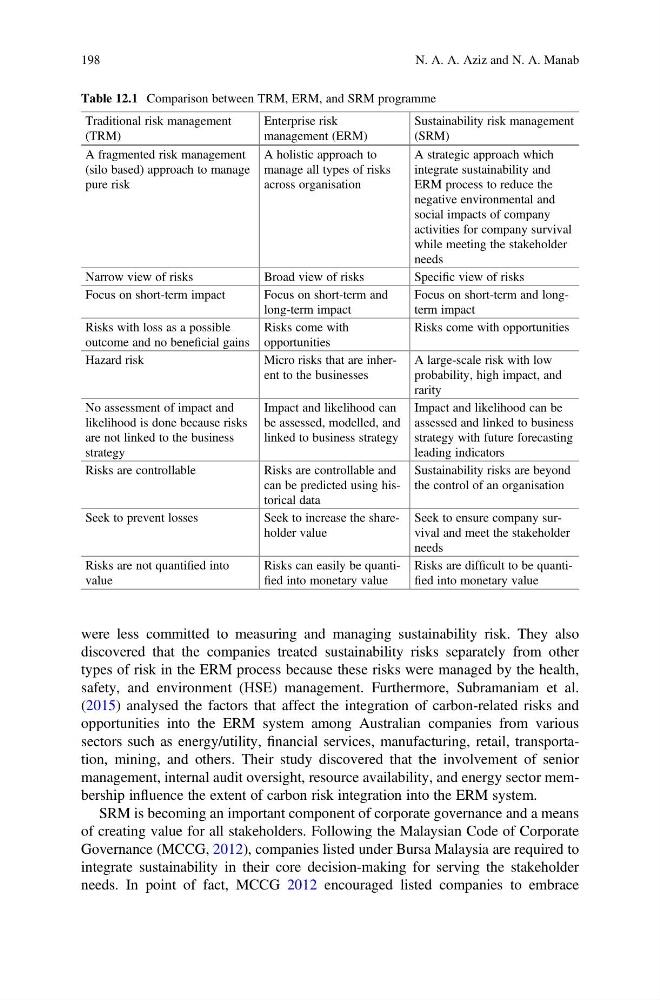
Table 12.1 Comparison between TRM, ERM, and SRM programme
Traditional risk management
(TRM)
Enterprise risk
management (ERM)
Sustainability risk management
(SRM)
A fragmented risk management
(silo based) approach to manage
pure risk
A holistic approach to
manage all types of risks
across organisation
A strategic approach which
integrate sustainability and
ERM process to reduce the
negative environmental and
social impacts of company
activities for company survival
while meeting the stakeholder
needs
Narrow view of risks
Broad view of risks
Specific view of risks
Focus on short-term impact
Focus on short-term and
long-term impact
Focus on short-term and longterm impact
Risks with loss as a possible
outcome and no beneficial gains
Risks come with
opportunities
Risks come with opportunities
Hazard risk
Micro risks that are inherent to the businesses
A large-scale risk with low
probability, high impact, and
rarity
No assessment of impact and
likelihood is done because risks
are not linked to the business
strategy
Impact and likelihood can
be assessed, modelled, and
linked to business strategy
Impact and likelihood can be
assessed and linked to business
strategy with future forecasting
leading indicators
Risks are controllable
Risks are controllable and
can be predicted using historical data
Sustainability risks are beyond
the control of an organisation
Seek to prevent losses
Seek to increase the shareholder value
Seek to ensure company survival and meet the stakeholder
needs
Risks are not quantified into
value
Risks can easily be quantified into monetary value
Risks are difficult to be quantified into monetary value
198
N. A. A. Aziz and N. A. Manab
discovered that the companies treated sustainability risks separately from other
types of risk in the ERM process because these risks were managed by the health,
safety, and environment (HSE) management. Furthermore, Subramaniam et al.
(2015) analysed the factors that affect the integration of carbon-related risks and
opportunities into the ERM system among Australian companies from various
sectors such as energy/utility, financial services, manufacturing, retail, transportation, mining, and others. Their study discovered that the involvement of senior
management, internal audit oversight, resource availability, and energy sector membership influence the extent of carbon risk integration into the ERM system.
SRM is becoming an important component of corporate governance and a means
of creating value for all stakeholders. Following the Malaysian Code of Corporate
Governance (MCCG, 2012), companies listed under Bursa Malaysia are required to
integrate sustainability in their core decision-making for serving the stakeholder
needs. In point of fact, MCCG 2012 encouraged listed companies to embrace
Table 12.1 Comparison between TRM, ERM, and SRM programme
Traditional risk management
(TRM)
Enterprise risk
management (ERM)
Sustainability risk management
(SRM)
A fragmented risk management
(silo based) approach to manage
pure risk
A holistic approach to
manage all types of risks
across organisation
A strategic approach which
integrate sustainability and
ERM process to reduce the
negative environmental and
social impacts of company
activities for company survival
while meeting the stakeholder
needs
Narrow view of risks
Broad view of risks
Specific view of risks
Focus on short-term impact
Focus on short-term and
long-term impact
Focus on short-term and longterm impact
Risks with loss as a possible
outcome and no beneficial gains
Risks come with
opportunities
Risks come with opportunities
Hazard risk
Micro risks that are inherent to the businesses
A large-scale risk with low
probability, high impact, and
rarity
No assessment of impact and
likelihood is done because risks
are not linked to the business
strategy
Impact and likelihood can
be assessed, modelled, and
linked to business strategy
Impact and likelihood can be
assessed and linked to business
strategy with future forecasting
leading indicators
Risks are controllable
Risks are controllable and
can be predicted using historical data
Sustainability risks are beyond
the control of an organisation
Seek to prevent losses
Seek to increase the shareholder value
Seek to ensure company survival and meet the stakeholder
needs
Risks are not quantified into
value
Risks can easily be quantified into monetary value
Risks are difficult to be quantified into monetary value
198
N. A. A. Aziz and N. A. Manab