

70
And that fallacy of the source of currency translates into a mismatch between
value and ecological sourcing. The further geographically one must go to reach the
source, theoretically, the most costly and precious the object. Yet, exogenous value
as measured by price has often superseded value-at-place-of-origin, a totally irrational function. Substitution economics—the obscuring of true value through commodity pricing that exploits labor in those areas of the planet with lower purchasing
power, or inflated home currencies—also clarifies the misnomers of borders, and
the true cost ecologically of misreading carrying capacity, and thus failing to incorporate often severe depreciations of natural capital. There is a limit to the number of
Netherlands the biosphere can accommodate, as a singular primate species continues its runaway exploitation unabated. Within the Netherlands, there can be only so
many Netherlands.
Our languages of ecosystem viability elude us at the philosophical juncture
where research and empirical data sets are supposed to cumulatively form the basis
for fair and accurate judgment. The history of economics is always falling short of
accounting for current economics. No moment-to-moment predictions can simply
fall back upon the conclusions reached by historians of the Great Depression. That
is because we nurture an ideal that is meant somehow inconceivably to stem the
chasm between the individual and its species. That gulf is comprised of no particular substance or view. Rather, all substance, as manifested in the perfect view, a
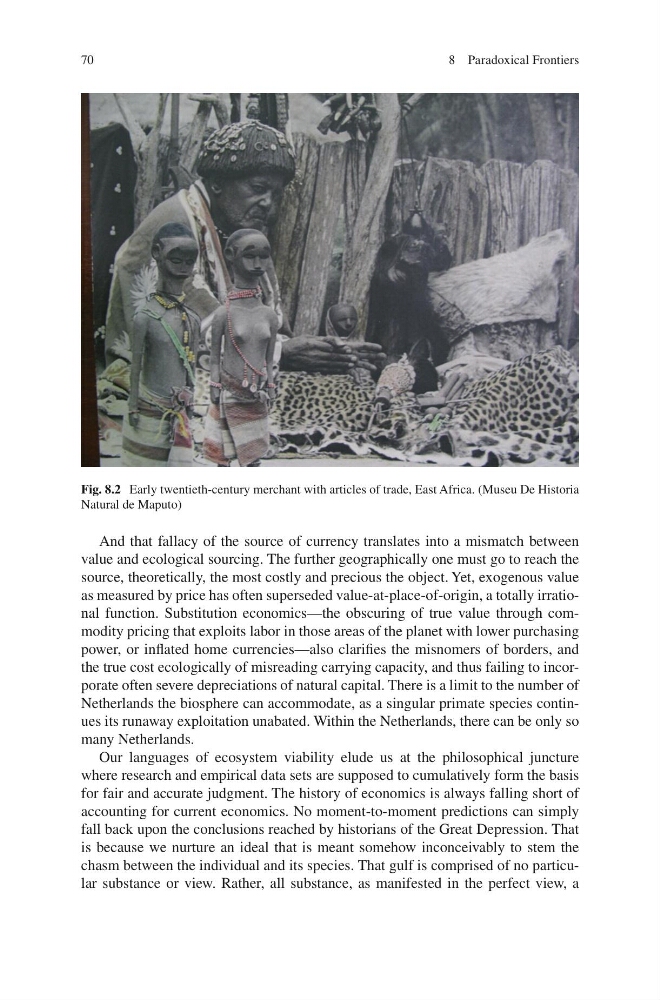
Fig. 8.2 Early twentieth-century merchant with articles of trade, East Africa. (Museu De Historia
Natural de Maputo)
8 Paradoxical Frontiers
And that fallacy of the source of currency translates into a mismatch between
value and ecological sourcing. The further geographically one must go to reach the
source, theoretically, the most costly and precious the object. Yet, exogenous value
as measured by price has often superseded value-at-place-of-origin, a totally irrational function. Substitution economics—the obscuring of true value through commodity pricing that exploits labor in those areas of the planet with lower purchasing
power, or inflated home currencies—also clarifies the misnomers of borders, and
the true cost ecologically of misreading carrying capacity, and thus failing to incorporate often severe depreciations of natural capital. There is a limit to the number of
Netherlands the biosphere can accommodate, as a singular primate species continues its runaway exploitation unabated. Within the Netherlands, there can be only so
many Netherlands.
Our languages of ecosystem viability elude us at the philosophical juncture
where research and empirical data sets are supposed to cumulatively form the basis
for fair and accurate judgment. The history of economics is always falling short of
accounting for current economics. No moment-to-moment predictions can simply
fall back upon the conclusions reached by historians of the Great Depression. That
is because we nurture an ideal that is meant somehow inconceivably to stem the
chasm between the individual and its species. That gulf is comprised of no particular substance or view. Rather, all substance, as manifested in the perfect view, a
Fig. 8.2 Early twentieth-century merchant with articles of trade, East Africa. (Museu De Historia
Natural de Maputo)
8 Paradoxical Frontiers