

808
American bacteriologist Hans Zinsser (1878–1940) championed a more thorough and unstintingly morose picture of the life of this planet, with a famed and
exhilarating prose style perhaps best captured in his great classic Rats, Lice and
History—being a study in biography, which, after 12 preliminary chapters indispensable for the preparation of the lay reader, deals with the life history of typhus
fever: “Man sees it from his own prejudiced point of view; but clams, oysters,
insects, fish, flowers, tobacco, potatoes, tomatoes, fruit, shrubs, trees, have their
own varieties of smallpox, measles, cancer, or tuberculosis. Incessantly, the pitiless
war goes on, without quarter or armistice – a nationalism of species against species.”
5
The man who had developed a typhus vaccine ultimately succumbed to that universal war of the worlds, in the form of acute leukemia. It is fascinating to note that
Zinsser, a poet/immunologist of the deepest sympathies with life, was laid to rest in
America’s most alluring cemetery, Sleepy Hollow in Mount Pleasant, about 30
miles north of New York City, adjoining the Rockefeller cemetery and Old Dutch
Church. Among the 45,000 or so other humans interred in those 90 acres is a veritable monument to the human species itself; a Who’s Who of that stellar constellation of passions, forebodings, energies, and mirrors of the earth that has received
them all: Washington Irving, Brooke and Vincent Astor, Andrew Carnegie and his
wife Louise Whitfield Carnegie, William Rockefeller, Walter Chrysler, Hudson
5 First published in 1934; this being the Black Dog & Leventhal Publishers, Inc., edition, New York,
in arrangement with Little, Brown and Company, Inc., 1996, p.7.
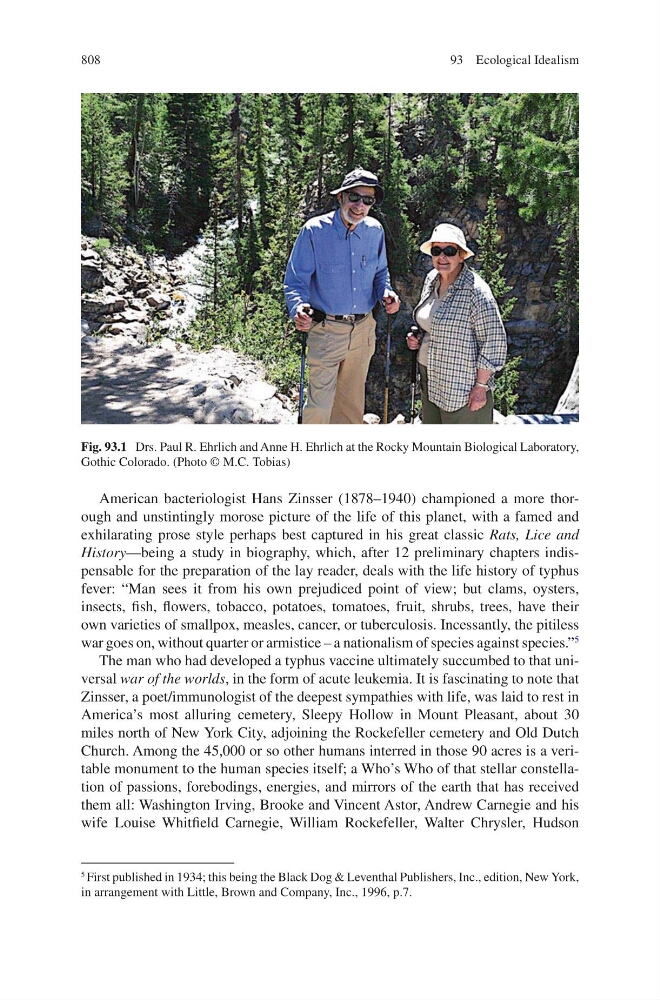
Fig. 93.1 Drs. Paul R. Ehrlich and Anne H. Ehrlich at the Rocky Mountain Biological Laboratory,
Gothic Colorado. (Photo © M.C. Tobias)
93 Ecological Idealism